
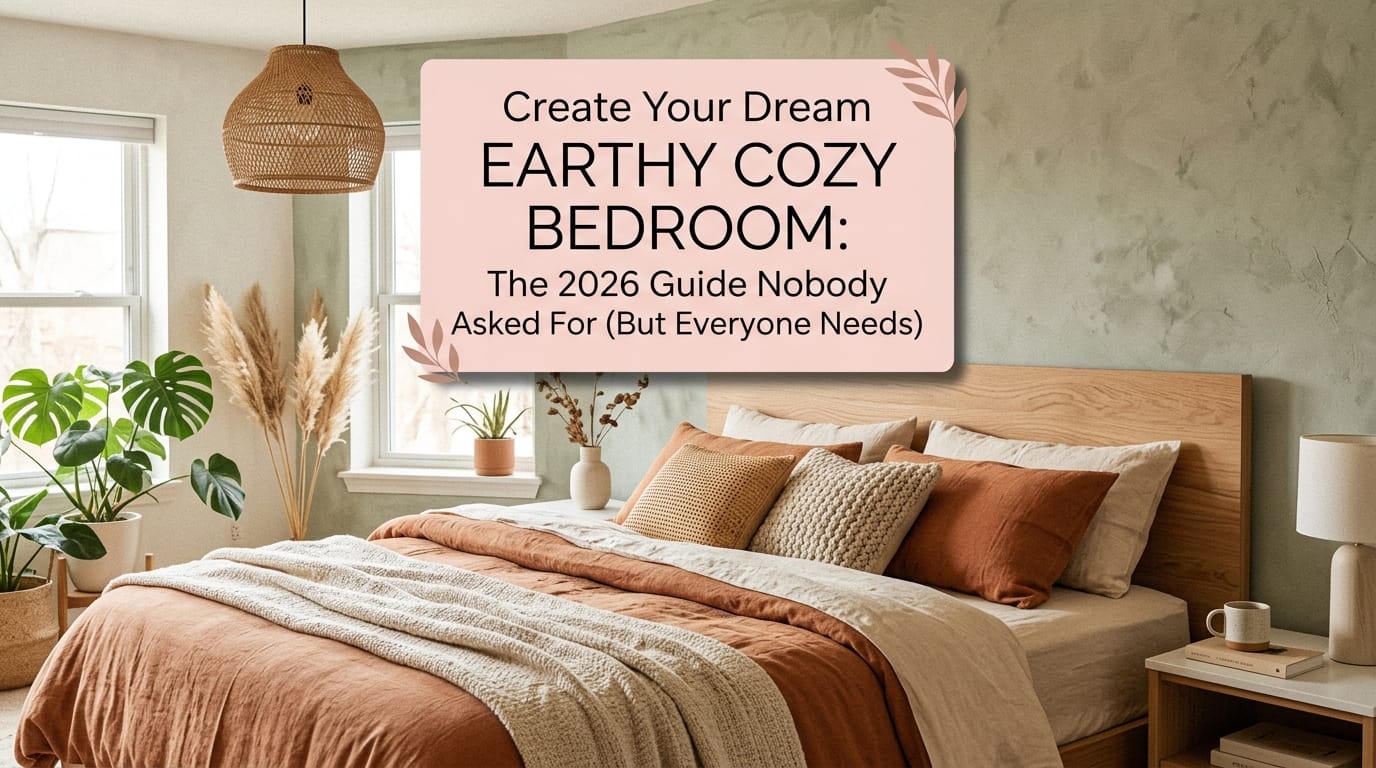
Look, I’m just going to say it—your bedroom probably feels like a sterile hotel room or a chaotic dumping ground for laundry. Either way, it’s time for an intervention. The earthy cozy bedroom trend isn’t just another Pinterest rabbit hole (though it definitely is that too). It’s actually the design movement that might save your sanity in 2026.
I stumbled into this whole earthy bedroom thing completely by accident. After moving into a place with stark white walls and fluorescent lighting that made me look like a sleep-deprived zombie, I knew something had to change. Fast forward to now, and my bedroom feels like the forest decided to give me a warm hug every time I walk in. No joke—my stress levels dropped, my sleep improved, and guests actually compliment my space instead of awkwardly avoiding eye contact.
So let me walk you through everything you need to know about creating an earthy cozy bedroom that doesn’t look like you’re trying too hard or living in a literal cave.
What Makes a Bedroom “Earthy Cozy” Anyway?
Think of it as nature’s greatest hits album but for your bedroom. We’re talking warm terracottas that remind you of desert sunsets, sandy beiges that feel like beach vacations, olive greens straight from Mediterranean hillsides, and rich browns that ground everything together.
The whole vibe centers on making your bedroom feel like a retreat—somewhere you actually want to be instead of just the place you collapse after doomscrolling for three hours. It’s about slowing down, which honestly sounds impossible until you create a space that practically forces you to chill out.
Here’s the core philosophy: Natural materials + warm tones + soft lighting + layered textures = instant sanctuary. Simple math, really.
The beauty of this trend? It works whether you’re renting a shoebox apartment or own a sprawling house. You don’t need to gut your entire room or take out a second mortgage. Sometimes it’s just about painting one wall rust-colored or throwing a chunky knit blanket on your bed.
The Color Palette That Actually Works
Ever wonder why some bedrooms feel immediately calming while others make you want to leave? Colors, my friend. And earthy cozy bedrooms nail this better than any other trend I’ve seen.
Your Go-To Color Roster
The warm neutrals are your foundation here. Think warm terracottas, sandy beiges, soft greys, and cream tones. These aren’t boring—they’re sophisticated in that “I didn’t try too hard but somehow nailed it” way.
Then layer in the mood-setters: Dusty rose for a touch of softness, olive greens for that forest cabin vibe, rich browns that feel grounding, and clay reds when you want drama without being dramatic. One interior designer I follow swears by smoky blue-greens and warm eucalyptus tones, and honestly? She’s onto something.
Here’s what nobody tells you—you’re supposed to layer multiple tones together, not pick one and call it a day. Pair terracotta with ochre and cream. Mix warm taupe with olive green. The depth comes from combining these colors, not isolating them.
The Dark vs. Light Debate
You’ve got two paths here, and both are solid choices depending on your vibe:
Dark earthy means espresso walls, charcoal linens, and that moody cave-like atmosphere that screams “leave me alone, I’m cocooning.” It’s intimate, it’s dramatic, and it works surprisingly well in smaller spaces because it makes boundaries feel intentional rather than cramped.
Light earthy goes for sage greens, breezy beiges, and that airy calm that makes you feel like you’re waking up in a Scandinavian forest cabin (minus the bears). It’s perfect if you need your space to feel open and if natural light is your friend.
IMO, most people should start light and add darker accents through textiles and furniture. It’s easier to commit to a beige wall than a deep burgundy one when you’re just testing the waters.
Textures: The Secret Sauce Nobody Talks About
Okay, real talk—color gets all the glory, but texture is doing the heavy lifting in earthy cozy bedrooms. This is where the “cozy” part really kicks in.
Natural Materials You Actually Need
Your shopping list should look like you’re preparing to live off the grid:
- Solid wood furniture (bonus points if it’s unpolished and looks a bit raw)
- Linen everything—sheets, curtains, throw pillows
- Cotton and wool for bedding layers
- Jute and rattan for rugs and light fixtures
- Stone elements like bowls or decorative pieces
- Leather accents (just a touch, we’re not making a cowboy bedroom here)
The trick? Layer them like you’re making the world’s most comfortable lasagna. Start with your base layer—maybe linen sheets. Add a cotton duvet. Throw on a chunky knit blanket. Toss in a wool throw at the foot of the bed. Boom—instant coziness that actually has visual depth.
The Texture Combinations That Work
I learned this the hard way after buying three jute rugs thinking more = better. (Spoiler: it doesn’t.) Here’s what actually works:
Smooth + rough: Pair crinkled linen with smooth cotton. The contrast creates interest without chaos.
Soft + structural: Combine fluffy wool throws with woven jute rugs. Your feet and eyes both appreciate variety.
Matte + natural shine: Unpolished wood furniture with brushed metal fixtures gives you dimension without going glossy (glossy = wrong vibe for earthy).
One designer put it perfectly when she said the goal is a “lived-in, honest feel.” You want your bedroom to look touched, used, and loved—not like a catalog that nobody’s allowed to sit on.
Lighting: Because Overhead Fluorescents Are Violence

Can we agree that harsh overhead lighting is the enemy of everything good? Earthy cozy bedrooms absolutely require you to rethink your lighting game.
The Golden Rules of Cozy Lighting
Warm-toned everything. If your bulbs are giving “hospital waiting room,” throw them out immediately. You want warm amber tones that make everything look like golden hour decided to move indoors permanently.
Layer your light sources like you layer your textures. Table lamps on your nightstands, wall sconces for ambient lighting, maybe a rattan pendant light if you’re feeling fancy. Edison bulbs are your friends here—they’ve got that vintage warmth that screams “I have my life together” even when you definitely don’t.
Here’s a pro tip one interior designer dropped: incorporate blackout layers for actual sleep quality. Earthy and cozy means nothing if you’re still waking up to car headlights at 2 AM. 🙂
Avoid these lighting disasters:
- Bright white LED bulbs (just no)
- Single overhead fixtures as your only light source
- Anything that flickers or buzzes
- “Daylight” color temperatures (save that for your bathroom)
Budget-Friendly Lighting Wins
FYI, you don’t need to drop hundreds on fancy fixtures. Thrift stores have amazing table lamps that just need new warm bulbs. String lights in warm tones can create magic for under twenty bucks. Salt lamps give you that amber glow and look intentional instead of college-dorm-chic.
I grabbed two amber sconces from a local resale shop, slapped them on either side of my bed, and suddenly my bedroom looked like an adult designed it. Total cost? About thirty dollars and an afternoon of very amateur electrical work (YouTube is free, people).
The Essential Elements Breakdown
Let me give you the cheat sheet I wish someone had given me when I started:
Walls: Your Canvas for Calm
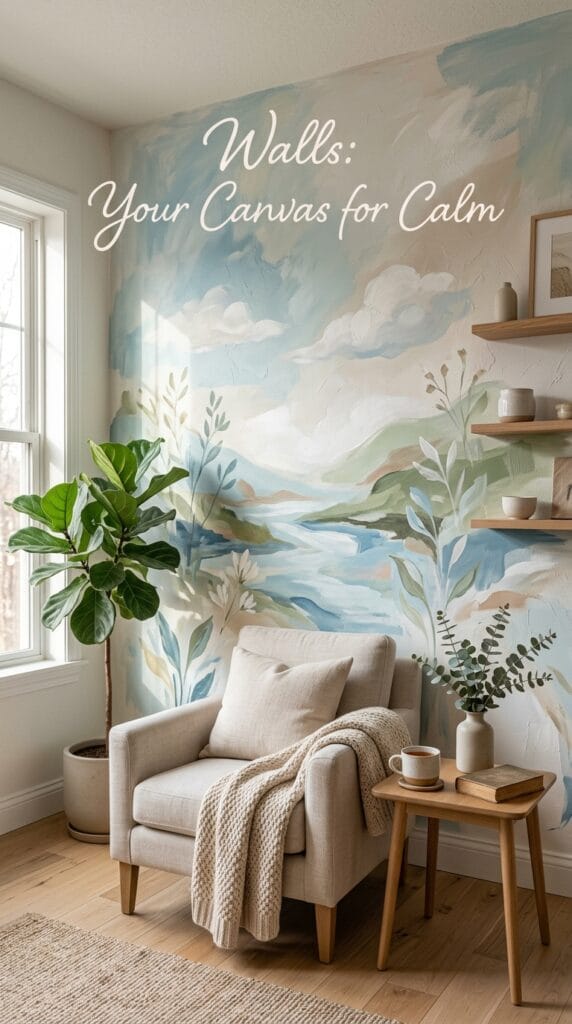
Earthy tone feature wall behind your bed creates instant focal depth. Rust-colored, burgundy, aubergine, or even a warm brown-pink neutral can transform your whole space. You don’t need to paint everything—one accent wall does most of the work.
If commitment scares you, try removable wallpaper in natural textures. Wood slats or textured panels behind the bed add dimension without permanent color decisions.
Flooring: The Underfoot Experience
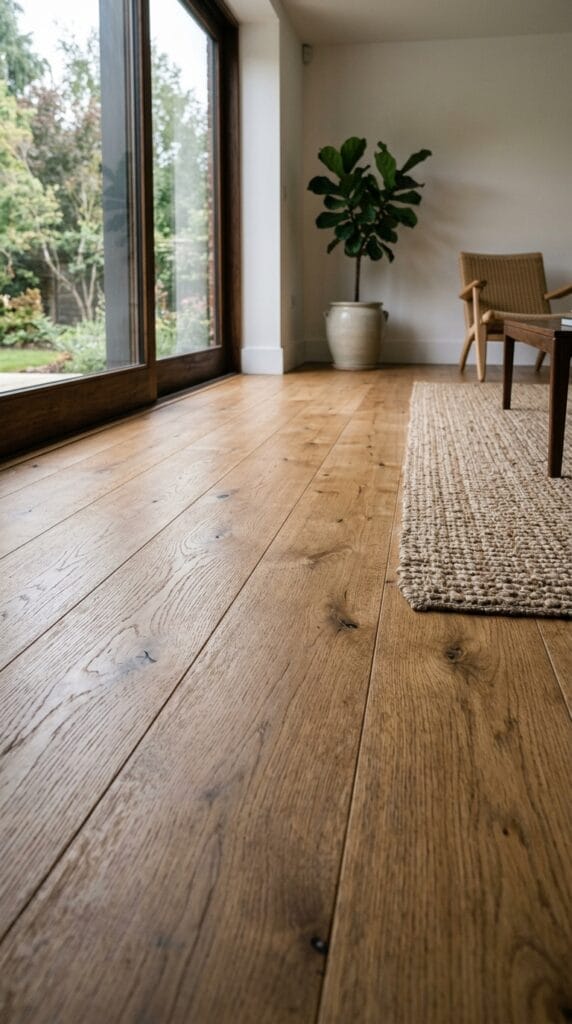
High-pile carpet or thick wool rugs in neutrals like tan, cream, or grey make your bedroom feel immediately plush. There’s something primal about soft flooring that signals “safe space for sleeping.” Jute rugs work too, though they’re scratchier—better for layering under softer rugs.
I went with a massive shag rug in warm grey, and stepping onto it every morning genuinely improved my mood. Small victories, right?
Bedding: Where Texture Gets Real
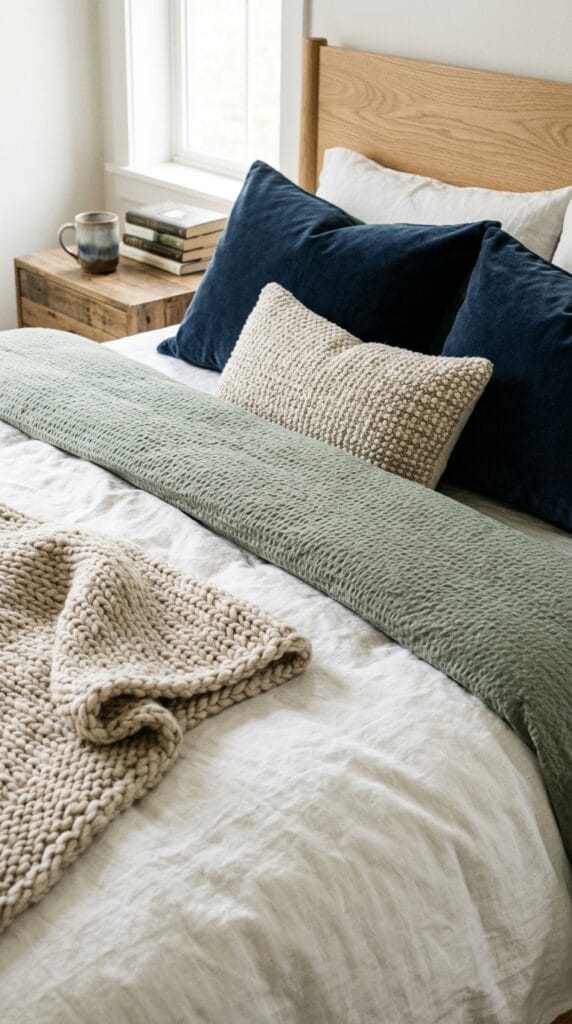
This is where you can go wild with layers without breaking the bank:
- Base layer: Natural fiber sheets in linen or cotton (cream, beige, or warm taupe)
- Middle layer: Textured duvet cover (think waffle weave or chambray)
- Top layers: Mix of throw pillows in varied textures—some smooth, some chunky
- Accent layer: Wool or knit throw at the foot of the bed
The table below shows you exactly how to build your bed layers for maximum earthy coziness:
| Layer Position | Material Choice | Color Recommendation | Texture Goal |
|---|---|---|---|
| Bottom sheets | Linen or cotton | Cream, warm taupe, soft beige | Smooth, breathable |
| Duvet/comforter | Cotton, chambray | Terracotta, dusty rose, olive | Textured weave |
| Decorative pillows | Mixed (linen, velvet, knit) | Layered earth tones | Varied heights & textures |
| Throw blanket | Wool, chunky knit | Rust, burnt orange, brown | Chunky, tactile |
Plants & Natural Elements: The Living Touch
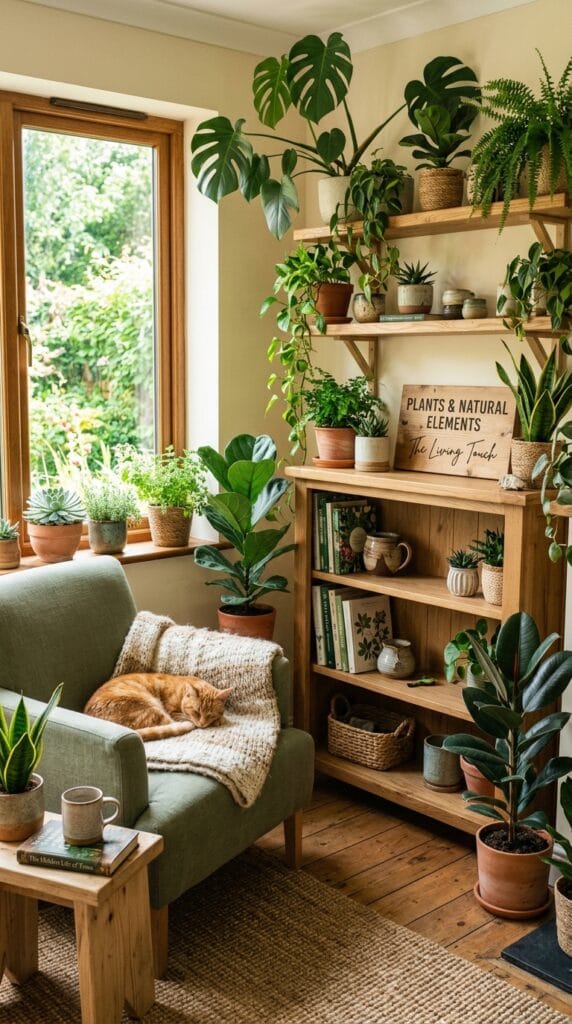
This is non-negotiable. Living plants bring literal life into your space, and research backs up what we all instinctively know—greenery actually improves sleep quality and reduces stress.
Easy wins for plant newbies:
- Snake plants (basically unkillable)
- Pothos (thrives on neglect)
- Peace lilies (pretty and forgiving)
Don’t have a green thumb? Dried flowers and botanical prints work too. I’ve got a mix of real plants near my window and dried pampas grass in a clay pot on my dresser. The combination feels intentional without requiring me to become a botanist.
Décor Accents That Don’t Feel Forced
Your shopping list:
- Macramé wall hangings (small ones, we’re not in the ’70s)
- Wooden bowls for jewelry or random stuff
- Clay pots (even empty ones look good)
- Stone elements like bookends or decorative rocks
- Woven baskets for storage that actually looks nice
The key? Balance and spacing. An overcrowded earthy bedroom just looks cluttered. Give each piece room to breathe. One designer told a magazine that these spaces should feel “grounded and peaceful,” not like a craft store exploded.
The Quick-Win Implementation Guide
Maybe you’re reading this thinking “sounds great but I’m broke and lazy.” Fair. Here are the fastest, cheapest ways to nail this trend:
Ten Changes You Can Make This Weekend
1. Paint a rust-toned feature wall behind your bed. One gallon of paint, one afternoon, instant transformation. Pairs beautifully with cream bedding and any wood furniture you already own.
2. Layer natural textiles you probably already have. Jute rug from that store everyone pretends they don’t shop at, wool throw from your grandma’s house, linen sheets from literally anywhere. Stack ’em up.
3. Deep brown or espresso walls if you’re feeling bold. Creates that cocoon effect everyone’s obsessing over. Just balance it with light-colored linens so you don’t feel like you’re sleeping in a cave (unless that’s your vibe—no judgment).
4. Dark green curtains for forest mood and the practical bonus of blocking light. Sleep quality goes up, your alarm clock becomes slightly less offensive.
5. Woven cane headboard adds airy texture and looks way more expensive than it is. Lets light filter through if your bed backs onto a window.
6. Two-tone walls with dark olive on bottom, beige on top. This creates visual height and subtle contrast without committing fully to dark walls.
7. Charcoal linen bedding provides depth against wood furniture. Add tan or cream pillows to keep it from feeling too moody.
8. Wood slats or textured panels behind the bed create dimension without color. Great if you’re renting and can’t paint.
9. Wool or shag rug in neutrals like tan or grey. Your feet will thank you, and it instantly makes everything feel more intentional.
10. Amber salt lamps soften shadows in darker color schemes and give you that warm glow without hard wiring anything.
The Budget Reality Check
Let’s be honest about costs here:
| Category | Under $50 | $50-$200 | Splurge Territory |
|---|---|---|---|
| Paint/Color | DIY accent wall, thrifted art | Premium paint brands | Professional painting service |
| Textiles | Thrift store throws, basic linen | Quality jute rugs, wool blankets | Luxury bedding sets |
| Furniture | DIY wood shelves, secondhand finds | Cane headboard, rattan lamps | Solid wood bed frame |
| Lighting | Thrift lamps + warm bulbs, candles | New amber sconces, salt lamps | Designer pendant fixtures |
| Plants/Décor | Grocery store plants, clay pots | Medium plants, macramé pieces | Large statement plants, art |
Most of my bedroom transformation cost under $300 total because I thrifted aggressively and DIY’d what I could. The only “splurge” was my bed frame, and even that was secondhand solid wood I refinished myself.
Why This Trend Actually Matters (Beyond Looking Good)
Here’s where I get slightly serious for a second—this isn’t just about following trends or making your Instagram look curated. There’s actual research showing that natural materials combined with greenery boost relaxation and improve sleep quality.
Your bedroom should function as a reset button for your brain. After dealing with whatever chaos your day threw at you, you need a space that slows you down and signals “you’re safe, you can rest now.” The combination of warm earthy tones, soft textures, and natural elements creates exactly that environment.
The psychological benefits aren’t subtle:
- Warm colors reduce cortisol (stress hormone) levels
- Natural textures provide sensory grounding
- Soft lighting promotes melatonin production
- Plants improve air quality and reduce anxiety
One designer called it creating “restful recovery zones,” and honestly, that’s the perfect description. Your bedroom becomes functional—not just a place you happen to sleep, but a space actively working to help you recover from modern life’s nonsense.
Common Mistakes (That I Definitely Didn’t Make… Okay I Made All of These)
The “More Is More” Disaster
Just because something is earthy doesn’t mean you need seventeen versions of it. I once bought four different jute items in one shopping trip, and my bedroom looked like a basket-weaving convention. Pick your textures thoughtfully, not frantically.
The Glossy Finish Trap
Shiny, polished surfaces kill the earthy vibe immediately. Stick with raw, matte, unpolished finishes. Your wood should look like wood, not like it got dipped in polyurethane three times.
The Lighting Temperature Betrayal
You can nail every other element, but if your lighting is harsh and cool-toned, the whole thing falls apart. Warm bulbs are non-negotiable. This is the hill I’m willing to die on.
The Clutter Creep
Earthy cozy requires restraint. Open space enhances peace. If every surface is covered in “natural elements,” you’ve just created an earthy mess. Balance matters more than abundance.
Ignoring Your Actual Climate
Look, if you live somewhere humid, all that natural fiber might develop a weird smell. If you’re in a super dry climate, some plants won’t thrive. Adapt the trend to your reality instead of fighting against it.
Advanced Variations for the Overachievers
Once you’ve nailed the basics, there are ways to elevate this aesthetic without losing the core vibe.
Pattern Play Without Chaos
Subtle patterns in earth tones add visual interest without overwhelming the space. Think muted stripes on throw pillows, understated florals in wall art, or geometric patterns in neutral colors on your rug.
The rule? Keep patterns minimal and ensure they stick to your earth-tone palette. One patterned element per zone (bedding zone, seating area, wall space) prevents pattern overload.
The Fifth Wall Concept
Designers in 2026 are obsessed with treating your ceiling as a design element. Consider a warm terracotta ceiling, exposed wood beams if you’ve got them, or even just painting it a shade deeper than your walls. It creates an enveloping effect that enhances the cocoon vibe.
Multifunctional Earthy Spaces
If your bedroom pulls double duty as an office or reading nook, use natural room dividers like folding screens in rattan or wood slats. Keep your work zone in lighter, more energizing earth tones (sage, light terracotta) while your sleep zone goes deeper and more restful (espresso, charcoal).
Aromatherapy Integration
This feels bougie but makes a genuine difference. Lavender candles in clay holders, eucalyptus bundles hung in your bathroom connected to the bedroom, cedar sachets in your drawers—these natural scents enhance the earthy atmosphere and have actual sleep-promoting properties.
One designer mentioned integrating aromatherapy for “luxury calm,” and after trying it, I’m a convert. Just don’t go overboard—subtle scent, not walking into a Bath & Body Works.
The Seasonal Shift Strategy
Here’s something I learned by accident—earthy cozy bedrooms are easy to adjust seasonally without redoing everything.
Summer lightening: Swap heavy wool throws for lighter cotton ones. Switch to linen sheets exclusively. Add more plants and leave windows uncovered during the day. The foundation stays the same, but the layers breathe more.
Winter deepening: Bring back the chunky knits, add an extra wool rug layer, incorporate more closed-in lighting (fewer open windows, more lamps). Same colors, just more insulation and coziness.
The earthy palette works year-round because it’s based on nature, which has seasons built into its DNA. You’re just emphasizing different aspects depending on what you need from your space.
Real Talk: What Doesn’t Work
I’ve tried plenty of things that looked great in theory and terrible in reality. Let me save you some trouble:
Fake plants in an earthy space look exactly like what they are—fake. Either commit to real ones (even super easy ones) or stick with dried flowers and botanical art.
Mixing in cold metallics like chrome or bright silver fights against the warm vibe. If you need metal accents, go with brushed brass, copper, or oil-rubbed bronze.
Tiny accent pillows get lost in the layered bedding. Go bigger with your pillows—they should feel substantial, not decorative afterthoughts.
Matching everything makes it look like you bought a bedroom set from one store and called it done. The magic is in the thoughtful mixing, not coordination.
Ignoring your room’s natural light means fighting an uphill battle. Work with what you’ve got—if your room is dim, lean into the dark cozy version instead of trying to force brightness with paint alone.
Sourcing Guide for the Practically Minded
Where do you actually find this stuff without spending your entire paycheck?
The Best Budget Sources
Thrift and secondhand stores are gold mines for wood furniture, linen textiles, and unique décor pieces. I found my favorite ceramic bowl (now my jewelry catch-all) for three dollars at a local thrift shop.
Big box home stores have surprisingly decent jute rugs, basic wood furniture, and affordable linen curtains. Don’t sleep on the basics just because they’re accessible.
Local craft fairs and markets often have handmade macramé, pottery, and woven goods from actual artisans. Supporting local and getting unique pieces? Win-win.
Online marketplaces work great for specific items like cane headboards or rattan light fixtures. Just read reviews obsessively because quality varies wildly.
The Splurge-Worthy Items
If you’re going to invest money anywhere, make it these:
Your mattress and bed frame—you’ll have them for years, and quality makes a real difference in both comfort and aesthetic longevity.
One statement light fixture—a beautiful rattan pendant or handcrafted wooden lamp elevates everything else around it.
A really good area rug—cheap rugs look cheap and fall apart. A quality wool or jute rug will last decades and becomes the foundation everything else builds on.
Everything else? You can absolutely budget and thrift your way to an amazing space.
The Maintenance Reality Nobody Mentions
Earthy cozy bedrooms require actual maintenance. Natural materials need care, and nobody talks about this in the pretty Instagram posts.
Linen wrinkles—embrace it or be prepared to iron. The wrinkles are part of the “lived-in” aesthetic, but if they drive you crazy, you’ll be ironing constantly.
Plants need water and light—shocking, I know. :/ But seriously, dead plants kill the vibe faster than anything else. Set reminders if you’re forgetful.
Natural rugs collect dust—vacuum regularly or they get musty. Jute especially holds onto dirt and pet hair like its job depends on it.
Wood furniture requires occasional treatment—even unpolished wood benefits from occasional oil treatments to prevent drying and cracking.
Wool items need proper cleaning—don’t just throw your wool blankets in a regular wash cycle unless you want doll-sized versions. Hand wash or dry clean.
This isn’t high-maintenance compared to some aesthetics, but it’s not zero-maintenance either. Budget a few minutes weekly for plant care and regular dusting to keep things looking intentional instead of neglected.
The Cultural Shift This Represents
Here’s the thing that makes this trend more interesting than just “some people like brown now”—it represents a genuine cultural move toward slowing down.
We’re all exhausted. Between screens constantly demanding attention, work bleeding into home life, and general societal chaos, people are desperate for spaces that function as actual retreats. The earthy cozy bedroom trend is a physical manifestation of that desperation.
It’s rejecting the minimalist “clean lines and stark white” aesthetic that made bedrooms feel like design showrooms instead of places to actually live. It’s pushing back against the maximalist “more stuff everywhere” approach that creates visual chaos.
Instead, it’s finding balance—enough texture and warmth to feel cozy, enough restraint to feel calm. It’s nature-inspired but adapted for actual human living. It’s intentionally grounding in a world that feels increasingly unmoored.
One designer described it perfectly as focusing on “comfort and longevity,” and that’s the secret sauce. These rooms aren’t trendy in a way that’ll look dated in two years. They’re based on timeless natural elements that have made humans feel safe and comfortable for millennia.
Your Action Plan (Because Inspiration Without Direction Is Just Daydreaming)
Alright, you’ve made it this far, which means you’re actually serious about this. Here’s your step-by-step game plan:
Week 1: Assessment and Planning
- Take photos of your current bedroom from multiple angles
- Identify what you already own that fits the earthy aesthetic
- Make a list of what needs to change most urgently
- Set a realistic budget
Week 2: Color Foundation
- Choose your base color (warm neutral) and accent color (terracotta, olive, rust, etc.)
- Paint your accent wall if you’re going that route
- Order any large textiles like rugs or curtains in your chosen colors
Week 3: Texture and Textiles
- Layer your bed with natural fiber sheets, textured duvet, and throws
- Add your area rug
- Hang curtains if needed
- Bring in throw pillows in varied textures
Week 4: Lighting and Finishing
- Replace all bulbs with warm-toned versions
- Add supplementary lighting (lamps, sconces, candles)
- Bring in plants and greenery
- Add final décor accents (wooden bowls, clay pots, macramé)
Ongoing:
- Maintain plants and natural materials
- Adjust layers seasonally
- Add pieces gradually as you find them rather than rushing
The goal isn’t perfection on day one. It’s creating a space that evolves into your perfect retreat over time.
Wrapping This Up (Finally)
Look, I could keep going about pillow arrangements and the philosophical meaning of terracotta, but you get the idea. The earthy cozy bedroom trend works because it taps into something fundamental—humans need spaces that feel safe, warm, and connected to nature.
You don’t need a huge budget, perfect design skills, or even that much time. You just need to commit to natural materials, warm tones, soft lighting, and layered textures. Everything else is just details.
Start with one change—maybe that rust-colored accent wall or a chunky wool throw. See how it feels. Add the next layer when you’re ready. Before you know it, you’ll have created a space that makes you actually want to put your phone down and just exist for a while.
And honestly? In 2026, that might be the most revolutionary thing you can do. Creating a bedroom that helps you rest, recover, and reset isn’t just good design—it’s survival strategy disguised as interior decorating.
Now go make your bedroom earthy and cozy. Your future well-rested self will thank you. 🙂
Create Your Dream Earthy Cozy Bedroom: The 2026 Guide Nobody Asked For (But Everyone Needs)