
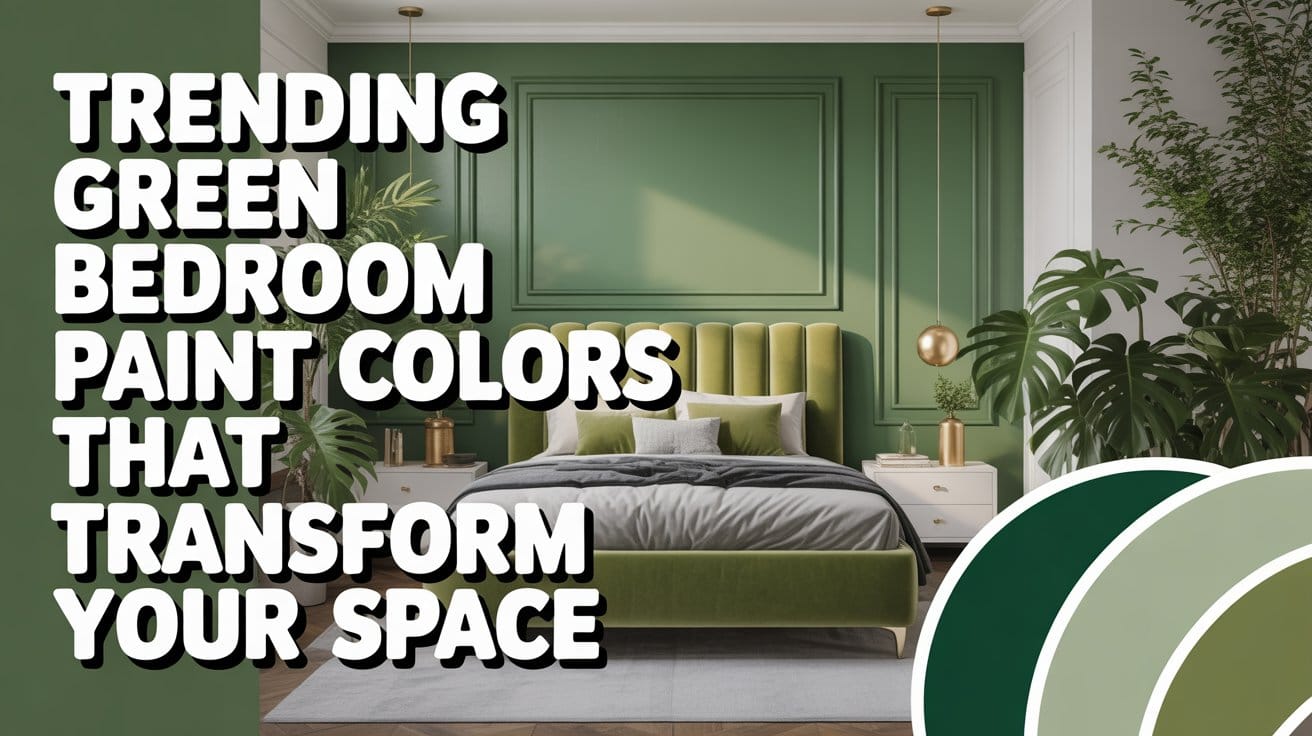
You want a bedroom that feels calm, cozy, and a little bit “designer,” right? You also want a color that won’t annoy you after two weeks of staring at it at 11:47 p.m. Welcome to green bedroom paint season (aka 2026), where moody, earthy greens take over and somehow make your room feel like a boutique hotel and a forest retreat had a very stylish baby.
I’ve played the “let’s repaint the bedroom” game more times than I’d like to admit, and FYI, green ranks as the most “why didn’t I do this sooner?” option—especially when you pick the right undertone.
Why green dominates bedroom paint trends in 2026
Green works in bedrooms because it nails the vibe we all want: restful, grounded, and warm, without looking boring. In 2026, the trend leans hard into earthy, nostalgic greens instead of icy, minty ones. Brands pushed greens as headline colors, and YouTube paint pros doubled down on deep, moody greens for bedrooms.
Moody greens feel like a “weighted blanket” for your walls
Ever notice how some rooms feel instantly calmer? Low-to-medium LRV greens help create that feeling because they absorb more light instead of bouncing it all over the place. You get depth, coziness, and that “intentional” look… even if you still store laundry on a chair.
Here’s the quick cheat sheet:
- Low LRV (darker color): cozy, dramatic, luxe, great for sleep
- Medium LRV: balanced, soothing, easier in mixed lighting
- High LRV (lighter color): airy, fresh, but sometimes “washed out” in dim bedrooms
Small bedroom? Dark green still works (yes, really)
People love to repeat the “dark paint shrinks rooms” rule like it came from a sacred design handbook. Real-life transformations tell a different story: designers and DIYers painted small bedrooms in dark green, and the rooms looked more intimate and elevated, not cramped—especially when they used the right finish or layered in warm accents.
So… do you want your bedroom to feel like a green cave in a good way? Because 2026 says yes.
2026 Green Bedroom Paint Trends
Top paint colors ranked by popularity and mood appeal for bedroom transformations
Key Takeaways
Moody Greens Dominate
Deep, earthy greens like Salamander and Secret Garden lead 2026 trends with 90%+ popularity, creating cozy sanctuary vibes.
Versatility Matters
Evergreen Fog and Acacia Haze score high across all room types – perfect for hesitant color adopters wanting safe sophistication.
Bold Accent Options
Current Mood and Secret Safari offer high-impact accent wall solutions with 80%+ appeal for commitment-shy decorators.
Small Space Friendly
Contrary to old rules, darker greens like Dirty Martini create intimate luxury in small bedrooms rather than shrinking them.
Top trending green bedroom paint colors for 2026 (the ones actually worth sampling)
I pulled these from 2026 color announcements, creator reviews, and real bedroom results. You’ll see a clear pattern: deep forest, mossy gray-greens, and warm eucalyptus tones run the show.
The 2026 green shortlist (with vibe + best use)
| Paint Color | Brand | 2026 Bedroom Vibe | LRV / Light Behavior | Best Use |
|---|---|---|---|---|
| Warm Eucalyptus | Valspar | Earthy + restorative, cozy nostalgia | Medium warmth (brand trend focus) | Full-room “color drench” |
| Midnight Garden | Dunn-Edwards | Dark mossy drama, grounded sanctuary | Low-to-medium (absorbs light) | Full room or statement wall |
| Secret Safari | PPG | Lime-honeydew energy, playful + bold | Brighter, higher lift | Accent wall, decor pop |
| Rosemary | Popular creator pick | Muted green-gray calm, modern | Medium-low (livable moody) | Whole room, especially primaries |
| Salamander | Benjamin Moore | Deep blue-green-black, luxe mood | Low-to-medium (rich depth) | Feature wall, millwork, cozy rooms |
| Forestwood | Sherwin-Williams | Deep dark green, “green-on-green” friendly | Low (dark) | Bedrooms with plants + warm woods |
If you feel stuck between “I want cozy” and “I fear darkness,” start with Rosemary or Warm Eucalyptus. They give you mood without making you feel like you moved into a gothic novel.
My “Top 5” bedroom greens for 2026 (fast picks, big impact)
You’ll hear these names a lot in 2026 bedroom paint conversations because they play nicely with real homes (not just staged Instagram rooms).
1) Evergreen Fog (Sherwin-Williams): the easy, serene crowd-pleaser
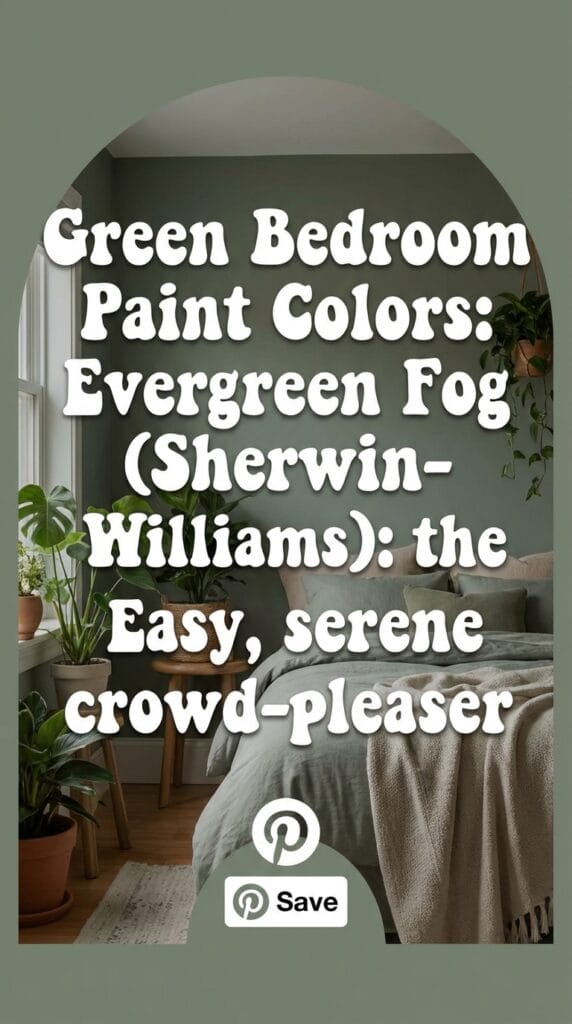
Evergreen Fog keeps showing up because it balances green and gray without acting weird in daylight. It fits nurseries, guest rooms, and “I just want peace” bedrooms. Do you want a calm room without committing to full forest drama?
Try it with:
- creamy white bedding
- pale wood shelves
- warm brass knobs or sconces
2) Secret Garden (Sherwin-Williams): dark, dramatic, oddly soothing
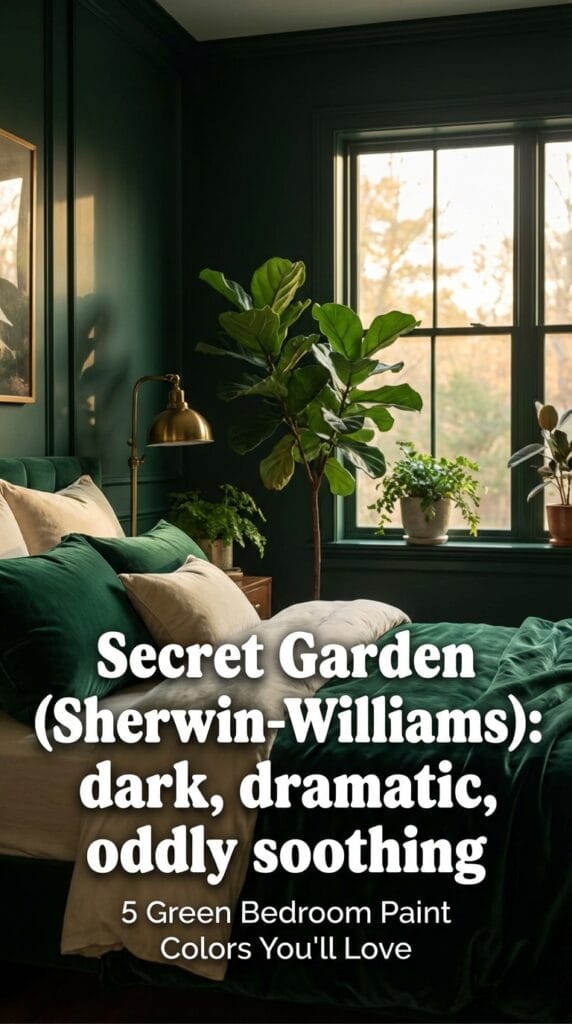
Secret Garden brings that moody glow that makes bedrooms feel expensive. It looks amazing with teak, walnut, and black accents. It also hides scuffs better than light paint, which feels like a personal gift from the universe.
Best move: paint all four walls and add lighter bedding for contrast.
3) Acacia Haze (Sherwin-Williams): muted mossy warmth
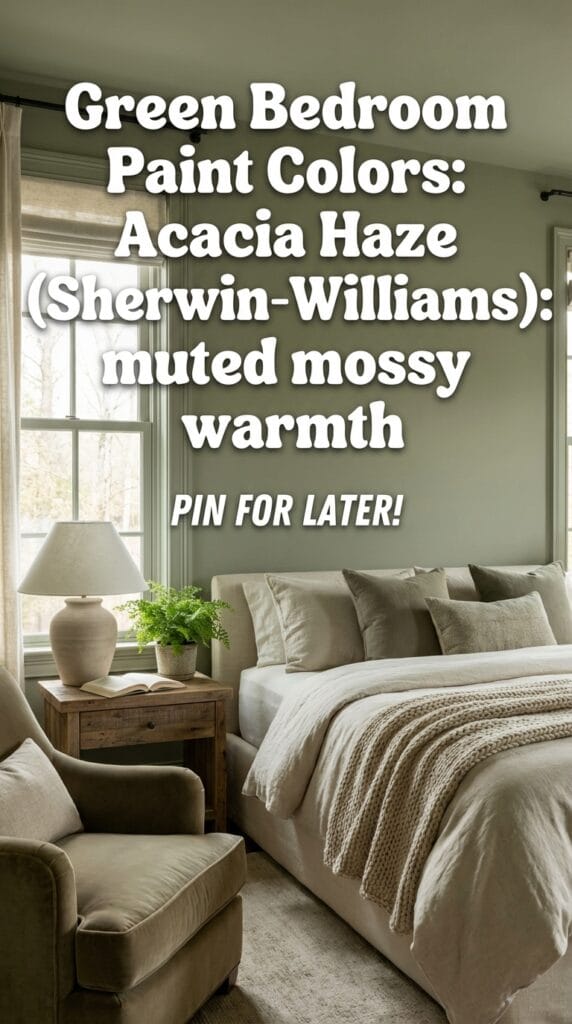
Acacia Haze lands in that sweet spot where the room feels softer but still modern. It works when you want a “grown-up” bedroom without going full cave. I love it with beige linens and textured rugs because it makes everything look intentional.
Watch for: lighting changes—this one shifts through the day.
4) Current Mood (Clare Paint): bold accent energy without chaos
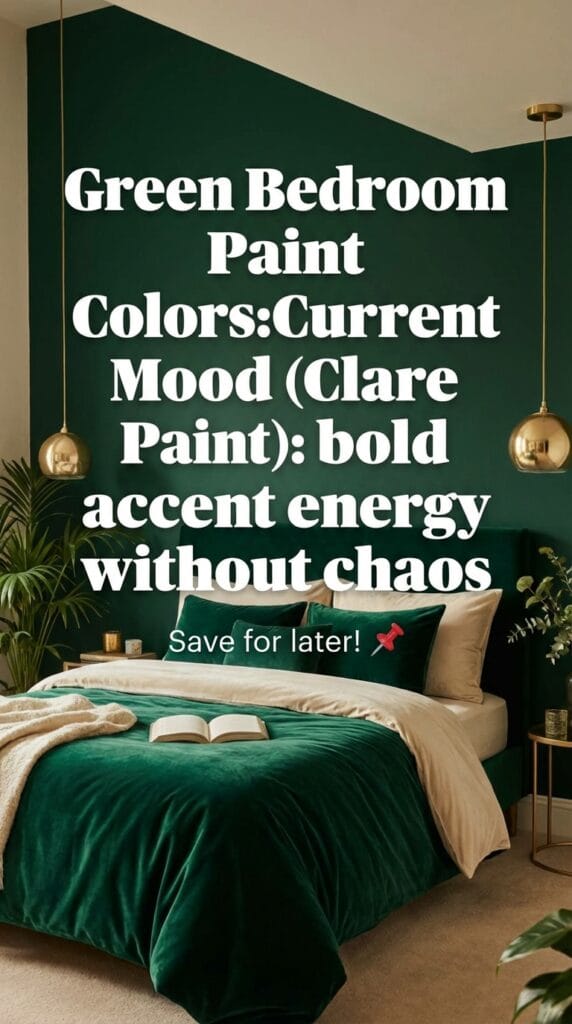
Current Mood brings more punch, so I like it for an accent wall, a nook, or even a headboard wall. You get personality without repainting your whole life if you change your mind. Have you ever painted a whole room and immediately thought “oh no”? Same.
Pair it with: gold mirrors or warm oak to keep it grounded.
5) Dirty Martini (Clare Paint): warm and vibey, not neon “cocktail”
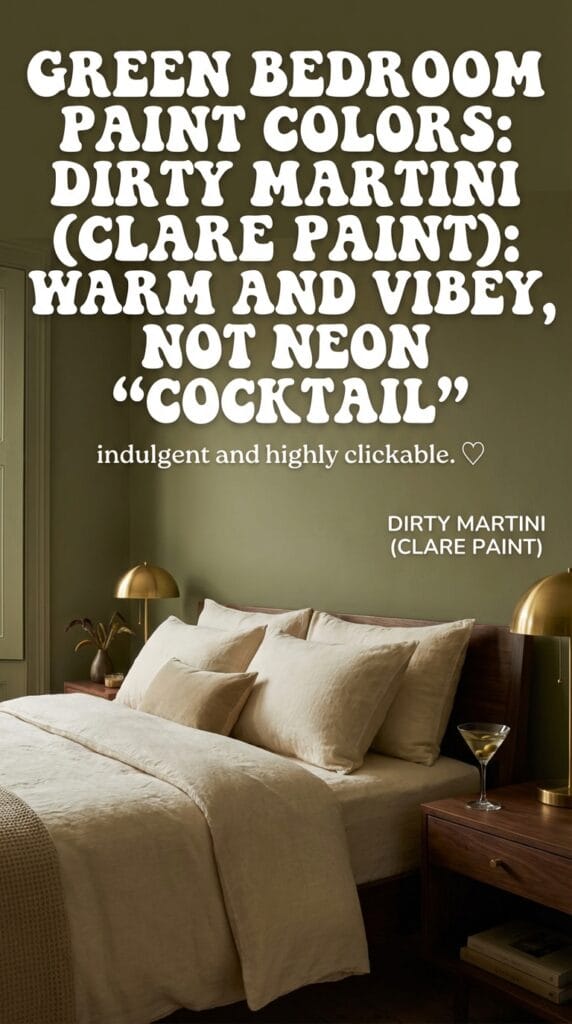
Dirty Martini leans warm and cozy, not highlighter green (thankfully). It gives bedrooms a relaxed, slightly retro vibe that fits 2026’s nostalgia wave. IMO, this works best when you keep the rest of the room simple and textural.
Perfect with: linen bedding + warm neutrals + soft lighting.
Real-life transformations: what actually happens when you go green
Trends sound cute until you paint the first coat and start questioning every decision you’ve ever made. Real case studies show a pattern: people panic mid-project, then they fall in love once the room finishes and the color settles.
Case study #1: the high-gloss dark green bedroom “panic → obsession” arc
One DIY designer painted a small white bedroom dark green in high gloss. They freaked out after the first coat, pushed through the extra coats, then gave the room a week to breathe. They ended up calling the result “magic,” and honestly, I get it—dark green with sheen can look insanely rich.
Lesson: dark green needs commitment, proper coverage, and a little patience.
Case study #2: Forestwood earned “spouse approval” (the highest honor)
A YouTube reviewer tested Sherwin-Williams Forestwood and rated it “mid versatility” but strongly recommended it for bedrooms and bathrooms—especially with plants. They even built a complementary “palette pyramid” around it, which sounds extra… but it works. They also used it in their own home and got a “big thumbs up” from their partner, which matters more than any trend report.
Lesson: deep greens feel safer when you pair them with warm neutrals and natural textures.
Case study #3: gray-green bedroom paint that shifts in sunlight
A homeowner used a soft gray-green (Hazelwood) in a main bedroom and loved how it shifted in sun throughout the day. That color-change effect shows up constantly in green paint feedback. Greens react to light like they hold tiny grudges, so you need to sample.
Lesson: you must test greens in your exact bedroom lighting, not in a store.
How to choose the right green for your bedroom (without spiraling)
You don’t need a design degree. You need a simple filter: light, undertone, and how you want to feel.
Step 1: check your bedroom light (the “green mood” controller)
Ask yourself:
- Do I get strong daylight, or do I live in lamp-light territory?
- Do I face north (cooler), south (warmer), west (golden), or east (bright morning)?
Low-light bedrooms usually love moody greens because the depth looks intentional instead of dull.
Step 2: pick the undertone on purpose
Undertones decide whether your green reads “spa,” “forest,” or “why does this look like pea soup :/”.
- Yellow undertone: warmer, cozy, more traditional
- Blue undertone: cooler, dramatic, sometimes more formal
- Gray undertone: modern, muted, very livable
Step 3: decide if you want full-room color drenching or an accent
You’ll get two very different results:
- Full room: enveloping, cozy, high-end, best for deep greens
- Accent wall: safer commitment, great for brighter greens like Secret Safari
Pairing guide: what looks amazing with green bedroom walls
Green plays nice with a lot, but it looks unbeatable with natural texture. You want the room to feel layered, not flat.
My favorite combos for 2026 green bedrooms
- Green + warm wood (oak, walnut, teak): makes the room feel grounded
- Green + creamy whites (not stark white): keeps it soft and cozy
- Green + brass/antique gold: adds warmth and “designer” energy
- Green + black accents: makes it modern and crisp
- Green + plants: yes, green-on-green works, and it looks intentional
Quick styling checklist (easy wins)
- Add linen or cotton bedding in cream, sand, or taupe
- Use two light sources minimum (bedside + overhead or lamp)
- Hang warm-toned art or wood frames to balance the paint
- Bring in one shiny element (mirror, metal, glossy finish) for depth
How to paint your bedroom green (step-by-step, no drama)
You can absolutely DIY this. You just need a plan and enough patience to wait for the paint to dry—tragic, I know.
- Sample first (always). Paint two large swatches on different walls.
- Check the swatches all day. Morning, afternoon, night, lamp light.
- Prep the wall. Clean it, patch holes, sand rough spots.
- Prime when needed. Prime if you cover a strong old color or patchy drywall.
- Roll two coats minimum. Dark greens often need a third coat for full depth.
- Pick a finish with intention. Matte hides flaws, satin cleans easier, gloss adds drama.
- Style after curing. Let the paint settle, then add wood, textiles, and warm lighting.
FAQ: green bedroom paint questions people actually ask
Should I use dark green in a small bedroom?
Yes, you can. Dark green can make a small room feel cozy and intentional, especially when you add lighter bedding and warm lighting.
Do moody greens make bedrooms too dark?
Moody greens absorb light, so they can darken a space. Add layered lighting and warm accents, and the room will feel rich, not gloomy.
Which green works best if I worry about weird undertones?
Start with muted gray-greens like Rosemary-style shades or gentle eucalyptus greens. They behave better across different lighting.
Do greens work with white trim?
Yes, and you’ll get a crisp, classic look. Choose a creamy white if you want warmth, or use a clean white if you want contrast.
Final thoughts: pick the green that makes you want to go to bed (seriously)
2026 bedroom trends put moody, earthy greens at the top for a reason: they make bedrooms feel calmer, warmer, and more “done.” You can go bold with Salamander or Midnight Garden, stay soft with Warm Eucalyptus, or keep things modern with a muted Rosemary-style green-gray.
Grab samples, watch the light, and commit when the color makes you exhale. And if you panic after the first coat, congratulations—you just started your very normal “dark green looks scary until it looks incredible” journey :).