
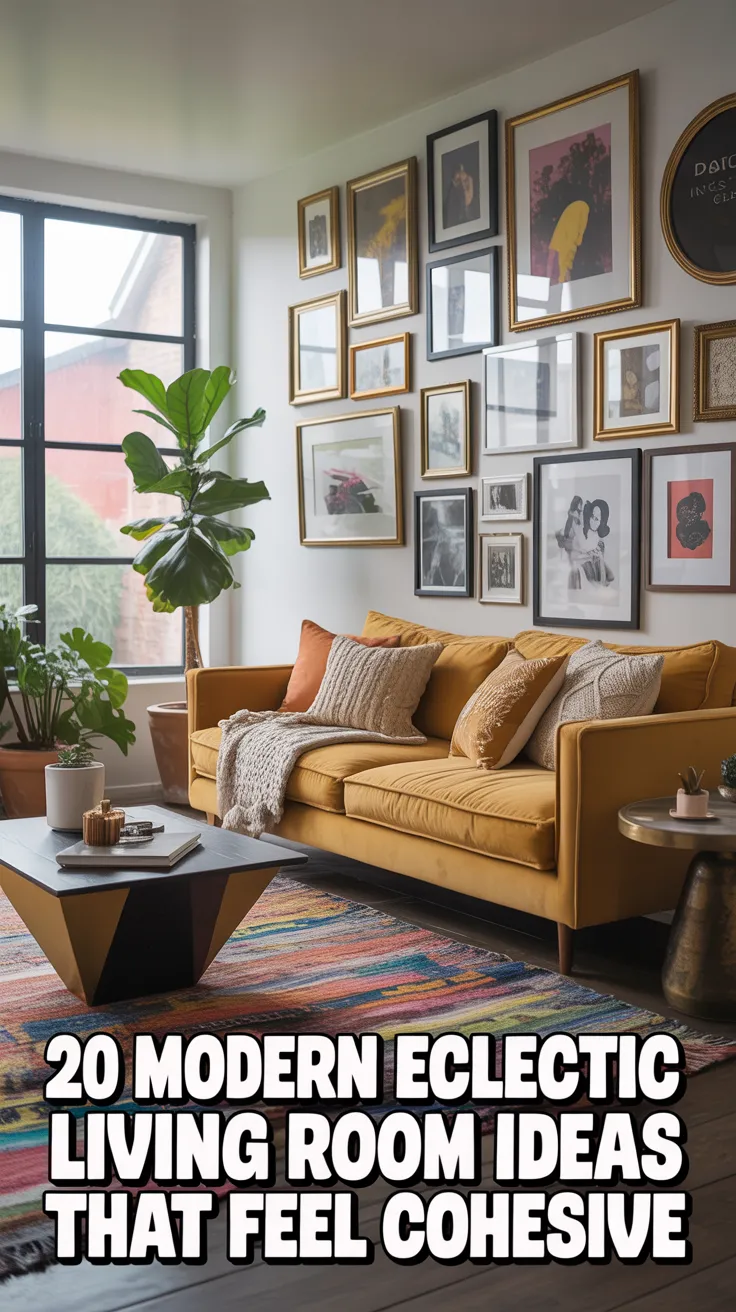
Okay, let’s be real for a second. You love the idea of a modern eclectic living room—mixing that killer vintage find with your sleek new sofa, layering textures, and showing off your unique personality. But then you actually try to do it, and suddenly your space looks less “artfully curated” and more “random stuff exploded.” Been there, bought the tacky throw pillow, hated it.
So, how do you nail that perfectly balanced, collected-over-time look without tipping into visual chaos? I’ve obsessed over this for years (and made every mistake imaginable, so you don’t have to). The secret isn’t in buying more stuff; it’s in using a few key design principles as your glue.
Think of this as your friendly, non-judgmental guide to eclectic styling that actually works. We’re talking 20 actionable ideas to create a space that’s uniquely you and totally cohesive. Let’s get into it.
1. Start With a “Style Anchor” Piece
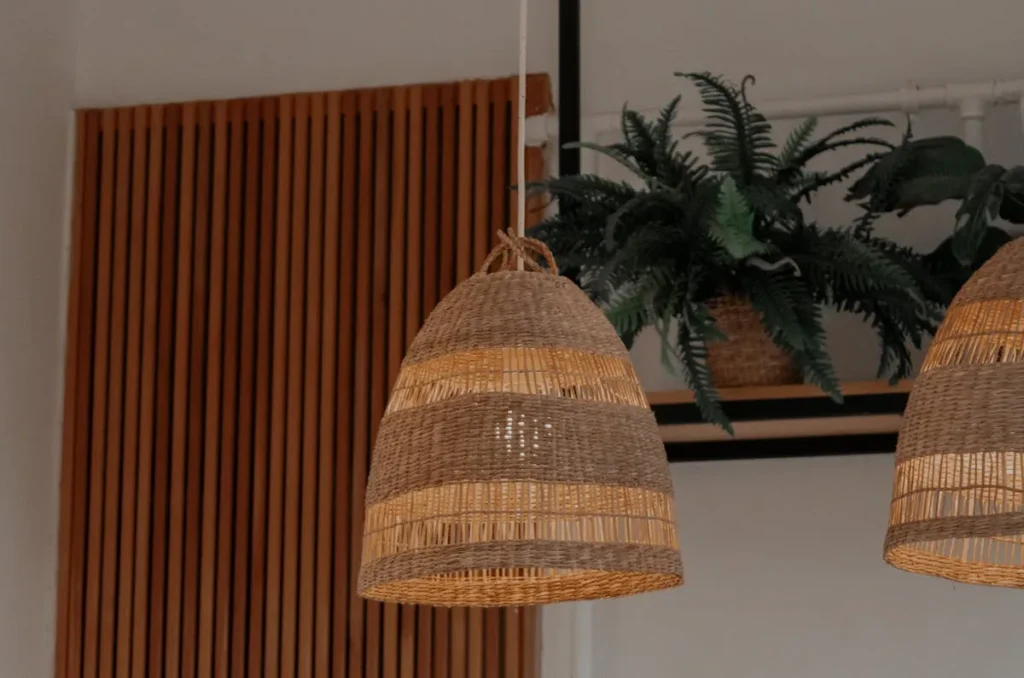
Every room needs a starting point, a visual heavyweight that sets the tone. In eclectic design, this is your anchor.
- What it is: This is usually your largest item or the piece with the strongest personality. Think a dramatic, modern sectional, a bold, colorful rug, or a large piece of statement art.
- Why it works: It gives your eye a place to rest and build around. Everything else in the room becomes a supporting character to this star. IMO, choosing your anchor first saves you from a million tiny, conflicting decisions later.
- Pro Tip: Your anchor doesn’t have to be neutral. A vibrant emerald green sofa or a wild, abstract painting can be a fantastic anchor. Just make sure you genuinely love it, as it will dictate the room’s vibe.
2. Master the 60-30-10 Color Rule (Seriously, It’s Magic)
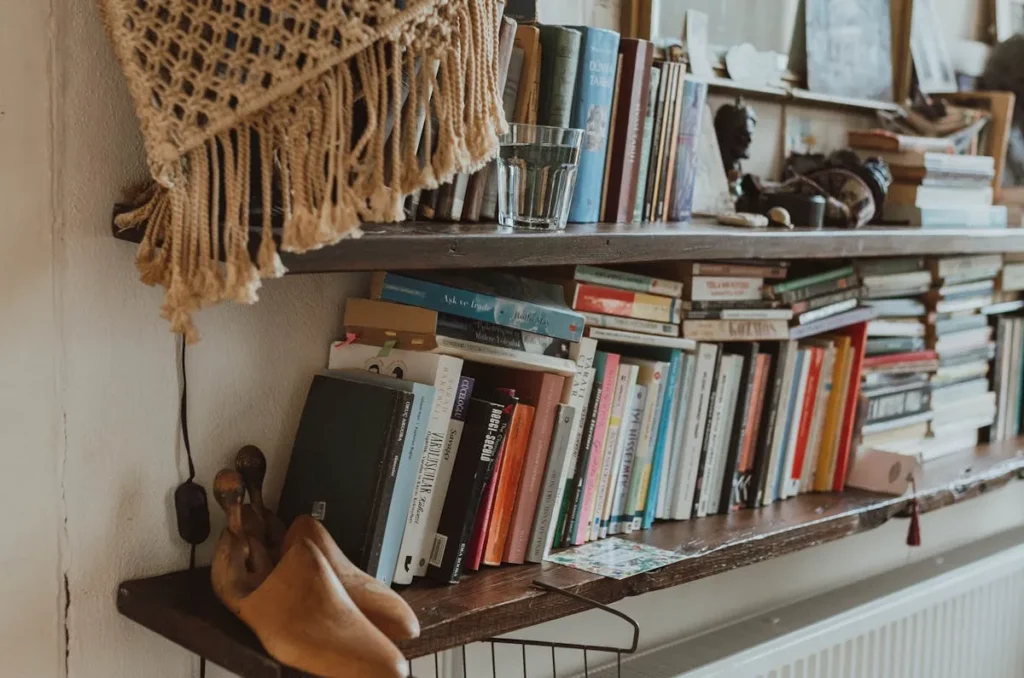
You’re mixing patterns, eras, and textures—your color palette shouldn’t be a free-for-all, too. The 60-30-10 rule is your secret weapon for harmony.
- 60% Dominant Color: This is the main color of your room. Usually, it’s your wall color, your large sofa, or your area rug.
- 30% Secondary Color: This provides visual interest. Think accent chairs, curtains, or a significant amount of your artwork.
- 10% Accent Color: This is your pop! Use it in throw pillows, small decor objects, books, or a single vibrant side table.
Sticking to this ratio creates a structured framework that lets your eclectic mix feel intentional, not accidental.
3. Create a Gallery Wall That Actually Talks to Each Other
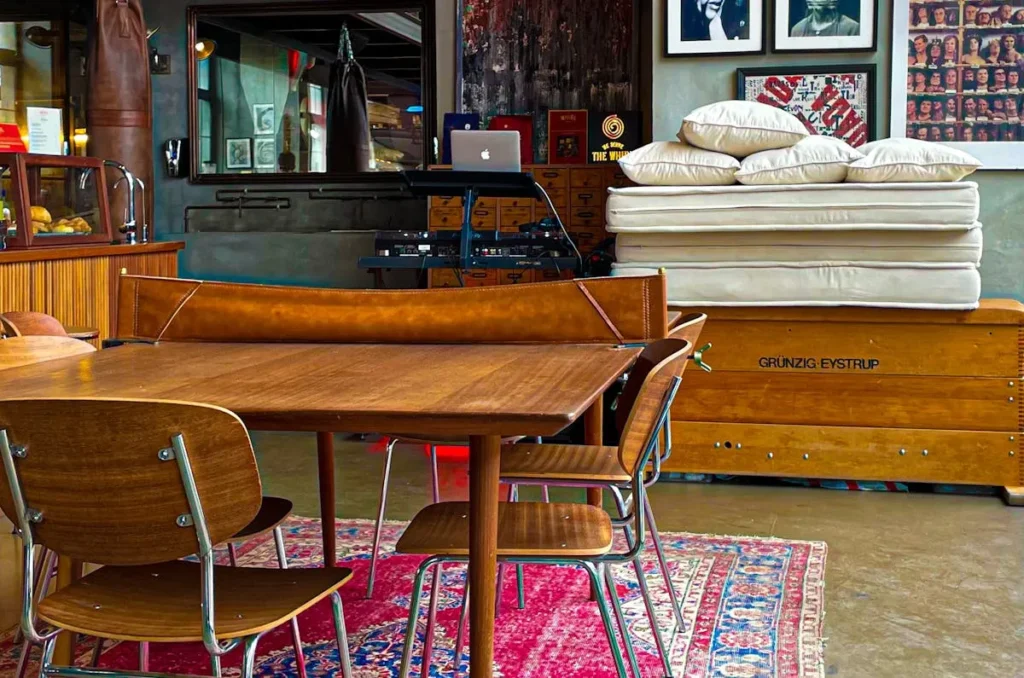
A gallery wall is eclectic 101, but a haphazard one is a fast track to clutter-town. Cohesion is key.
How to build a talkative gallery wall:
- Pick a Unifying Element: This could be all black frames, all gold frames, all vintage botanical prints, or all abstract art in a similar color family. The common thread is what makes it work.
- Vary Sizes and Layouts: Within your unifying element, play with different frame sizes and orientations. A mix of large, small, horizontal, and vertical keeps it dynamic.
- Incorporate 3D Objects: Add a small shelf with a vase, a woven wall hanging, or even a cool vintage plate. This breaks up the flatness and adds texture.
Ever wondered why some gallery walls feel so “done”? It’s that balance of unity and variety.
4. Mix Wood Tones Like a Pro
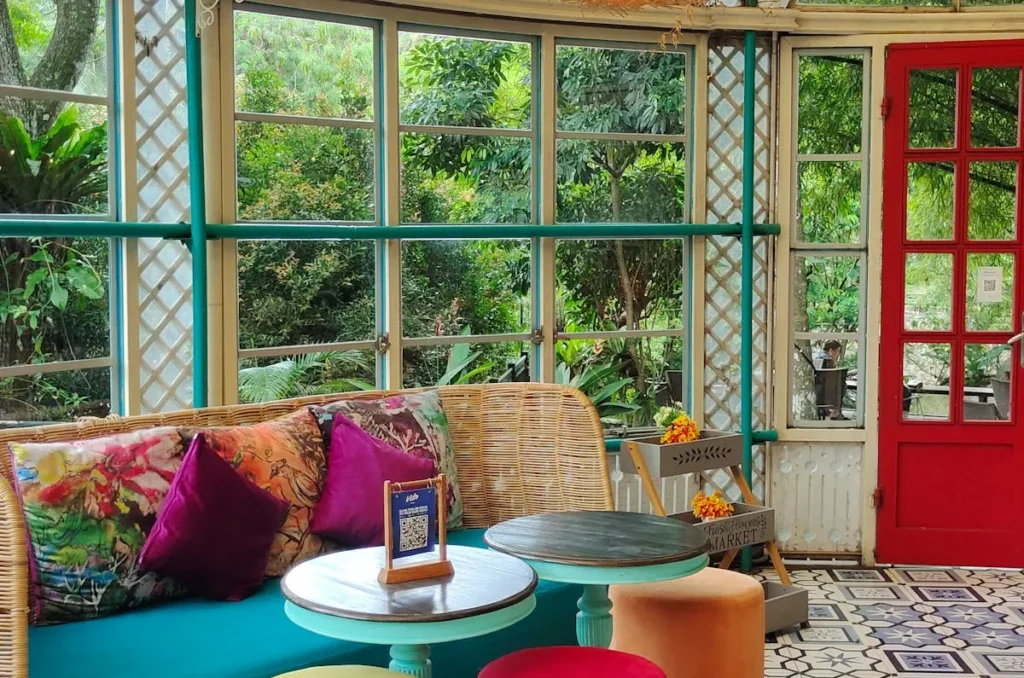
The old rule was “match all your wood furniture.” The new, way-better rule? Deliberately mix them.
- The Strategy: Pair warm woods (oak, teak, walnut) with cool woods (ash, painted, or bleached finishes). The contrast is interesting, not jarring.
- My Go-To Move: I love using a rich, dark walnut coffee table with lighter oak side tables and legs on a cream-colored sofa. The different tones add depth and keep the room from feeling like a flat, matchy-matchy showroom.
- The Glue: Use your rug, textiles, or metal finishes to tie the different woods together. A jute rug or black metal hardware can act as a neutral bridge.
5. Play With Scale and Proportion
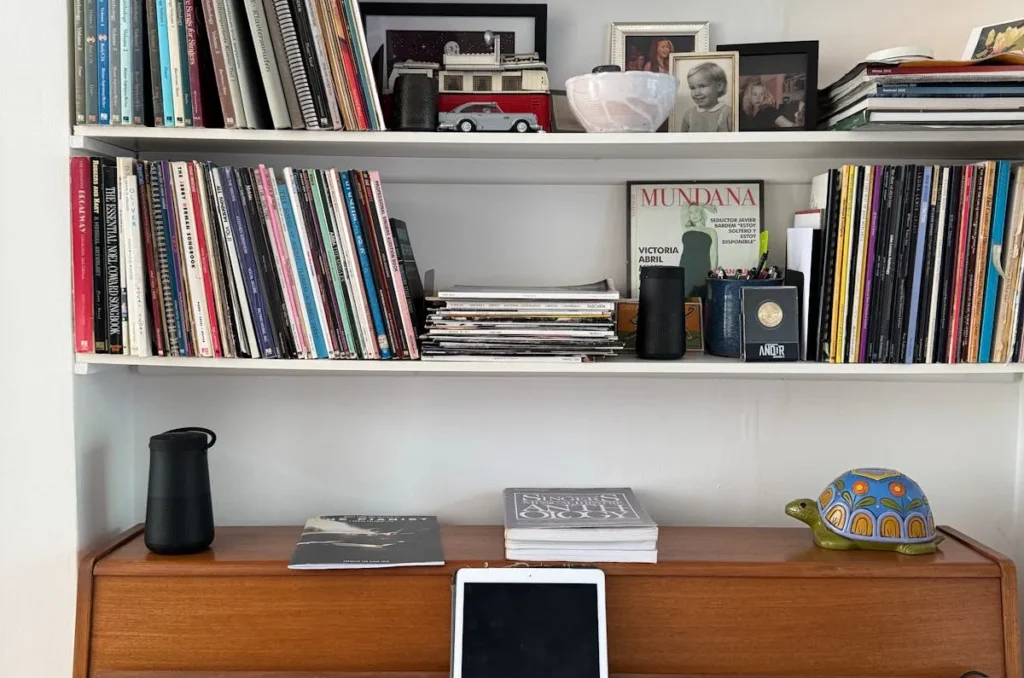
This is where the “modern” in modern eclectic really comes to play. Balance oversized items with more delicate ones.
- Big + Small: Pair a large, chunky, modern armchair with a slender, vintage side table. Place a huge, dramatic floor lamp next to a low-profile, minimalist sofa.
- Avoid the “Same-Size” Trap: When everything is roughly the same height and bulk, a room feels static and boring. Varying scale creates visual energy and rhythm. FYI, it’s also just more fun to look at.
6. Use Texture as Your Secret Weapon
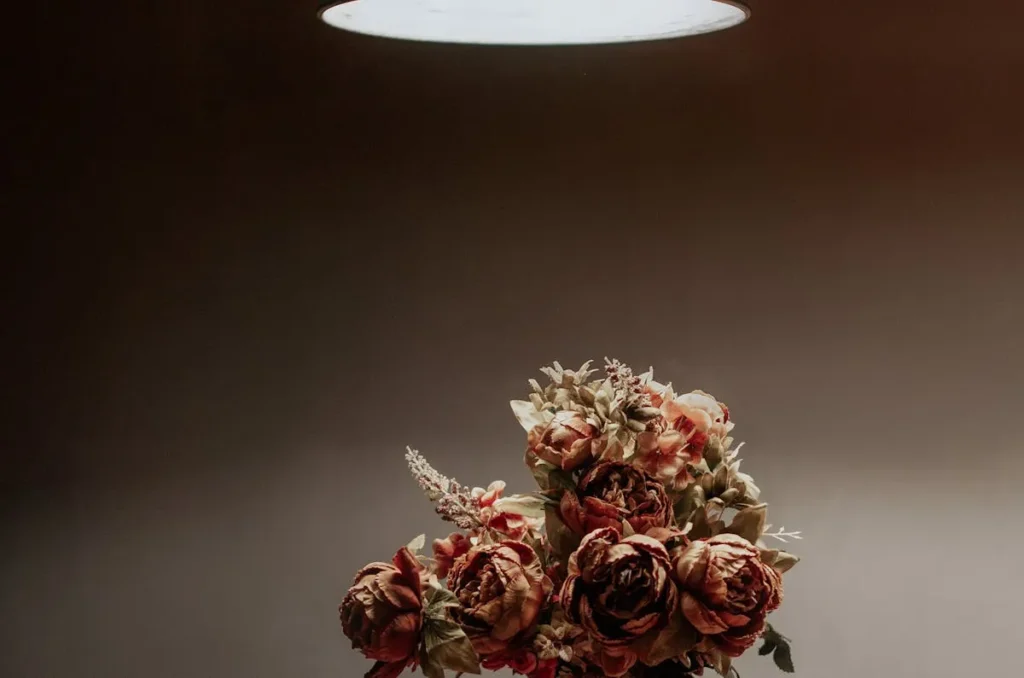
Color gets all the attention, but texture is the quiet hero that makes a room feel lush and lived-in. In an eclectic space, you can—and should—go big here.
Build a texture palette:
- Smooth: Glass, polished metal, lacquered wood
- Rough: Jute, rattan, raw wood, concrete
- Soft: Velvet, shearling, chunky knits, linen
- Shiny: Brass, silk, glossy ceramics
A sleek leather sofa (smooth) + a nubby wool throw (rough) + a velvet pillow (soft) + a brass lamp (shiny) = instant, cozy dimension.
7. Repeat Shapes for Subtle Harmony
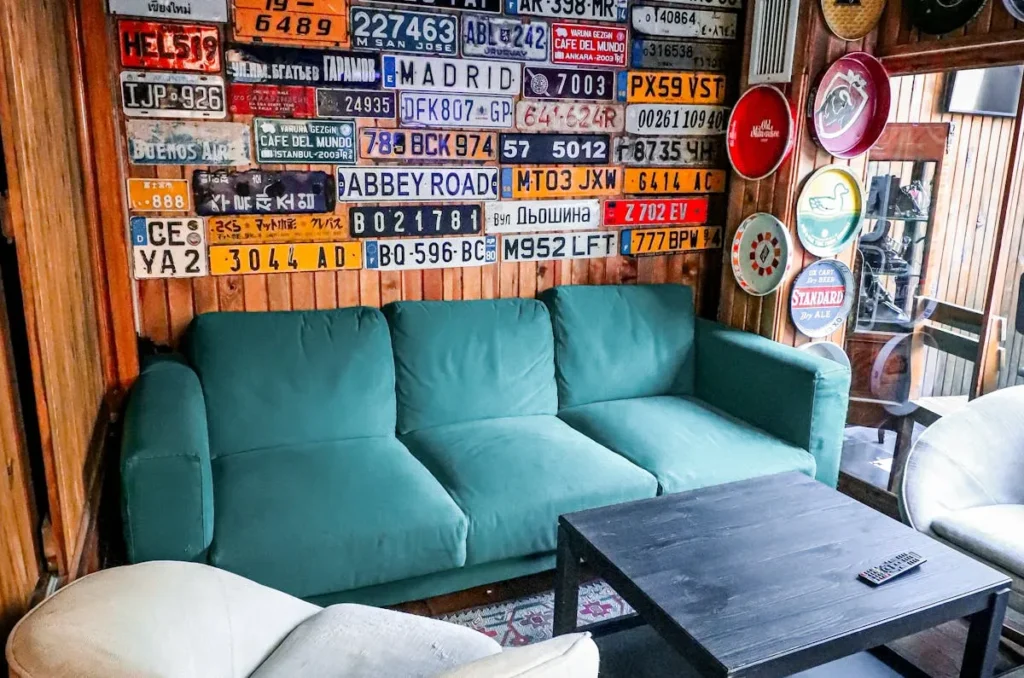
This is a ninja-level trick. Is there a curve in your coffee table? Find a similar arc in a mirror frame or the arm of a chair. Using geometric patterns on your pillows? Echo that shape in a side table.
This subtle repetition creates a hidden language in your room that your brain picks up on, making the whole space feel designed, not random.
8. Let One Pattern Take the Lead
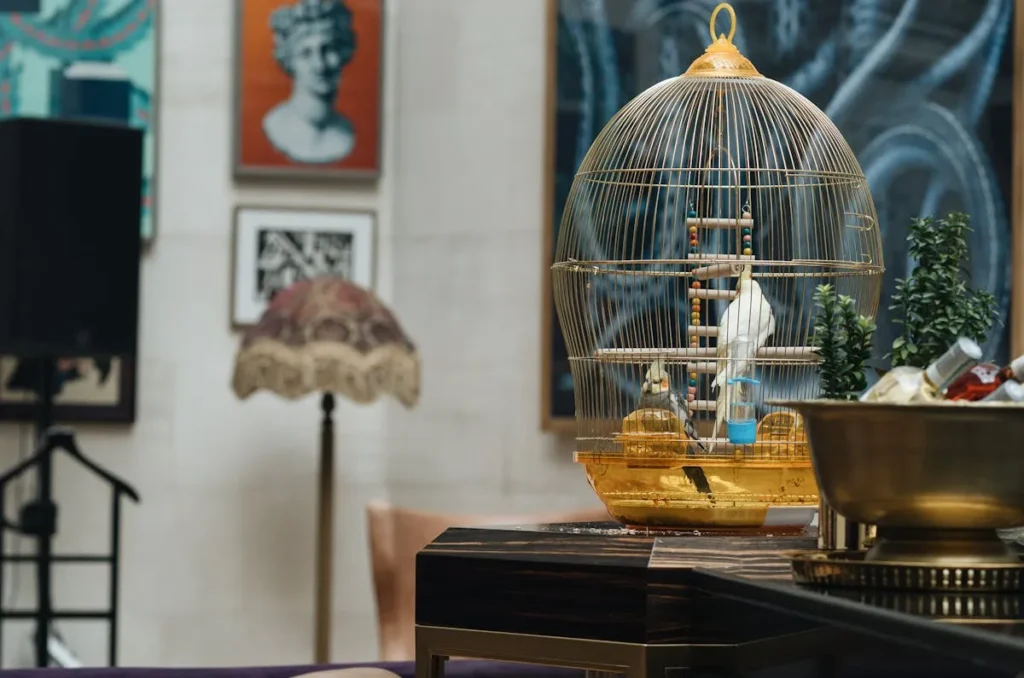
You want to mix patterns, but should they fight to the death? No, thank you.
- Choose a Hero: Select one larger-scale, busier pattern as your focal point. This could be on a statement armchair, a large area rug, or bold curtains.
- Supporting Players: Choose smaller-scale, simpler patterns in coordinating colors for throw pillows, a smaller rug, or ottoman upholstery.
- The Common Thread: Always ensure your mixed patterns share at least one or two colors from your established 60-30-10 palette.
9. Incorporate “Weird” Art and Personal Artifacts
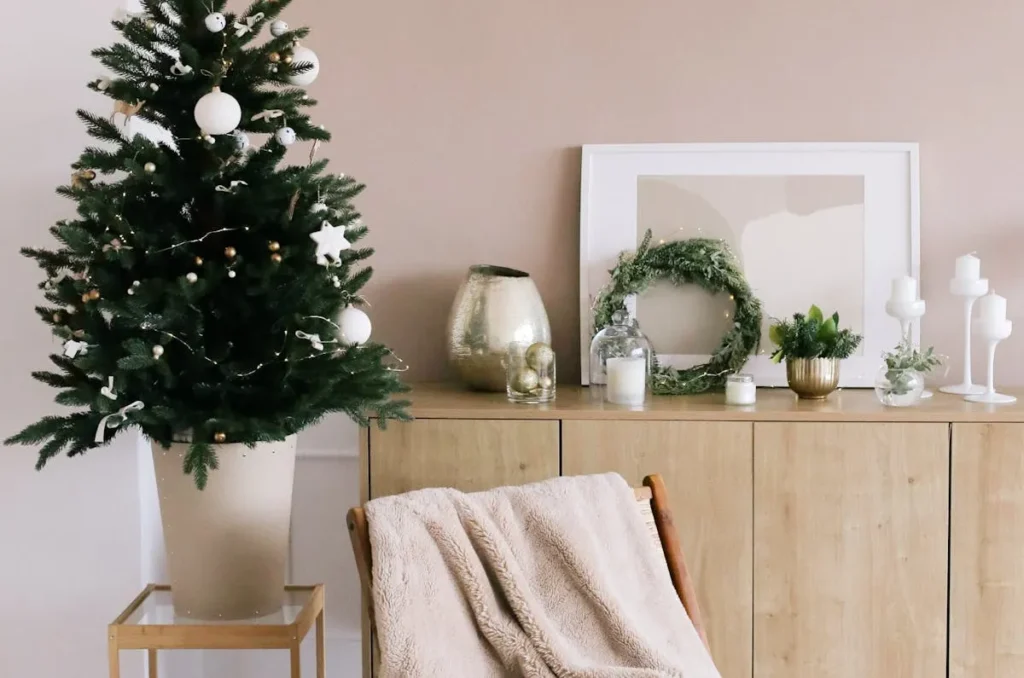
Your space should tell your story. That weird sculpture you bought on a trip? The vintage postcards you’ve collected? Display them!
- Why it works: These personal items are the soul of your eclectic space. They break up the “store-bought” vibe and inject genuine personality. A conversation-starting piece is worth a dozen generic decor items.
- Styling Tip: Give these quirky items pride of place. Don’t hide them on a crowded shelf. Style them simply on a console table or hang them solo on a small wall to let them shine.
10. Balance Old and New, Deliberately
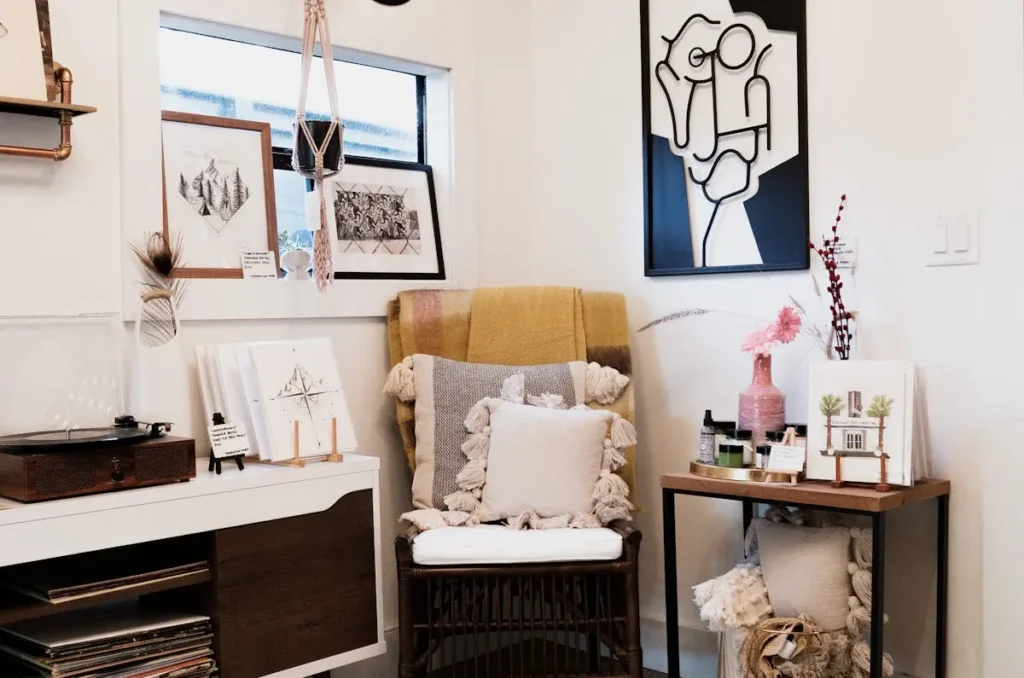
The heart of eclectic design is this mix. But it’s not 50/50 old junk and new stuff.
- A Modern Framework: Often, it works best to use clean-lined, modern furniture (sofa, shelving, rug) as your neutral base.
- Vintage Accents: Then, layer in character with vintage accent chairs, an antique trunk as a coffee table, old books, or vintage lamps.
- The Rule of Thumb: If your big pieces are vintage, maybe your accents are modern. It’s all about counterpoint. A sleek, new sofa makes a ornate, carved vintage mirror look even more special, and vice versa.
11. Don’t Forget Negative Space
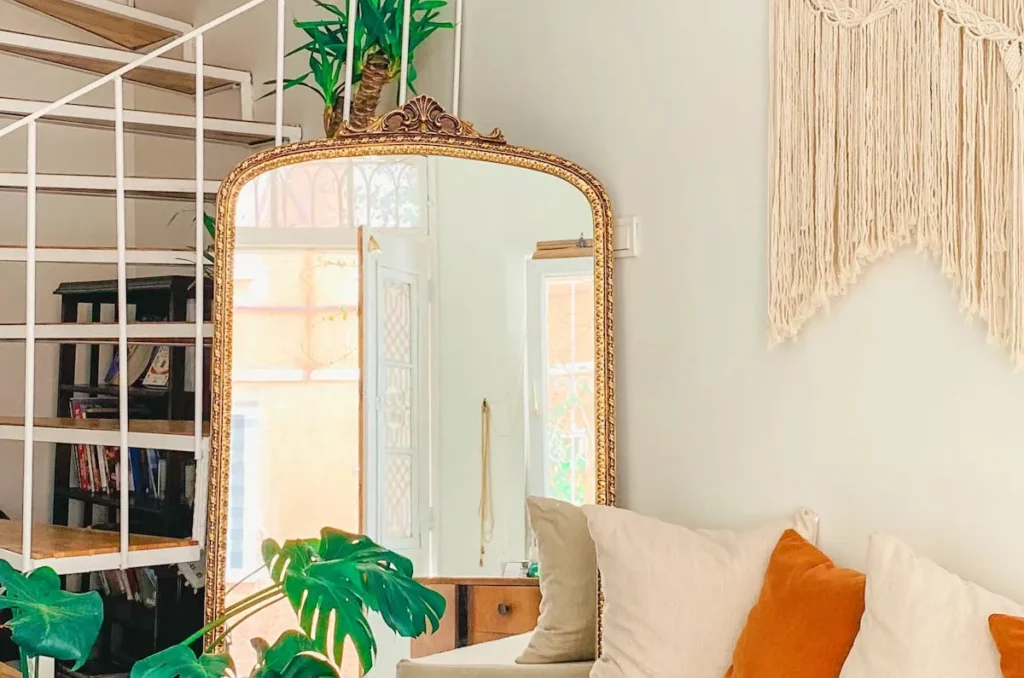
In the zeal to collect and layer, we often forget to let the room breathe. Negative space (empty wall areas, bare spots on a shelf) is not your enemy.
- What it does: It gives the eye a break and actually makes the objects you have displayed feel more important and less cluttered.
- Try This: After you style a shelf or console, take one or two items away. I promise, it will probably look better. Fighting the urge to fill every inch is the final boss of eclectic design.
12. Lighting is Everything: Layer It!
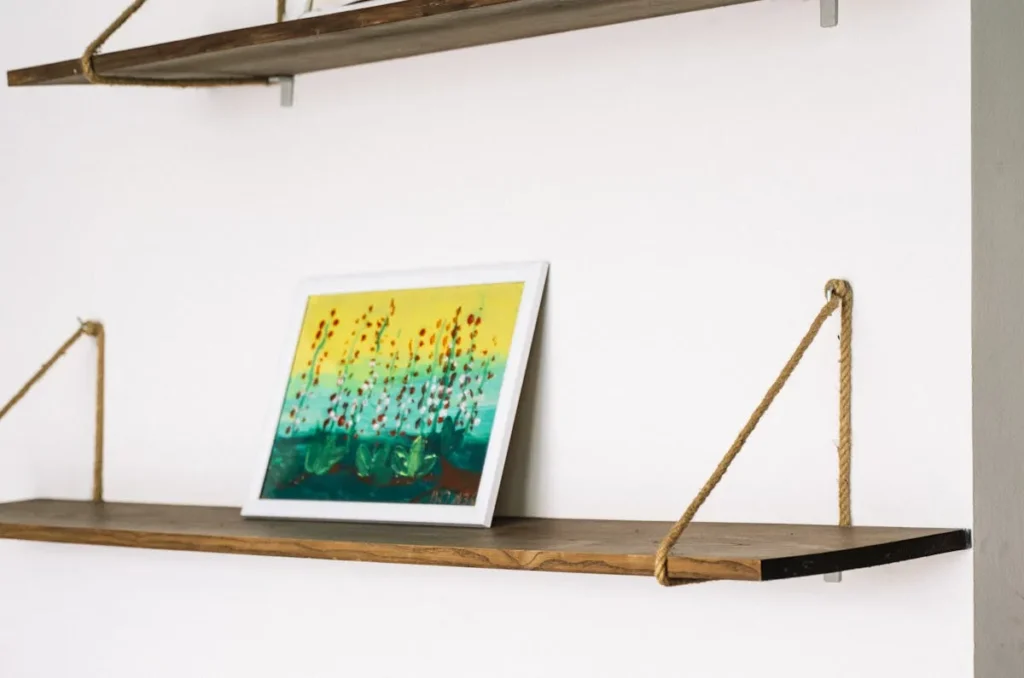
Overhead lighting alone is a crime in any living room, but especially in an eclectic one. You’re creating a mood, not interrogating your guests.
Build your lighting layers:
- Ambient: Overhead or central light (on a dimmer, please!).
- Task: Floor lamps by reading chairs, table lamps on consoles.
- Accent: Picture lights on art, small puck lights in shelves, candles.
Mix modern floor lamps with vintage ceramic table lamps. The different styles will unify under their shared, warm glow in the evening.
13. Books Are Your Best (and Cheapest) Decor

Colorful books, stacked horizontally and vertically, are the easiest way to add height, color, and a collected feel. Use them on coffee tables, shelves, and side tables. They instantly make a space feel lived-in and intellectual. Plus, you know, you can actually read them.
14. Add Something Organic in Every Corner
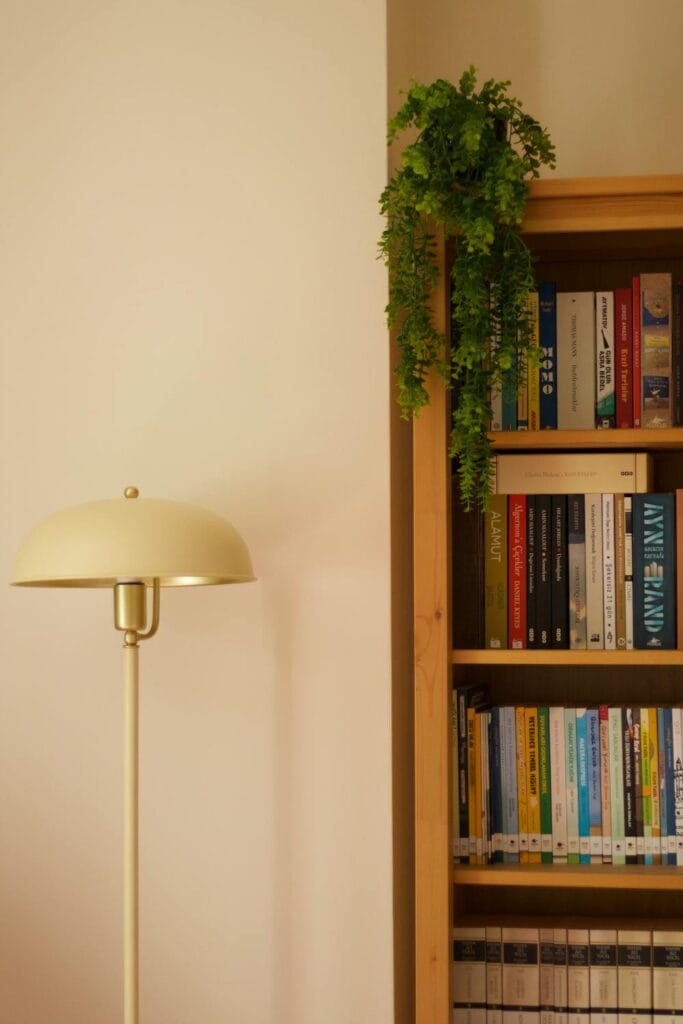
Life! Plants (real or very, very convincing fakes), a vase of fresh branches, a bowl of beautiful lemons, or a piece of driftwood. Organic elements soften the hard edges of furniture and add a vital, fresh energy. No eclectic room is complete without a little bit of nature crashing the party.
15. Define Zones in an Open Floor Plan
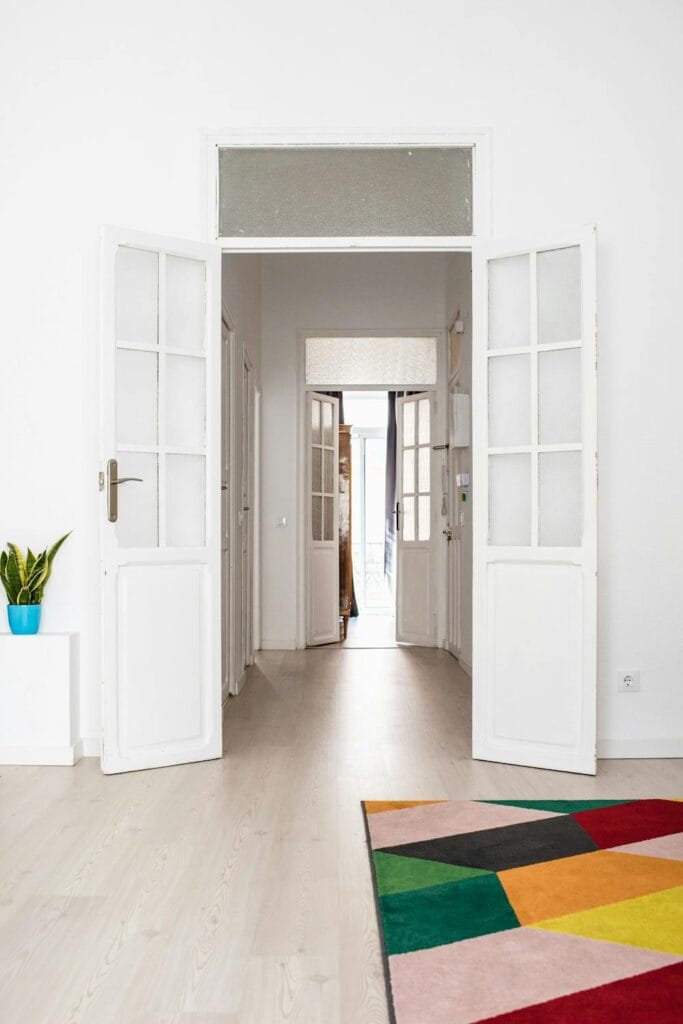
In a big, open space, use area rugs and furniture placement to create distinct “rooms.” A modern eclectic style is perfect for this—you can use a bohemian rug to define the seating area and a more graphic, modern one for the dining space. The mix of styles clearly separates the zones while keeping the overall look dynamic.
16. Commit to the “Third Thing” Principle
Struggling to make two very different pieces work together? Find a third thing that bridges them.
- Example: A modern gray sofa and a rustic wood chair feel disconnected. Add a throw pillow that has both gray and a rustic woven texture. Boom. Connected. This “third thing” can be a color, a material, or a shape that relates to both items.
17. Edit Ruthlessly (and Often)
Eclectic is not hoarding. It’s careful curation. Every few months, take a critical lap around your room. Does that item still spark joy? Does it fit the vibe? Be merciless. Store things away, swap them out, or donate them. A constantly evolving space is a healthy one.
18. Ignore One “Rule” On Purpose
Here’s the meta-rule: once you understand the principles, break one deliberately. It shows confidence. Hate the 60-30-10 rule? Go monochromatic with texture instead. The point is to move from accidental chaos to intentional, joyful rebellion.
19. Look Beyond the Furniture Store
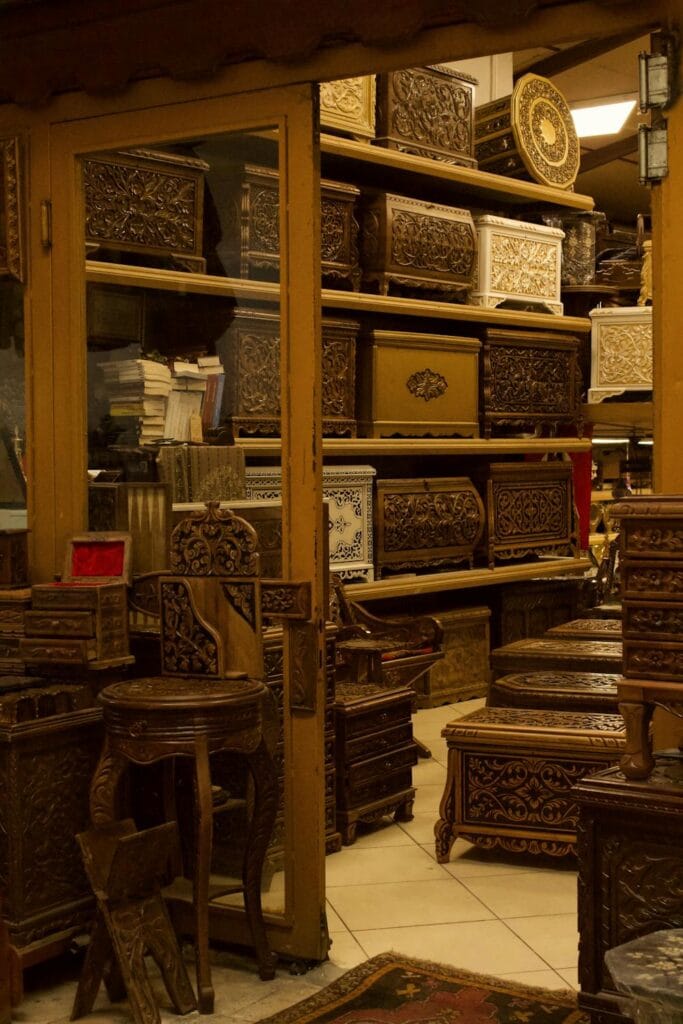
Your best pieces won’t come from a single catalog. Scout flea markets, Etsy, Facebook Marketplace, and even your grandparents’ attic. The story behind a piece adds to its power in your space.
20. Remember, It’s YOUR Vibe
At the end of the day, all these “ideas” are just tools. The only rule that truly matters is that your space makes you happy. Do you love that pink flamingo statue next to your serious modernist painting? Then rock it. Confidence is the ultimate cohesive element.
So, there you have it. Twenty ways to channel the chaos into creativity. Start with one or two ideas that resonate with you. Maybe this weekend you’ll play with texture or finally tackle that gallery wall. Remember, your home is a living project, not a finished museum. Have fun with it, laugh at the mishaps, and create a space that feels unmistakably, perfectly you. Now go mix something!