
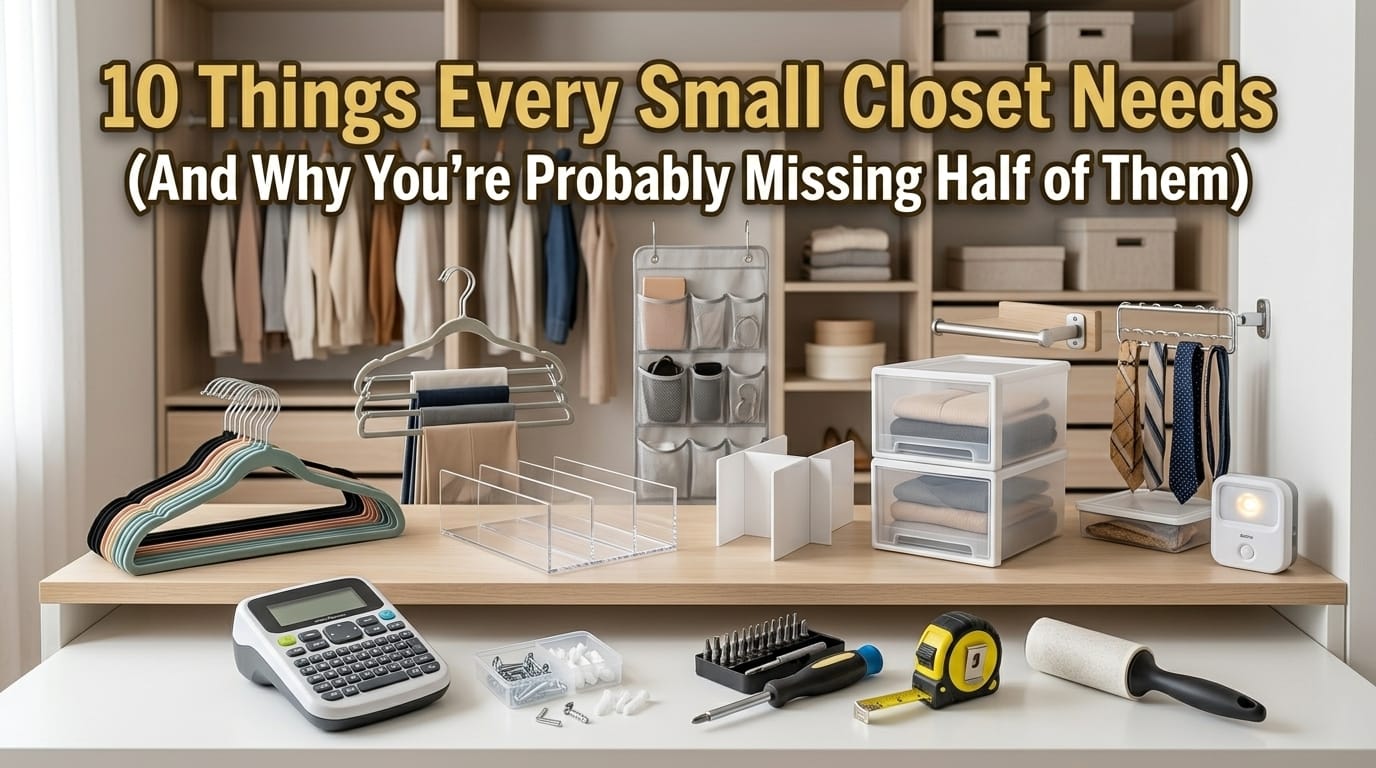
Look, I get it. You open your closet door every morning and immediately feel defeated. Clothes are crammed together like sardines, shoes are playing hide-and-seek under hanging stuff, and you’re pretty sure there’s a scarf in there you haven’t seen since 2019. Small closets are the ultimate test of adulting, and honestly? Most of us are failing miserably.
Here’s the thing though – your tiny closet doesn’t have to be a source of daily frustration. After transforming my own shoebox-sized closet (seriously, I’ve seen bigger pantries), I’ve learned that it’s not about having more space. It’s about having the right stuff to maximize what you’ve got. And no, you don’t need to spend a fortune or become a professional organizer to make it happen.
Let me walk you through the 10 essentials that literally doubled my closet capacity and saved my sanity. These aren’t just random items I’m throwing at you – they’re battle-tested solutions that actually work in real-world tiny spaces.
Slim Velvet Hangers: The Non-Negotiable MVP

Okay, if you take nothing else from this article, take this: ditch those chunky plastic hangers your dry cleaner keeps giving you. Right now. Like, after you finish reading this sentence.
Velvet hangers are absolute game-changers, and I’m not being dramatic. These thin beauties take up 40-50% less space than regular hangers, which means you can literally fit twice as many clothes on the same rod. When I switched to all velvet hangers, I went from squishing 30 shirts onto my rod to comfortably hanging 60. That’s not an exaggeration – that’s just basic math winning.
Why Velvet Specifically?
The grippy texture means your silky tops and tank tops actually stay put instead of doing that annoying slide-to-the-floor thing. Plus, they look clean and uniform, which makes your closet feel less chaotic even when you’re running late and throwing clothes everywhere.
Pro tip: Buy them in bulk (50-packs run about $15-20) and commit to the purge. Get rid of every mismatched hanger situation you’ve got going on. Your closet will thank you, and honestly, so will your morning routine.
Clear Storage Bins: Because “Out of Sight” Shouldn’t Mean “Lost Forever”
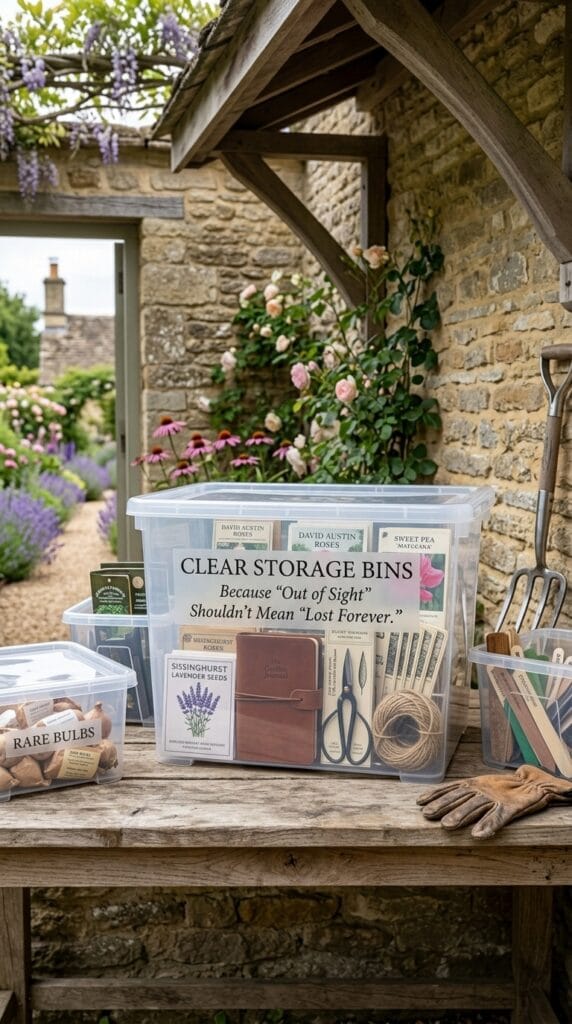
Ever bought something, forgot you owned it, then bought it again? Yeah, me too. That stops with clear bins.
I’m talking about those stackable plastic containers that let you see exactly what’s inside without playing the guessing game. They’re perfect for sweaters, t-shirts, workout gear, or anything you fold. You can fit twice as many items in bins versus loose stacking because you’re using vertical space efficiently and nothing’s toppling over every time you grab something.
The Clear Advantage
Here’s where people mess up – they buy cute wicker baskets or fabric bins because they look nice on Pinterest. But guess what? You’ll never actually know what’s in them without rummaging around like a raccoon in a dumpster. Clear bins solve this instantly.
Stack them on shelves, slide them under hanging clothes, or use them for seasonal rotation. I keep my winter sweaters in bins during summer and swap them out when the weather changes. Game. Changer.
Drawer Dividers: Ending the Sock Black Hole Crisis
Let’s be honest – your sock drawer is probably a disaster zone. Same with underwear, accessories, and anything small that gets tossed in there. Drawer dividers turn chaos into calm in about 5 minutes flat.
I use adjustable fabric dividers that fit any drawer size (around $12 for a set), and now I can actually find matching socks without doing laundry first. Revolutionary, I know 🙂
Beyond Socks
Use dividers for:
- Jewelry (no more tangled necklaces)
- Belts rolled up
- Workout headbands
- That random tech cable collection
The key is creating designated homes for stuff so you’re not just shoving everything in and hoping for the best.
Over-the-Door Organizers: Free Real Estate You’re Ignoring
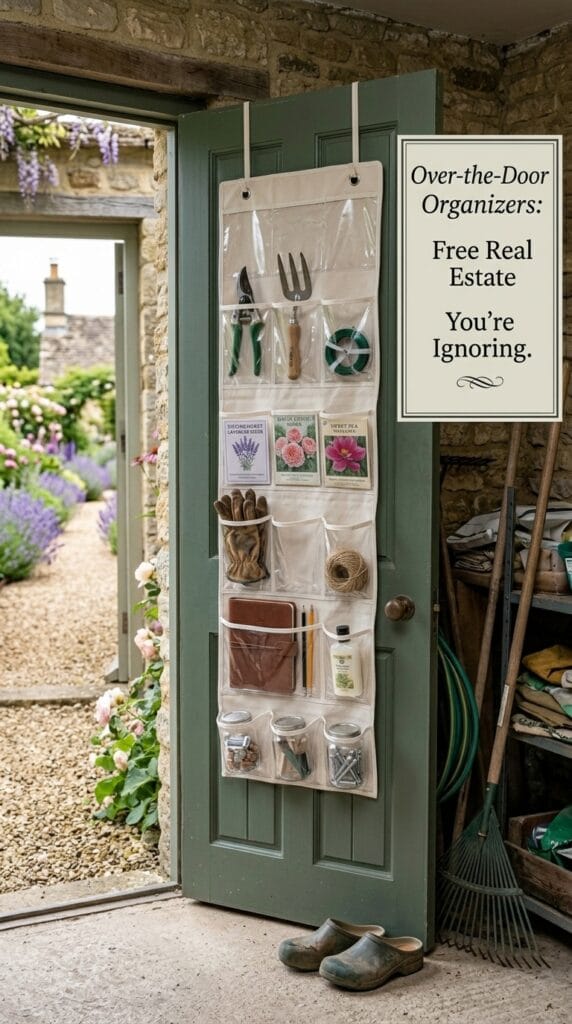
That back of your closet door? It’s prime real estate you’re probably wasting. An over-the-door organizer costs like $15-30 and instantly gives you storage for 20-40 shoes, bags, scarves, or whatever’s currently living on your floor.
I was skeptical at first (will it hold? will it damage the door?), but after two years of daily use, mine’s still going strong with zero damage. The hooks just slip over the top – no drilling, no tools, no commitment issues.
What to Store There
IMO, shoes are the best use because they’re easy to see and grab. But I’ve also used mine for:
- Clutches and small purses
- Winter accessories (hats, gloves, scarves)
- Hair styling tools
- Cleaning supplies (if it’s a hallway closet)
Ever wondered why you keep tripping over shoes? This fixes that problem permanently.
Tension Rods: The Secret to Doubling Your Hanging Space
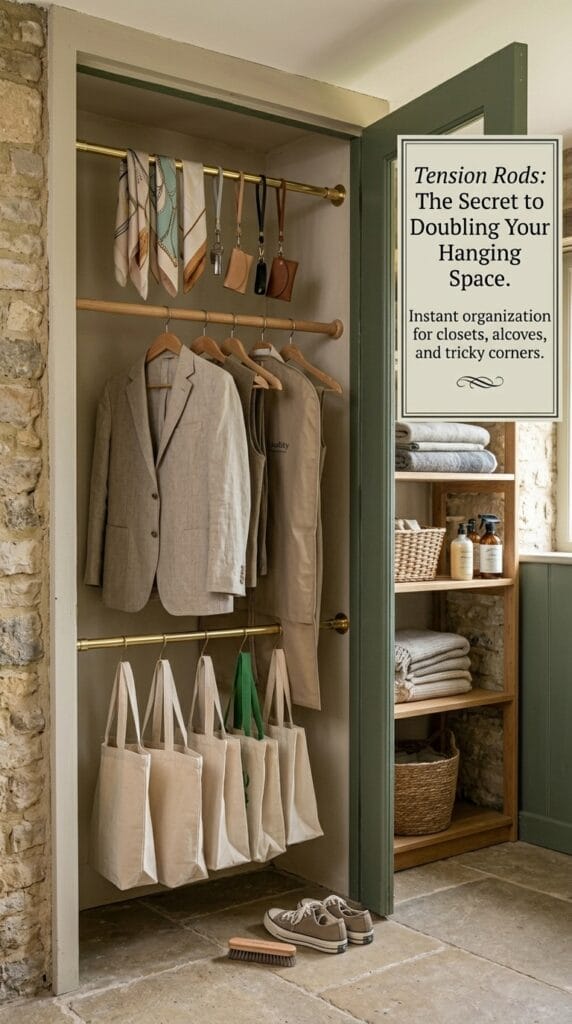
Here’s a hack that feels like cheating: install a tension rod below your main hanging rod for shorter items. Suddenly you’ve got double-deck hanging for shirts, skirts, and folded pants.
Tension rods are adjustable (usually 24-40 inches), cost about $10, and require zero tools or holes. Just twist them into place and boom – you’ve doubled your hanging capacity. I use mine for tank tops and short-sleeve shirts on the bottom, with longer items up top.
The Math is Simple
If you’ve got 8 feet of hanging space, you’re really getting 16 feet when you double-hang. That’s like having a second closet without moving or renovating. Pretty sweet deal if you ask me.
Shoe Racks: Because Floor Space is Sacred
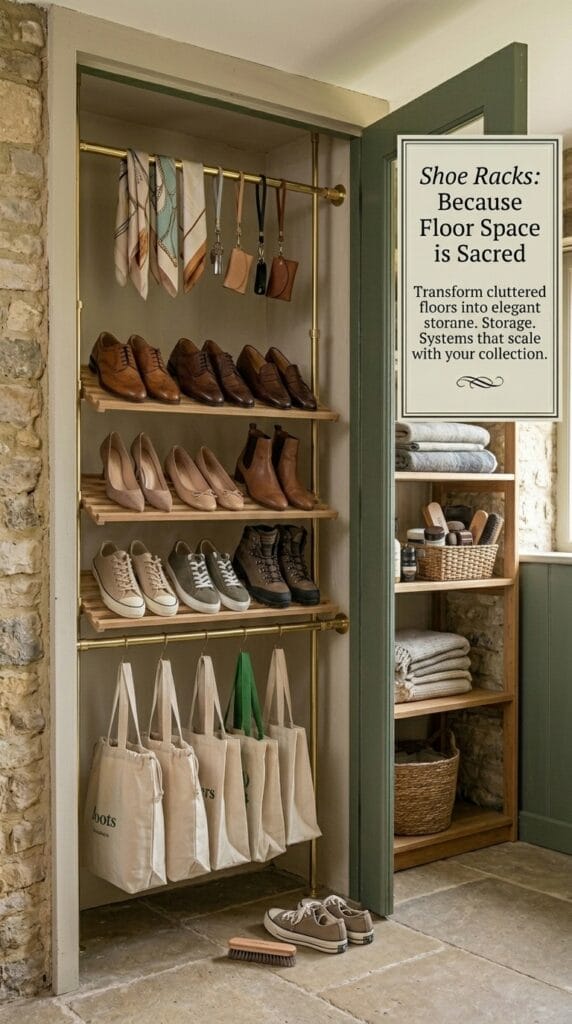
Shoes scattered on the closet floor? Amateur hour. A tiered shoe rack lifts everything off the ground and makes use of vertical space you’re currently wasting.
I switched from floor-pile chaos to a narrow 9-inch-deep rack that holds 18 pairs, and suddenly I had actual floor space to stand in my closet. Wild concept, right? Plus, when you can see all your shoes at once, you actually wear more of them instead of defaulting to the same three pairs.
Rack vs. Hanging Slots
- Tiered racks: Better for boots and heavier shoes
- Hanging fabric slots: Great for flats and sneakers
- Stackable individual holders: Perfect if you rotate seasonally
Pick what works for your shoe collection, but for the love of organization, get them off the floor.
LED Lighting: Seeing is Believing (And Finding)
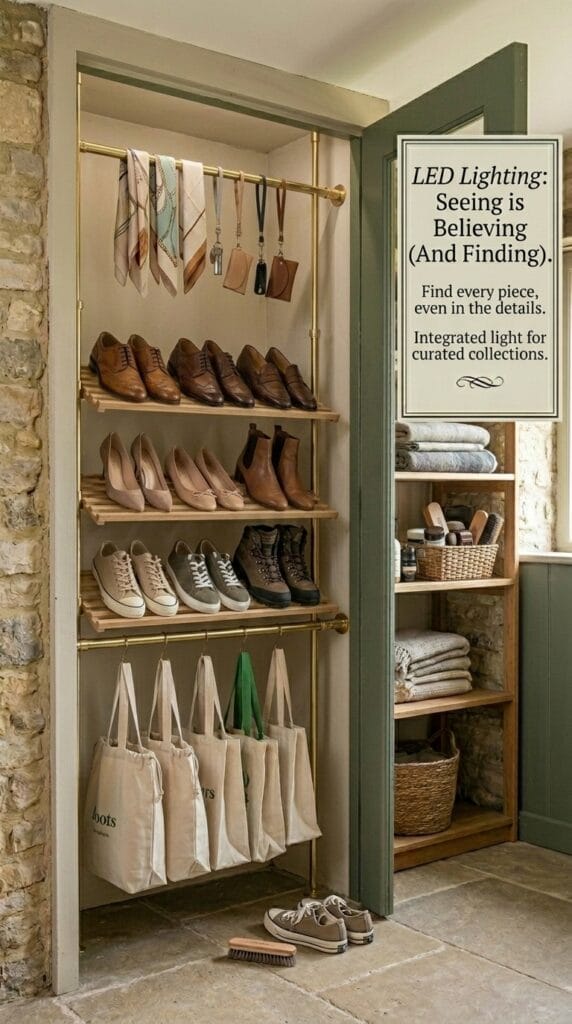
You know that corner of your closet where stuff goes to die because it’s too dark to see? LED strip lights fix that problem for like $15-40.
I added battery-powered motion-sensor lights to my closet shelves, and it’s honestly one of the best upgrades I’ve made. Now I can actually see colors accurately when picking outfits, and I discovered clothes I forgot I owned hiding in the dark corners.
Quick Install Options
- Adhesive LED strips: Stick anywhere, USB rechargeable
- Battery-powered puck lights: Great for shelves
- Motion-sensor bars: Turn on automatically when you open the door
FYI, good lighting makes your tiny closet feel bigger and more boutique-like. It’s weirdly mood-boosting to have a well-lit closet.
Shelf Dividers: Stopping the Sweater Avalanche
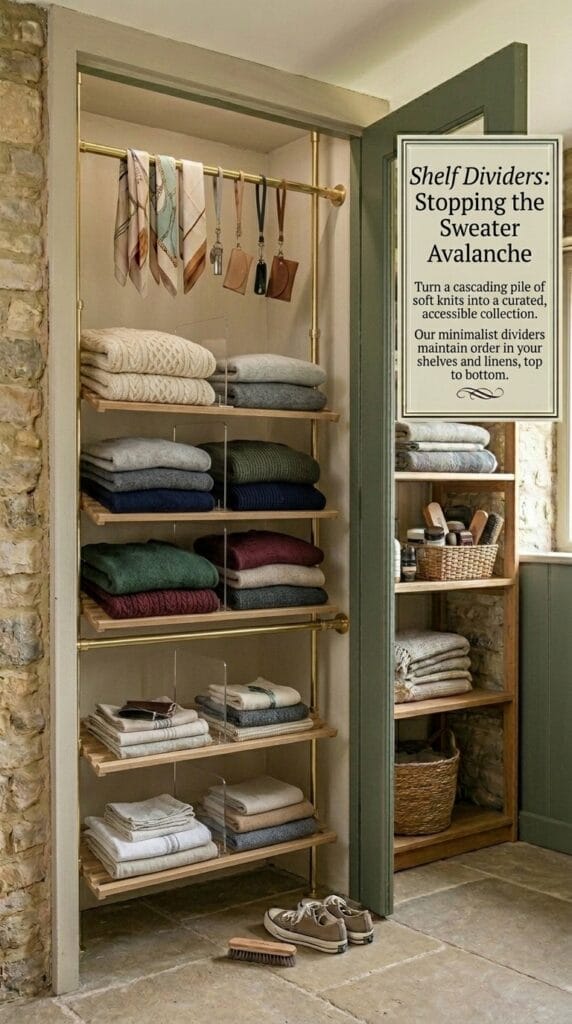
Ever neatly stack sweaters on a shelf, only to have them topple over into a chaotic pile by next Tuesday? Shelf dividers are those simple acrylic or fabric barriers that keep stacks separate and upright.
They’re stupid simple but crazy effective. I can fit 20 folded items on a shelf with dividers versus maybe 8 before everything collapsed. They prevent that domino effect where pulling out one thing destroys your entire organizing system.
Where to Use Them
| Location | What to Store |
|---|---|
| Top shelves | Purses, storage bins |
| Middle shelves | Folded sweaters, jeans |
| Lower shelves | Bags, workout gear |
Honestly, once you use shelf dividers, you’ll wonder how you lived without them. They’re that clutch.
Hooks and Pegboards: Accessories Finally Have a Home
Belts, scarves, hats, bags – all that “where the heck do I put this?” stuff – belongs on wall-mounted hooks or a small pegboard.
I installed 6 heavy-duty hooks on my closet wall (about $10 for the set), and now my bags aren’t stacked in a precarious tower and my belts aren’t tangled in a drawer. Everything hangs neatly, visible and accessible. Revolutionary.
The Pegboard Advantage
If you’re feeling fancy, a mini pegboard lets you customize and rearrange your storage as your collection changes. Add hooks for necklaces, small baskets for sunglasses, or clips for hats. It’s like adult Legos but actually useful.
Step Stool: Because You’ve Got 8 Feet of Height to Use
If you’re not using the top shelf of your closet because you can’t reach it comfortably, you’re wasting valuable real estate. A small folding step stool (around $15-25) unlocks that entire upper zone for storage.
I keep off-season stuff and less-used items up top, but now I can actually access them without doing some dangerous chair-balancing act. Safety aside, it just makes sense to use 100% of your vertical space when you’re working with limited square footage.
What Goes Up Top
- Seasonal clothing in bins
- Extra bedding
- Luggage (stuff smaller bags inside larger ones)
- Fancy occasion wear you rarely need
Just make sure whatever you store up there is properly contained so you’re not dodging falling objects every time you reach up.
Bonus: Vacuum Storage Bags for Seasonal Rotation
Okay, this is technically item 11, but it’s too good not to mention. Vacuum storage bags compress bulky winter coats and sweaters down to like 20% of their original size.
I rotate my wardrobe seasonally – winter stuff gets vacuum-sealed and stored under my bed during summer, then we swap when the weather changes. This way my small closet only holds what I’m actually wearing, not a year’s worth of clothes crammed in there.
The Compression Game
A 6-pack of vacuum bags runs about $15, and you can compress:
- Puffy winter coats
- Thick sweaters
- Comforters and blankets
- Pillows you’re storing
Just roll them up, seal the zipper, and suck out the air with your vacuum hose. They shrink down to practically nothing, giving you back tons of closet space.
Your Action Plan: Where to Start Without Losing Your Mind
Look, I know that’s a lot of stuff, and you’re probably thinking “do I really need ALL of this?” The answer is… probably not all at once. Here’s how I’d prioritize if I were starting over:
Week 1: The Foundation
- Purge first – seriously, Marie Kondo that stuff for 20 minutes
- Buy velvet hangers – biggest impact for the money
- Add clear bins – organize what you’re keeping
- Install drawer dividers – tame the small stuff chaos
Cost: About $50-70
Impact: You’ll see 50% improvement immediately
Week 2: Going Vertical
- Get an over-door organizer – free up floor space
- Add a tension rod – double your hanging capacity
- Install hooks – accessories off the floor
Cost: Another $40-50
Impact: You’re now using 3D space like a pro
Week 3: The Finishing Touches
- Add lighting – see everything clearly
- Install shelf dividers – prevent avalanches
- Get a step stool – access the high frontier
Cost: Final $40-60
Total investment: $130-180
Results: You’ve basically doubled your usable closet space
The Real Talk: Common Mistakes to Avoid
After watching countless people tackle their small closets (and making plenty of mistakes myself), here are the things NOT to do:
Don’t over-buy storage solutions before purging. I made this mistake and ended up with bins I didn’t need. Declutter first, then buy what fits your actual remaining stuff.
Don’t go all-in on one system. Mix and match – some stuff needs bins, some needs hanging, some needs hooks. One-size-fits-all approaches don’t work in small spaces.
Don’t forget to measure. That cute shelf organizer? Useless if it doesn’t fit your actual shelf depth. Measure your space before buying anything. (Ask me how I know this… ugh.)
Don’t make it complicated. The best organizing system is one you’ll actually maintain. Keep it simple enough that you’ll put things back where they belong.
The Bottom Line: Small Closets Can Actually Work
Here’s what nobody tells you about small closet organization: it’s not about having less stuff (though that helps). It’s about being smarter with the space you’ve got.
My closet is still small – nothing changed about the actual dimensions. But now I can fit twice as much stuff, find everything in seconds, and I don’t want to cry every morning when getting dressed. That’s worth way more than the $200 I spent making it happen.
Start with the basics (hangers, bins, dividers), then build from there. You don’t need everything at once, and you definitely don’t need to spend a fortune. Just commit to actually implementing these solutions instead of bookmarking this article and forgetting about it 🙂
Your mornings will be easier, your stress will be lower, and you might actually wear more of your clothes instead of defaulting to the same safe options sitting at eye level. Plus, there’s something genuinely satisfying about opening a well-organized closet. It’s like giving yourself a little win before the day even starts.
Now go measure your closet, order some velvet hangers, and reclaim that space. Future you will be seriously grateful. Trust me on this one.