
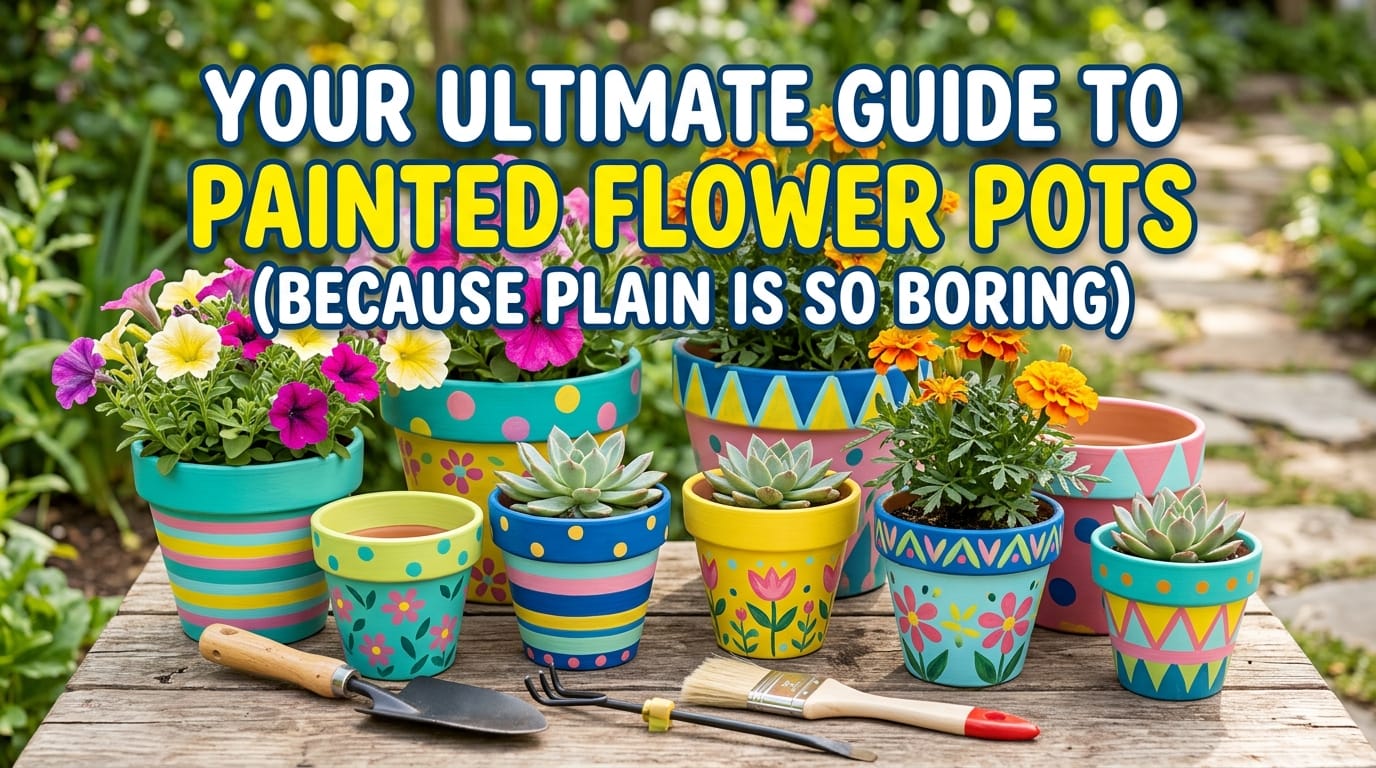
Look, I get it. You walk past those boring terracotta pots at the garden center and think, “Meh.” But here’s the thing—those plain Jane pots are literally begging for a makeover. Painted flower pots have become the DIY obsession we didn’t know we needed, and honestly? It’s about time. Whether you’re jazzing up your patio, hunting for the perfect gift for that friend who has everything, or just trying to avoid looking at another sad brown pot, painting them is ridiculously satisfying. Plus, it’s way cheaper than therapy, and you get cute planters out of it. Win-win, right?
Why Everyone’s Obsessed with Painting Flower Pots Right Now
So what’s the big deal? Why is everyone suddenly hosting pot-painting parties and flooding social media with their creations? Well, for starters, it’s insanely easy. You don’t need to be Picasso to make something that looks amazing. I’ve seen kids create better designs than some stuff at overpriced boutiques, FYI.
The popularity spike in 2025 isn’t random. People are craving hands-on activities that don’t involve staring at screens. Family gatherings, girls’ days, even kiddie birthday parties—everyone’s incorporating pot painting. It’s creative, social, and you actually end up with something useful instead of another dust collector.
Here’s what makes painted pots so appealing:
- Personalization is king – Your style, your colors, your rules
- Budget-friendly magic – Transform $3 thrift store finds into statement pieces
- Therapeutic AF – There’s something zen about watching paint glide onto terracotta
- Gift-giving gold – Way more thoughtful than another generic candle
And let’s be real, there’s something deeply satisfying about taking something plain and making it uniquely yours. It’s like giving your plants a stylish outfit instead of leaving them naked in their terracotta birthday suits.
What You Actually Need (No Fancy Stuff Required)
Before you run to the craft store and blow your budget on supplies you’ll never use again, let me save you some cash. You seriously don’t need much to get started, and most of this stuff you might already have lying around.
The Essential Shopping List
Pots – Obviously. Hit up thrift stores, dollar stores, or garden centers. Unglazed terracotta works best because the paint actually sticks. I’ve scored pots for under $2 each, so don’t overpay.
Paint – Here’s where people get confused. You want outdoor acrylic paint if these babies are living outside. Brands like Patio Paints or ceramic-safe acrylics work great. Spray paint is your BFF for large pots or when you’re feeling lazy (no judgment). Metallic paints create that fancy Instagram-worthy shimmer.
Brushes – Foam brushes are perfect for base coats. Grab a few regular brushes for detail work. Nothing expensive—seriously, save the fancy brushes for actual art projects.
Sealers – This is non-negotiable if you want your masterpiece to survive more than three weeks. Clay pot sealer for the inside, clear coat sealer for the outside. Trust me on this.
Design Tools – Painter’s tape for stripes and geometric designs, stencils if you’re not confident freehanding, sponges for texture. Get creative with what you’ve got.
The “Oops, I Forgot” Extras
Don’t forget sandpaper (250-grit is perfect), a damp rag for cleaning, and newspapers or a drop cloth unless you want rainbow splatters on your driveway. Been there, done that, got the permanently stained concrete to prove it. :/
The Foolproof Step-by-Step Process (Even If You’re Craft-Challenged)
Alright, let’s get into the actual how-to. I’m breaking this down so simply that even my friend who “can’t even draw stick figures” successfully made gorgeous pots. If she can do it, you absolutely can.
Step 1: Prep Like Your Life Depends On It
This is where people get lazy and then wonder why their paint peels off faster than a bad sunburn. Don’t skip this part.
Clean your pots thoroughly. I mean actually clean them—no dirt, no dust, no mystery residue. Use a damp rag and let them dry completely. Like, bone dry. We’re talking 24-48 hours if they’ve been washed.
Pro move: Apply clay pot sealer to the inside and bottom. This prevents water from seeping through and destroying your paint job from the inside out. Learned this the hard way when my first attempt bubbled up like a bad pizza. Not cute.
Step 2: Base Coat (Or Don’t—You’re the Boss)
Here’s where you decide your vibe. Want that natural terracotta to peek through? Skip the base coat. Going for bold, opaque colors? You’ll need 2-3 thin coats of paint.
Key things to remember:
- Thin coats dry faster and look better than thick gloppy ones
- Work in broad, smooth strokes with a foam brush
- Let each coat dry 1-2 hours before adding the next
- Avoid painting over the drainage hole unless you hate your plants
I thin my paint slightly with water for super smooth coverage. Game changer. Also, work in sections if you’re impatient like me—paint the rim, take a snack break, come back for the body.
Step 3: Get Wild with Your Design
This is the fun part where your personality shines through. Ever wondered why some people’s designs look professionally done while others look like a toddler got loose with the paint? It’s all in the technique.
Stripe lovers: Use painter’s tape to mark off sections. Paint between the lines, let it dry, peel off the tape slowly. Vertical stripes make pots look taller, horizontal ones make them look wider. Mind. Blown.
Stencil squad: Tape your stencil down firmly. Use a stippling motion (dab, don’t brush) to prevent paint from sneaking under the edges. Two to three light coats beat one heavy coat every time.
Freehand fearless: Dots that turn into flowers, abstract patterns, geometric shapes—just go for it. Worst case? Paint over it and try again. Nobody’s judging.
I’ve seen people create amazing stuff with just dots and lines. You don’t need to be an artist. One friend painted simple bees using just dots and dashes, and everyone at the party went crazy for them.
Step 4: The Detail Work That Makes It Pop
Once your base design is dry, this is where you add those little touches that make people ask, “Wait, you MADE that?”
Add metallic accents with gold or silver paint. Outline shapes for definition. Add a contrasting color to the rim. Try a distressed look by lightly sanding edges after everything’s dry—instant vintage vibes.
Quick comparison of popular techniques:
| Technique | Difficulty | Time | Best For |
|---|---|---|---|
| Solid color blocks | Easy | 30 mins | Beginners, modern looks |
| Stripes | Easy | 1 hour | Clean, contemporary style |
| Stencils | Medium | 1-2 hours | Detailed patterns, consistency |
| Freehand | Varies | 1-3 hours | Unique, artistic pieces |
| Metallic accents | Easy | 20 mins | Adding sophistication |
Step 5: Seal the Deal (Literally)
Remember that story about the person whose beautiful pots bubbled up and got ruined within weeks? Yeah, they forgot to seal them. Don’t be that person.
After everything is completely dry—and I mean wait a full 24 hours—apply at least two coats of clear sealer. DuraClear, matte varnish, whatever you prefer. This protects against weather, water, and general life happening to your pots.
Let it cure for another 1-2 days before actually planting anything. I know waiting sucks, but patience now means your pots will still look amazing next season instead of looking like sad, chipped messes.
Design Ideas That’ll Blow Your Mind
Stuck staring at blank pots wondering where to start? I’ve got you. Here are some ideas that consistently get gasps and compliments, ranging from “I could totally do that” to “maybe after some practice.”
Easy Wins for Beginners
The Classic Two-Tone: Paint the rim one vibrant color, keep the base natural terracotta or a neutral. Simple, foolproof, always looks intentional.
Geometric Minimalist: Use painter’s tape to create triangles, diamonds, or abstract shapes. Paint in contrasting colors. Remove tape. Look like a design genius.
Ombre Effect: Start with your darkest color at the bottom, gradually add white to each section as you move up. Blends the colors slightly where they meet. Very Pinterest-worthy.
Intermediate Level-Up Ideas
Boho Dream: Think tropical leaves, abstract patterns, mixed metallics. Layer different stencils, don’t worry about perfect precision—the slightly imperfect look is part of the charm.
Color Block Party: Divide the pot into sections with tape, paint each a different bold color. Modern, playful, and surprisingly forgiving of mistakes.
Vintage Charm: Use chalk paint, let it dry, then distress with sandpaper. Add a crackle medium between paint layers for authentic aged vibes.
Show-Off Advanced Projects
X-Ray Flower Effect: Use a Cricut to cut intricate flower outlines, paint through them. When you peel off the stencil, the terracotta shows through in flower shapes against your painted background. Stunning.
Custom Typography: Cut out words or phrases with your Cricut, apply as stencils. Perfect for gifting—”Grandma’s Garden,” “Herb Garden,” or whatever makes sense.
Multi-Pot Masterpiece: Paint a series of pots in complementary colors and patterns. Stack them or display together for major visual impact.
Design Inspiration by Season
Spring: Pastels, flowers, butterflies, fresh greens
Summer: Bright citrus colors, tropical vibes, nautical stripes
Fall: Warm oranges, browns, leaf patterns, rustic textures
Winter: Metallic silvers, whites, geometric snowflakes (though honestly, who’s painting pots in winter? IMO, that’s indoor craft project season)
Real Talk: What People Are Actually Saying
Nothing sells an idea like hearing from people who’ve actually done it. I’ve collected some experiences from the DIY trenches that are both helpful and hilarious.
One blogger straight-up admitted: When she skipped sealing her pots, her “beautiful paint job bubbled up and was ruined within weeks.” She learned her lesson the expensive way so we don’t have to. That’s community service right there.
Party Hosting Success Stories
A mom threw a summer pot-painting party where kids and adults all decorated their own pots. She set up newspapers everywhere (smart), provided garden paints, and let people loose with brushes. Everyone went home with a planted pot as a party favor. The kids made dots that became flowers and bees—simple but adorable. She said it took only 1-2 hours for everything to dry in the sun, and the creative bonding was worth every bit of setup.
Someone else hosted a “girls’ day” pot-painting session with snacks and drinks, describing it as “so much fun!” with sparkle emojis galore. Sometimes the activity matters less than the excuse to hang out, but having cute pots as souvenirs doesn’t hurt.
Gift-Giving Wins
Elementary school kids painted pots, sealed them with clear coat, added plants and ribbons, then gave them to grandma for Mother’s Day. Her reaction? She loved the personalized keepsake. The blog specifically mentioned these were perfect “for non-green-thumbs”—you just need the pot to look good, the plant is optional. 🙂
The Thrift Store Success
One creator (shoutout to Serena Appiah from Thrift Diving) bought cheap thrift store planters, spray-painted them with Rustoleum, and showed the before/after transformation. Result? Vibrant, durable outdoor pots achieved in under an hour for probably under $10 total. That’s the kind of bang-for-your-buck I can get behind.
Troubleshooting When Things Go Wrong (Because They Will)
Let’s keep it real—sometimes your pots turn out less “Instagram-worthy” and more “what happened here?” Don’t panic. Most mistakes are fixable.
Common Problems & Actual Solutions
Paint is peeling or chipping: You either didn’t seal properly or used the wrong paint type. Indoor acrylic on outdoor pots = disaster waiting to happen. Sand it down, start over with outdoor-rated paint, seal properly this time.
Colors look streaky or uneven: You probably applied coats too thick or didn’t let them dry between applications. Thin your paint slightly with water and work in layers. Patience grasshopper.
Stencil bled under the edges: Tape wasn’t secure enough or you used too much paint. Press stencils down firmly, use a stippling motion instead of brushing, and remove tape while paint is still slightly wet.
Design doesn’t match what you envisioned: Join the club. Sometimes you just need to embrace happy accidents. Or paint over it. Black or white base coats cover almost anything.
Pro Tips from Someone Who’s Made All the Mistakes
Working on large pots? Spray paint is your friend. Brush painting a giant planter will test your patience and probably look streaky.
Want ultra-smooth finishes? Sand your pot lightly before painting. It helps paint adhere better and creates a smoother surface.
Painting with kids? Stick to simple techniques like dots, stripes, or sponge painting. Save intricate stencils for your solo projects unless you enjoy chaos.
Outdoor durability matters? Re-seal your pots once a year. Even the best sealer breaks down with constant sun and weather exposure.
Need inspiration fast? Look at fabric patterns, wallpaper designs, even your favorite coffee mug. Translate those patterns to your pots. Nobody will know you copied your curtains.
The Cost Breakdown (Because We’re All on Budgets)
Let’s talk money. How much does this hobby actually cost? Can you really do this cheaply or is it one of those “budget crafts” that somehow costs $100?
Basic Starter Kit: Under $20
- Pots: $2-5 for small to medium terracotta (thrift stores = goldmine)
- Paint: $5-8 for a small set of outdoor acrylics
- Brushes: $3-5 for a foam brush pack
- Sealer: $5-8 for a spray can of clear coat
- Painter’s tape: $3-4 (you probably have this already)
Total: About $18-30 for supplies that’ll make multiple pots. Not bad for a hobby that produces usable, giftable items.
Upgrade Kit: $40-60
Add stencils ($8-12), specialty metallic paints ($6-10), better quality sealers ($10-15), sandpaper and prep supplies ($5). This gives you way more design options without breaking the bank.
Full DIY Addict Kit: $100+
Cricut for custom stencils ($200+ but usable for tons of other projects), premium outdoor paints in every color, various texture mediums, crack/distress effects, professional grade sealers. Only go here if you’re committed or planning to make pots for everyone you know.
Reality check: Most people stay happily in the $20-40 range and make gorgeous pots. Expensive supplies don’t automatically equal better results—technique matters way more than fancy brands.
Quick-Fire FAQ (Because You’re Still Wondering)
Can I use spray paint or does it have to be brush-applied?
Spray paint works great, especially for solid color coverage on large pots. Just make sure it’s labeled for multiple surfaces or specifically for outdoor use.
What about plastic pots instead of terracotta?
Sure, but you’ll need plastic-specific primer first. The paint won’t stick as well to smooth plastic without it. Terracotta is easier for beginners because it’s porous.
Is this safe if I’m growing herbs or veggies to eat?
If you seal just the outside and use food-safe sealers, you’re good. Or paint only the exterior and leave the interior natural. Paint shouldn’t contact your plant or soil directly anyway.
How long does paint actually take to dry?
Touch-dry in 1-2 hours per coat, but wait 24 hours before adding another design layer or sealing. Full cure time before planting? 48 hours minimum. I know, the waiting is brutal.
Do I need a Cricut or special cutting machine?
Absolutely not. Pre-cut stencils from craft stores work perfectly fine. Painter’s tape creates clean geometric designs. You can even freehand with paint pens. Technology is optional.
Will painted pots last outside through winter?
If properly sealed, yes. But extreme temperature swings can cause any pot to crack (painted or not). Bring expensive pieces inside during harsh winters if possible.
Can I paint already-glazed ceramic pots?
You can, but it’s trickier. The glaze makes it harder for paint to stick. Sand lightly to rough up the surface and use a good primer designed for glossy surfaces first.
Making It a Social Thing (Because Everything’s Better with Friends)
One of the coolest trends I’ve seen is turning pot painting into group activities. Why craft alone when you could turn it into a party?
Hosting Your Own Pot Painting Party
Set up an outdoor space with tables covered in newspaper or plastic tablecloths (trust me on this). Provide pots in various sizes, paint selections, brushes, and lots of napkins. Maybe some wine if it’s adults, juice boxes if there are kids involved.
Give people free creative reign or suggest themes: beach vibes, geometric patterns, monochrome elegance, whatever fits your group. Play music, provide snacks, and let the creativity flow.
Party favor hack: Have plants or seed packets ready so guests leave with a complete planted pot. It’s functional AND memorable. Way better than another candle or picture frame.
Family Bonding That Doesn’t Involve Screens
Kids actually love this activity because there’s no “wrong” way to do it. Even toddler scribbles look artistic on a pot (or at least you can convince yourself they do). It’s messy, hands-on, and they get to see their creation used in the garden.
Make it educational: Let them paint pots for seeds they’re growing. Watching their decorated pot sprout vegetables they can eventually eat? That’s full-circle satisfaction right there.
Why This Beats Buying Expensive Planters
Here’s my honest take: You can buy a designer planter for $30-100, or you can spend $3 on a plain pot and $5 on paint and make something equally cool. Maybe I’m cheap, but I’d rather have ten custom pots I made myself than one overpriced boutique piece.
Plus, when your toddler nephew knocks it over and it breaks? Way less heartbreak over a $3 DIY project than a $75 West Elm purchase. Just saying.
The real value isn’t just financial though. There’s something genuinely satisfying about creating instead of just consuming. Your outdoor space becomes a reflection of your actual style, not whatever was trendy at HomeGoods this season. Every pot has a story—the one you made during that girls’ weekend, the set you and your daughter created for Mother’s Day, the first one where you finally nailed that stencil technique.
Final Thoughts (Before You Go Paint Everything in Sight)
Look, painted flower pots aren’t going to change your life or solve world hunger. But they might make your patio a little more you. They might give you a legitimate excuse to hang out with people you love doing something creative. They might even spark a new hobby you didn’t know you needed.
The barrier to entry is ridiculously low—some pots, paint, and a couple hours. You don’t need artistic talent, expensive supplies, or a Pinterest-perfect craft room. You just need a willingness to try and possibly make a mess.
Will your first pot be Instagram-worthy? Maybe not. Mine definitely wasn’t. But it held a plant just fine, and that’s literally the entire point. Every pot you paint teaches you something, and before you know it, you’re that person giving handmade planters as gifts and having friends ask you to teach them.
So grab some pots, pick some colors that make you happy, and just start. Worst case scenario? You paint over it and try again. Best case? You discover you’re actually pretty good at this, and suddenly every plant in your house is living in a tiny work of art.
Now get out there and give those boring pots the glow-up they deserve. Your plants (and your Instagram feed) will thank you. 🙂