
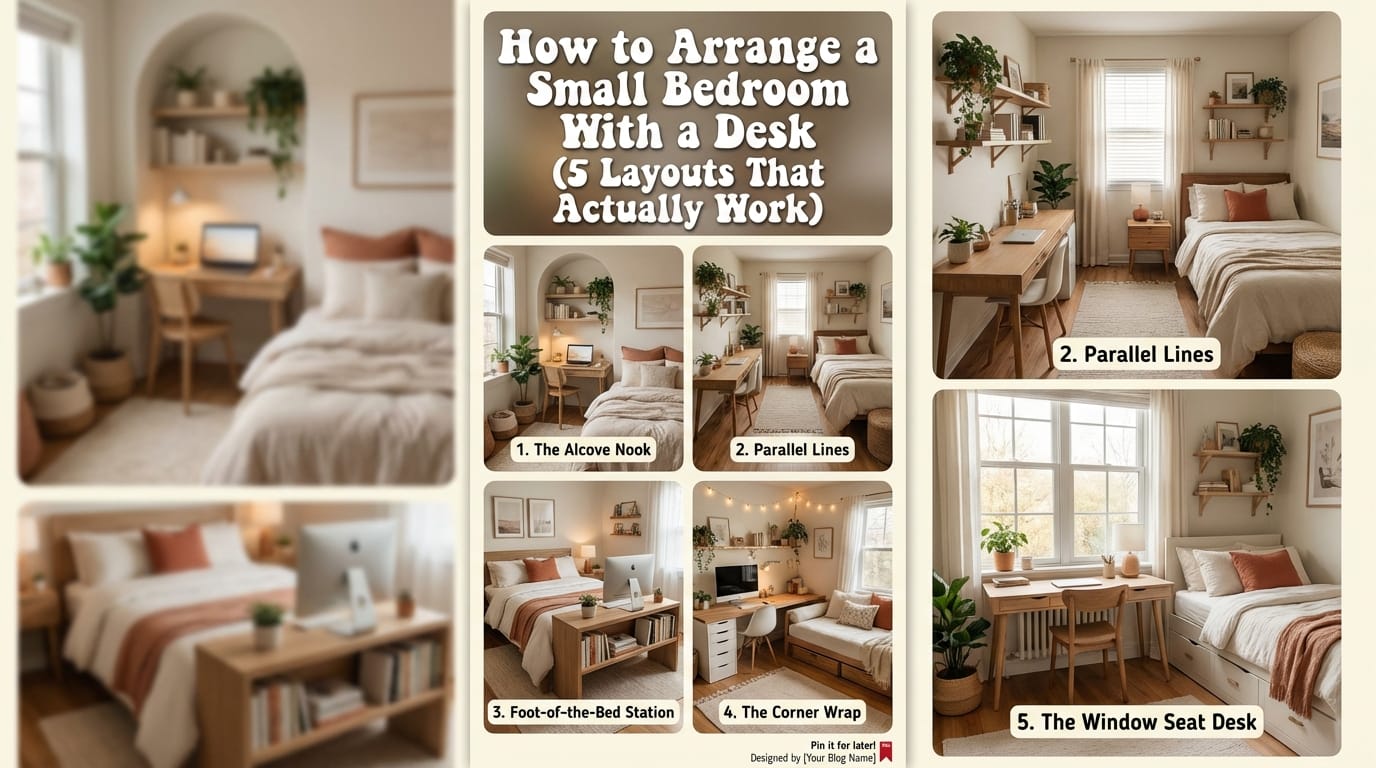
Your bedroom feels tiny, you need a desk, and you refuse to climb over furniture like you live in an obstacle course. Fair. I’ve helped friends “shoehorn” desks into small bedrooms more times than I can count, and the difference always comes down to one thing: layout beats furniture.
So let’s talk about the best small bedroom desk layouts—the ones that keep your bed usable, your walkways clear, and your brain slightly less stressed when you open the door. Ready?
Quick Wins: 5 Space-Saving Desk Layouts for Small Bedrooms
If you want the short list first (because who doesn’t?), these layouts show up constantly in recent design demos and real-room makeovers for rooms under 10×10 ft:
- Floating wall desk (the fan favorite)
- Corner L-shaped mini desk
- Window-seat or bedside desk hybrid
- Fold-down (Murphy-style) hidden desk
- Loft bed with an integrated desk underneath
Each one solves the same problem in a different way: you need a functional workspace without losing your floor. Ever noticed how “just add a desk” turns into “where did my room go”? Yeah.
Why These Layouts Work in Tight Spaces
Small rooms don’t forgive mistakes. A chunky desk in the wrong spot can kill your walkway, block drawers, and make the room feel like it shrank overnight.
These layouts work because they lean on three rules:
- Use vertical space (walls, shelves, above-desk storage)
- Pick multi-functional furniture (desk + nightstand, desk + vanity)
- Protect the pathways (you want 3–4 ft walkways where possible)
Recent layout demos consistently show that wall-mounted, fold-down, and corner setups save about 20–50% more floor space than freestanding desks because you skip bulky legs and wasted clearance. You also gain 2–3 ft of usable walkway when you keep desk depth slim (think 12–18 inches).
And yes, cable mess counts as clutter. When you use under-desk strips and channels, you can cut visible cable chaos by roughly 70%. Your room instantly looks calmer, even if your inbox still screams.
Layout #1: Floating Wall Desk (The Most Popular for a Reason)
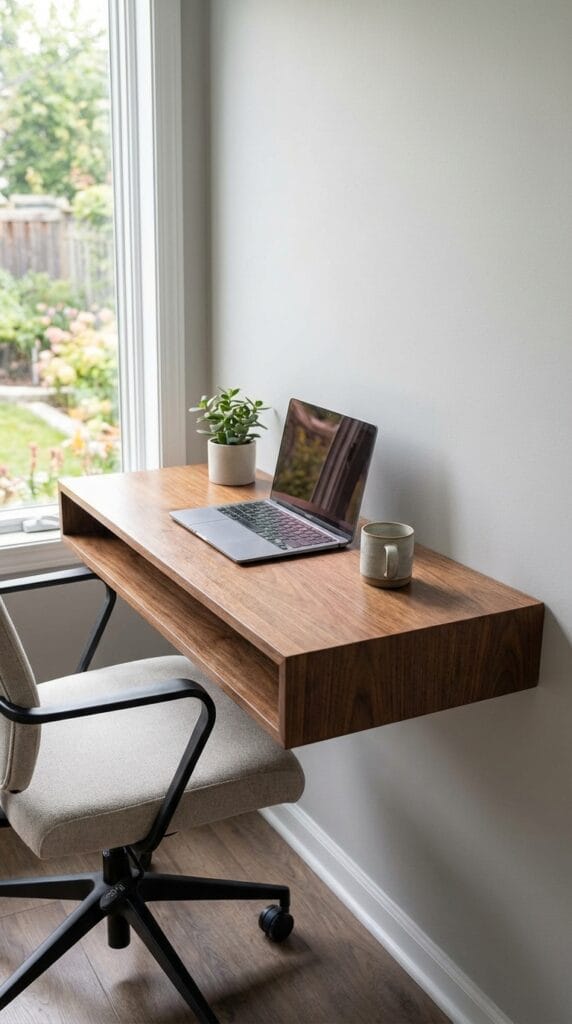
If you only try one setup, try this one. You mount a shallow desktop directly to the wall, and you keep the floor totally open underneath. That “open” area makes your room feel bigger fast.
Why it works so well
- You save roughly 40–50% of the floor footprint compared to a freestanding desk
- You keep 3–4 ft walkways in narrow rooms if you choose an 18–24 inch depth
- You can stack shelves above and add up to 40–50% more vertical storage capacity
How I’d set it up (without overthinking it)
- Place it opposite the bed or over a nightstand
- Add one shelf above for books and daily clutter
- Use a wall-mounted power strip and a cable channel so cords don’t ruin the vibe
Cost reality check
You can build a convincing floating desk with a tabletop and brackets for about $50–$150. FYI, painting the desk the same color as the wall makes it “disappear” visually, and it looks way more custom than it should for that price.
Layout #2: Corner L-Shaped Mini Desk (Maximum Use of Dead Space)
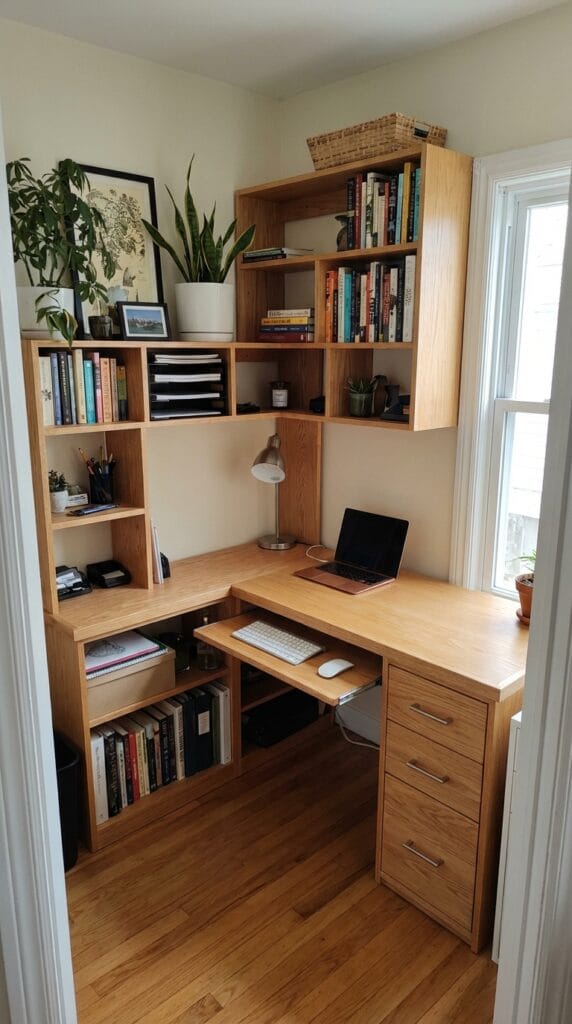
Corners always sit there doing nothing, like that one chair that collects laundry. A corner desk forces the corner to earn its rent.
This layout usually looks like:
- Bed runs along one wall
- Storage (dresser or shelves) sits in an alcove
- Small L-desk tucks into the opposite corner
Recent room demos show this keeps about 60% of the room open for movement even with a queen bed in ~100 sq ft. That’s huge.
What to look for in a corner desk
- Width under 4 ft
- Depth around 12 inches if you work on a laptop
- Slim legs or a “floating feel” so it doesn’t look bulky
My honest opinion
IMO, this layout wins when you need a “real” work zone (monitor, notebook, lamp) but you still want the center of the room to feel open. Just don’t buy a corner desk with massive drawers unless you enjoy shin bruises.
Layout #3: Window Desk or Bedside Hybrid (Light + Mood = Better Work)
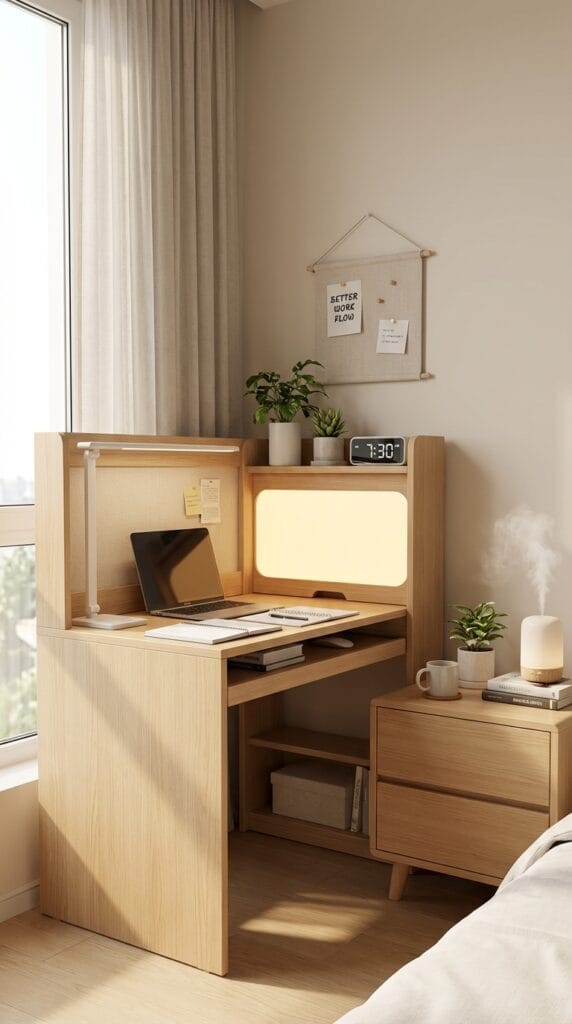
If you’ve got a window, use it. Natural light makes tiny rooms feel bigger, and it boosts productivity in a way no overhead bulb ever will.
You’ve got two easy ways to do this:
Option A: Desk between the bed and the window
You slide a slim desk into that gap, and you keep enough clearance so you don’t trap yourself.
Aim for:
- 60 cm (about 24 in) clearance so you can access the bed
- A desk depth that won’t block curtains (go slim)
Option B: Turn the windowsill into a desk-like surface
Some layout demos show a “windowsill desk” that slides out when needed, then hides again. That trick feels ridiculously satisfying, like your room suddenly learned magic 🙂
Why this layout feels so good
- You get daylight for calls and focus
- The desk blends into the room instead of screaming “home office”
- You can combine functions and save furniture costs by using the desk as a nightstand/vanity
Layout #4: Fold-Down Murphy Desk (The Disappearing Act for Guest Rooms)
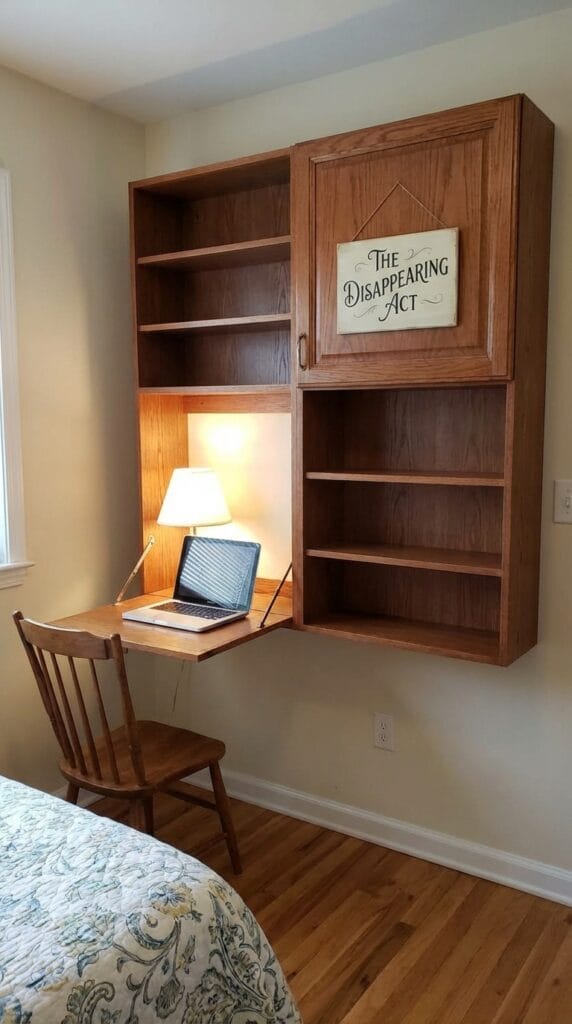
If your bedroom doubles as a guest room, you don’t want a permanent desk hogging space. You want a desk that shows up only when you need it—like a helpful roommate who also cleans.
Fold-down desks can save 50–70% of the floor footprint because they leave zero desk footprint when closed.
Where this layout works best
- At the foot of the bed
- Inside a wardrobe nook
- In a shallow alcove
Pros and cons (because nothing stays perfect)
Pros
- You reclaim your space instantly
- You can stash supplies inside the cabinet
- Guests don’t have to sleep next to your paperwork pile
Cons
- Quality hardware costs money (often $200–$400 for reliable builds)
- You need solid mounting, so renters should check rules first
If you love a clean look, this setup delivers. If you hate measuring and leveling, it might test your patience :/
Layout #5: Loft Bed With Integrated Desk (The Vertical Power Move)
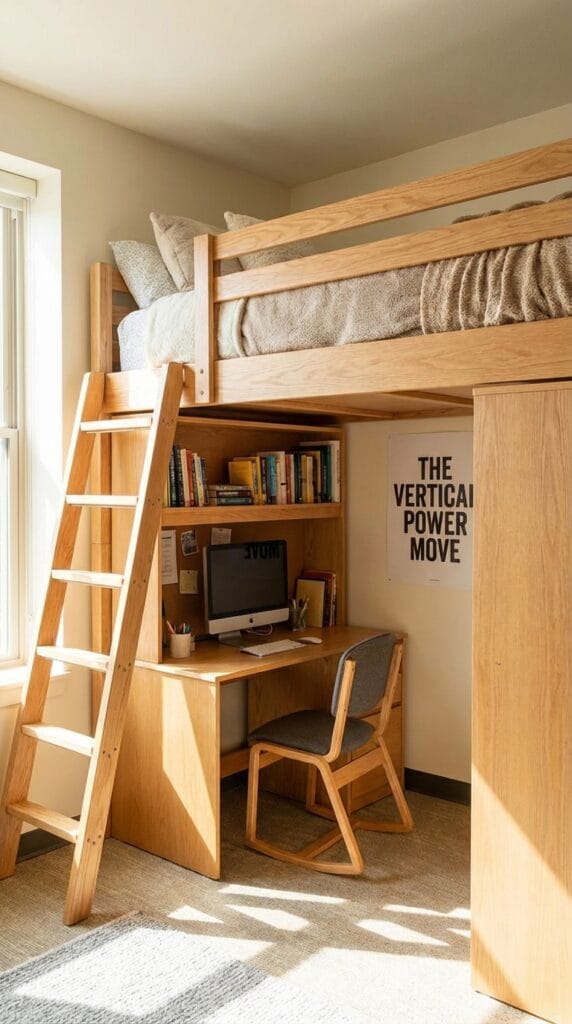
When your room dips under 80 sq ft, you need to start thinking vertically. A loft bed creates a full desk zone underneath, so one footprint handles two functions.
Why people love it
- You gain a true work zone without shrinking walk space
- You can add bookcases and drawers in the same unit
- Kids and teens treat it like the ultimate command center
Where it shines
- Tiny rooms
- Kids’ rooms
- Studios that need separate “sleep” and “work” zones
This setup often costs more (commonly $300+), but it can replace multiple pieces of furniture. When it works, it really works.
Comparison Table: Which Small Bedroom Desk Layout Fits Your Room?
Here’s the cheat sheet I wish everyone used before they bought a desk.
| Layout | Estimated Floor Space Saved | Best Room Fit | Typical Cost Range | Why People Pick It |
|---|---|---|---|---|
| Floating Wall Desk | 40–50% | Under 100 sq ft | $50–$150 | Keeps floor open, looks airy, easy to DIY |
| Corner L-Shaped Mini Desk | 30–60% | Around 100 sq ft | $100–$250 | Turns dead corner into a real workstation |
| Window / Bedside Hybrid | 25–40% | Any room with a window | $75–$200 | Better light, calmer mood, multi-use |
| Fold-Down Murphy Desk | 50–70% | Guest rooms / multipurpose | $200–$400 | Hides completely when you don’t need it |
| Loft Bed + Desk | 50%+ | Under 80 sq ft | $300+ | Full work zone without stealing floor |
Desk Selection Guide: Sizes That Fit (Without Wrecking Your Walkway)
People usually buy a desk that fits their laptop, then they panic when the chair blocks everything. I want you to do the opposite: protect the room flow first.
Quick sizing rules
- Choose 12–18 in depth for laptop setups
- Aim for 30–36 in desk height
- Keep 24 in behind the chair if you plan to slide it out comfortably
Here’s a practical guide based on common compact desk dimensions:
| Desk Style | Typical Dimensions (HxWxD) | Best For | Best Layout Match |
|---|---|---|---|
| Compact Corner Desk | ~77 x 99 x 66.5 cm | Small setups with storage | Corner layout |
| Slim Modern Desk | ~81 x 90 x 50 cm | Laptop + lamp + notebook | Window layout |
| Storage Desk (Small) | ~76 x 95 x 55 cm | Work + supplies | Loft / hybrid |
| Folding Desk | ~72.5–84.5 x 83 x 53 cm | Flexible rooms | Foot-of-bed / foldable |
| Ladder / Vertical Desk | ~180 x 65 x 40 cm | Ultra-tight spaces | Wall-based layout |
Real-World Mini Case Studies (Because Theory Only Gets You So Far)
A loft renovation that saved three kids’ rooms
A city loft renovation carved out multiple tiny bedrooms for kids and used loft beds with custom desks to fix bad flow. The family gained storage and usable zones without expanding square footage. Bold ceiling color and smart built-ins made the rooms feel taller, not cramped.
A budget “dream desk” in a cramped room
A creator built a clean desk setup with a slim floating surface, tidy cable management, and a wall-mounted power solution. The room instantly looked bigger because the floor stayed open and the desk stayed visually light.
Designer-style floating desks in narrow bedrooms
Several small-room client designs used floating desks with shelves, plus bedside nooks aligned to mattress height. People reported that they “regained floor space” and felt more privacy in the same footprint. That result tracks with what I see every time: vertical storage changes everything.
Styling & Optimization Tips (The Stuff That Makes It Feel Finished)
You don’t need a full renovation. You need a few smart moves.
Keep the desk zone “clean” on purpose
- Mount one shelf above the desk for daily items
- Use a small tray for loose stuff (keys, chargers, pens)
- Add one task lamp so you don’t rely on harsh overhead light
Create zones without building walls
- Use a small rug under the desk chair
- Paint or wallpaper the desk wall to create contrast (even one accent color helps)
- Hang one piece of art above the desk so the area feels intentional
Don’t forget ergonomics
Most sit-stand converters fit slim desks, but you should check weight limits (often 20–30 lb). Your desk shouldn’t wobble every time you type like you upset it personally.
FAQs: Small Bedroom Desk Layouts
Can I fit a desk in a small bedroom with a queen bed?
Yes. You should use a floating desk or a corner mini desk and keep the desktop slim. You protect the walkways first, then you size the desk.
What desk depth works best in a tight room?
A 12–18 inch depth works great for laptop work. You can go deeper if you place the desk where it won’t block movement.
What if my bedroom has no window near the desk spot?
You can still win. Add a task lamp, mount shelves for vertical storage, and pick a wall-mounted or ladder-style desk so the room doesn’t feel boxed in.
How do I stop the desk area from looking messy?
Route cables under the desk, mount a power strip, and keep only daily essentials on the surface. You’ll cut visual clutter fast.
Final Thoughts: Pick the Layout That Protects Your Floor
You can absolutely arrange a small bedroom with a desk without turning it into a cramped furniture sandwich. Start with the floating wall desk for the biggest “wow” per inch, choose a corner L when you want a legit workstation, and grab a fold-down if you crave a clean guest-room reset.
Measure first, keep the desk slim, and treat vertical space like your best friend. Then enjoy the weirdly satisfying moment when your room finally feels bigger—even though you didn’t add a single square foot.