
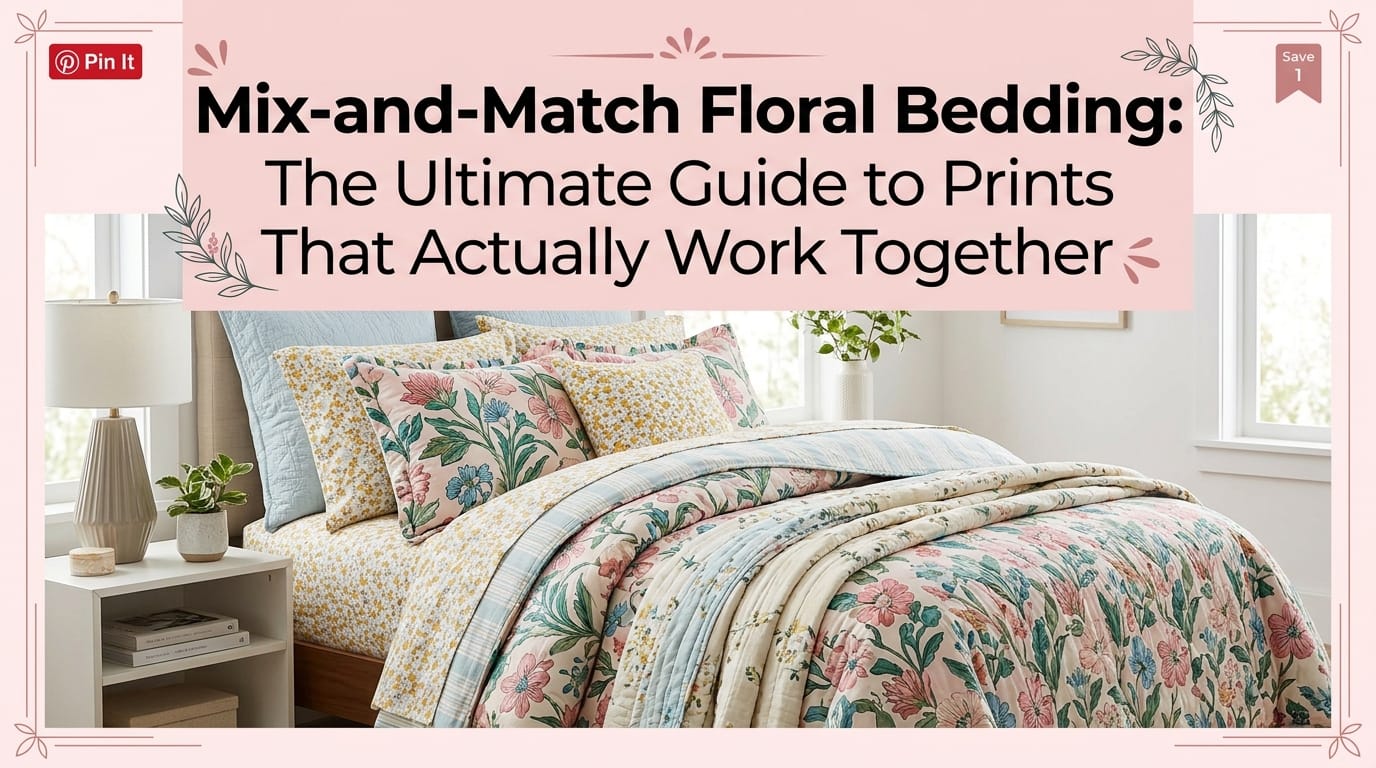
Let’s be real—decorating your bedroom shouldn’t feel like solving a puzzle that requires a degree in interior design. Yet somehow, when you try to throw together different floral prints, suddenly your bed looks like a fabric store exploded on it rather than a chic, curated space. What if I told you there’s actually a simple formula to make mixing patterns work beautifully? Spoiler alert: you don’t need to be a designer to pull this off.
I’m obsessed with floral bedding, but I used to make every mistake in the book. I’d pair massive roses with tiny polka dots, throw in three different color families, and wonder why the result looked chaotic instead of charming. Then I discovered the rules that actually work, and everything changed. Now I’m going to walk you through exactly how to create that dreamy, layered bed aesthetic you’ve been pinning—without the design disasters.
The Three Golden Rules for Floral Mix-and-Match Magic
Rule #1: Anchor Everything in Shared Colors
Here’s the thing about color: it’s your best friend when mixing prints. You need at least one common color tying your patterns together, acting as the glue that makes everything feel intentional rather than random.
Let me break this down. If you pick an orange blossom floral as your hero duvet, you’d want to grab sheets that also feature orange—maybe paired with pinstripes in the same shade. This shared color creates visual cohesion without boring repetition. Think of it like having a conversation where everyone’s speaking the same language but with different accents.
Here’s what actually works:
- Limit your palette to three colors maximum (not counting neutrals like white, black, or grey—those are freebies)
- Pull accent colors from your main floral print
- Use jewel tones like emerald, sapphire, or amethyst for depth and richness
- Let neutrals act as your breathing room
Pro tip: If you’re unsure, grab a color wheel and check which hues actually harmonize. You’d be shocked how many people skip this step and then wonder why their bedroom looks off 🙂
Rule #2: Vary Your Scales Like Your Life Depends on It
Ever seen a bed drowning in large-scale florals? It’s visual chaos. Your eye doesn’t know where to land, and the whole vibe turns cluttered instead of curated.
The secret is scale variation. You pair your big, bold prints with small-scale patterns—think tiny florals, polka dots, or delicate pinstripes. This prevents pattern competition and creates visual breathing room that makes your eyes actually relax when you look at the bed.
Here’s the winning formula:
- Large-scale floral (your hero duvet with big hibiscus or Victorian lilacs)
- Small-scale pattern (tiny florals, dots, or pinstripes on sheets)
- Medium-scale accent (stripes or gingham on pillowcases or a throw blanket)
Imagine a Victorian Lilac duvet with massive blooms paired against delicate Vermont Country Store sheets covered in barely-there florals. That’s the sweet spot. The prints play together instead of fighting for attention.
Rule #3: Choose Complementary Patterns That Actually Make Sense
Florals aren’t shy little flowers that only get along with other florals. They’re actually pretty sociable and vibe with tons of other patterns when you’re intentional about it.
The patterns that play nicely with florals include:
- Polka dots (especially when sharing color with your main print)
- Stripes (pinstripes for boho, wider stripes for cottage vibes)
- Gingham (perfect for spring or coquette aesthetics)
- Tartan and plaid (adds unexpected richness to botanical prints)
- Small geometric prints (they don’t compete with florals)
- Solid colors (always a safe anchor)
Ever wonder why some print combinations just feel “right”? It’s because these patterns don’t demand attention—they support your floral moment instead of upstaging it.
Understanding Your Floral Style: Which Aesthetic Speaks to You?
Different floral types call for different companion prints. Let me walk you through the main styles and what actually works with each one.
Boho Block Print Florals
These are the vintage, globally-inspired prints that make you feel like you’re sipping tea in a Moroccan riad. Orange Blossom and Red Poppy patterns typically feature warm, earthy tones with intricate detailing.
What pairs beautifully:
- Small-scale florals in complementary colors (maybe a forest green floral alongside your orange)
- Pinstripes in matching warm tones
- Polka dots—yes, really, and they look amazing
- Solid sheets in cream, taupe, or rust
The magic happens because boho inherently celebrates eclecticism. Mixing patterns feels intentional rather than accidental in this aesthetic.
Cottage and Shabby Chic Florals
Blue and white, pink and white, or cream with lavender—these romantic, traditionally-inspired prints scream English garden and Sunday morning nostalgia.
What makes these sing:
- Crisp stripes in matching colors (blue/white stripes with blue/white florals = chef’s kiss)
- Soft pastel solids for breathing room
- Ruffled or textured fabrics in coordinating shades
- Small florals in similar color families
Here’s where texture becomes your friend. Mix your crisp cotton prints with soft linen or add delicate ruffles to your shams. That tactile variation keeps the look from feeling too matchy-matchy and predictable.
Tropical Florals
Midnight Lotus, Tropical Garden, hibiscus prints—these florals evoke island vibes and warm sunsets. They’re bold, energetic, and absolutely demand complementary patterns that won’t fade into the background.
The perfect companions:
- White shell prints or solid whites (let the tropical energy shine)
- Soft peach or coral solids (Lands’ End has gorgeous options here)
- Subtle white-on-white textures
- Barely-there striping in neutral tones
The key with tropical is knowing when to get out of the way. Your supporting prints should whisper, not shout. Let that hibiscus duvet be the star.
Botanical and Botanical-Inspired Prints
Think Moonlit Taj with its intricate vines and blossoms in jewel tones. These prints carry a sophisticated, almost healing energy—very “wellness aesthetic” meets luxury bedding.
Pattern pairings that work:
- Matching solid sheets in coordinating colors (green for green vines, blue for blue florals)
- Subtle geometric prints in similar color families
- Textured solids in taupe or charcoal
- Unexpected accent colors like mustard yellow or deep burgundy
Botanical prints are sophisticated enough to stand alone, but they truly sing when paired with solids and subtle textures that let their detail shine.
The Ultimate Layering Strategy: From Duvet to Pillows
Okay, so you’ve picked your prints and your colors align perfectly. Now comes the fun part: actually layering them to create that effortless designer bed that makes people stop and stare.
Start With Your Foundation
Your base layer is everything. I typically go with neutral sheets in white, cream, or a soft grey—something that won’t compete with what you’re layering on top. This gives you flexibility and prevents visual overwhelm.
Think of it like priming a canvas before painting. You need that clean foundation to build on.
Make Your Duvet the Hero
This is where your large-scale floral lives. Your duvet cover is the biggest visual statement, so let it shine. Whether you’re choosing Orange Blossom, Victorian Lilac, or a bold tropical print, this is your “moment.”
Your duvet should feature that gorgeous large-scale print you’re obsessed with, in colors that make your heart happy.
Add the Secondary Print Strategically
Your flat sheet or coordinating blanket is where you introduce your first supporting player. This might be your small-scale floral, your polka dot pattern, or your complementary print.
Here’s where scale variation saves you. If your duvet has massive blooms, keep this layer delicate and understated. The prints perform a visual dance—one leads, one follows, and together they create harmony.
Finish With Pillows and Texture
Your pillowcases and throw pillows are your finishing touches. This is where you can bring in that third pattern or double down on one of your existing prints in a different scale.
Here’s what usually works:
- One sham in a small-scale version of your main floral
- One sham in your complementary pattern (stripes, dots, gingham)
- Throw pillows mixing these same elements
- A textured throw blanket in a coordinating solid or subtle pattern
Mix your fabrics too—combine crisp cotton with soft linen, add a silk pillowcase, introduce a chunky knit throw. These texture variations create depth and make the bed feel intentionally layered rather than slapped together.
Real-World Examples That Actually Work (No Pinterest Fantasy Stuff)
Let me give you actual combos that I’ve seen work beautifully, from real retailers and designer collections:
The Orange Blossom Boho Dream
The combo: Vintage orange floral duvet + polka dot sheets in cream and orange + small geometric pillow in rust
Why it works: The shared orange tone anchors everything. Scale varies dramatically (large florals to tiny dots), and the boho aesthetic embraces pattern mixing naturally. This feels intentional and curated, not chaotic.
Where to shop: Saffron Marigold carries incredible block-print florals, and Vermont Country Store has sheets that pair perfectly with vintage vibes.
The English Garden Classic
The combo: Blue and white large-scale floral duvet + crisp blue/white pinstripe sheets + white ruffled pillowcases + yellow accent pillow
Why it works: The blue and white anchor creates instant cohesion. Adding yellow (a color that appears in many florals) as an accent prevents the look from feeling too matchy-matchy. The ruffled texture adds softness and prevents rigidity.
Where to shop: Anthropologie has beautiful traditional florals, and any quality bedding retailer carries classic blue/white stripes.
The Botanical Escape
The combo: Blue/green Moonlit Taj print duvet + solid teal sheets + small geometric pillow with hints of gold + green velvet throw
Why it works: The monochromatic color family (all cool tones) creates sophisticated harmony. Texture variation (smooth cotton, velvet) keeps it from looking flat. The gold accent pillow adds unexpected richness without clashing.
Where to shop: Sweet Jojo Designs has gorgeous botanical collections, and Peacock Alley carries luxe solids and textures.
The Spring Coquette Moment
The combo: Pastel floral duvet (pink, lavender, sage) + blush gingham sheet set + cream ruffled pillows + silk accent throw
Why it works: The pastels create immediate spring energy. Gingham echoes the playfulness without competing. The silk and ruffles introduce femininity and texture. This combination feels fresh, romantic, and totally current without trying too hard.
Where to shop: Urban Outfitters and Roomtery both carry excellent pastel floral options right now.
Common Mistakes I’ve Totally Made (So You Don’t Have To)
Mistake #1: Cramming Too Many Colors Into the Mix
I once threw together an orange floral, green striped sheet, and purple pillowcases because I loved them all. Spoiler: my bedroom looked like a rainbow threw up on my bed. Not in a fun way.
The fix: Stick to three colors maximum (excluding neutrals). Pick your main color, your secondary color, and ONE accent. That’s it. That’s the limit.
Mistake #2: Pairing Large-Scale Prints With Other Large-Scale Prints
Listen, I get it—you love bold patterns. But when you pair massive roses with enormous paisleys, your eye has nowhere to rest. The bed becomes overwhelming rather than inviting.
The fix: Always include at least one small-scale pattern or solid in your layering. Think of it as visual punctuation. The small pattern gives your eye permission to pause.
Mistake #3: Ignoring Undertones
I once paired a warm-toned floral with cool-toned stripes, and while they technically shared a color, something felt off. The undertones clashed even though the colors appeared to match.
The fix: Hold your fabrics side-by-side in natural light. Check if the undertones feel warm (peachy, golden) or cool (blue-based, silver). These need to match, not fight.
Mistake #4: Going Full Pattern When You Should Stop
Sometimes I get so excited about layering that I pattern everything. Every pillow, every sham, every blanket layer becomes a pattern, and suddenly the bed looks busy instead of curated.
The fix: For every two patterned elements, include one solid. Solids are your secret weapon for visual harmony. They’re not boring—they’re strategic.
The Shopping Strategy: Actually Finding These Prints Together
Here’s the real challenge—finding these coordinating prints actually exists, especially when you want quality fabrics.
Start With Your Hero Floral
Pick the duvet or comforter you absolutely love first. This is your anchor. Everything else builds from here.
Search for this specific print on:
- Saffron Marigold (block prints and vintage florals)
- Anthropologie (designer collaborations and unique prints)
- Urban Outfitters (trendy, fashion-forward options)
- Roomtery (sortable by style and date added)
Build Your Palette From There
Once you’ve locked in your hero print, take a photo of it and use that as your visual reference when shopping for complementary pieces.
Pull colors directly from the print. If your floral features orange, sage green, and cream, search for sheets and pillows in those specific shades. You’re looking for items that feature these colors, even if the pattern is completely different.
Pro Shopping Tips
- Visit specialty retailers like Garnet Hill or Lands’ End—their collections are often designed with mixing in mind
- Check Urban Outfitters for trendy, youth-oriented mixes that actually work together
- Don’t shy away from vintage or secondhand options—Etsy sellers often have coordinating vintage linens that pair beautifully
- Visit physical stores when possible to compare fabrics side-by-side in natural light
- Read the return policy before committing—sometimes pieces don’t work until they’re actually on your bed
Quick Reality Check: Testing Before You Commit
FYI, I learned this the hard way after returning bedding more times than I’d like to admit. Before you fully commit, actually test your combination.
The Fabric Drape Test
Order your pieces and literally drape them on your bed or across a chair. Stand back about five feet—this is roughly the distance you’ll view your bed from when you’re sitting or lying in it. Do the prints feel cohesive from that distance, or do they visually compete?
The Sunlight Test
Check how your fabrics look in both natural daylight and artificial lamplight. Colors shift dramatically depending on lighting, and you want to make sure your color harmony holds up in both scenarios.
The Photo Test
Take a photo of the arrangement (because your phone camera sometimes sees colors differently than your eyes). Does the combination make you happy in the photo? If something feels off, trust that instinct.
Making This Your Own: Final Thoughts
Here’s the beautiful thing about the mix-and-match floral approach—there’s no single “correct” way to do it. These aren’t rigid rules carved in stone; they’re guidelines that give you permission to be creative without descending into chaos.
The core principles (shared colors, scale variation, complementary patterns) remain constant, but how you apply them depends entirely on your aesthetic and personal taste. A boho lover will mix differently than a cottagecore enthusiast, and that’s literally the whole point.
Start with one floral print you genuinely adore. Pick supporting pieces that share at least one color, vary the scale, and add a complementary pattern. Step back and trust your instincts. Your bed should make you smile every time you walk into your bedroom.
And honestly? Once you nail this formula, you’ll realize you can apply it to literally any room. Mixing patterns isn’t dark magic—it’s just intentionality, a little color theory, and the confidence to trust what feels right. You’ve got this. 🙂