
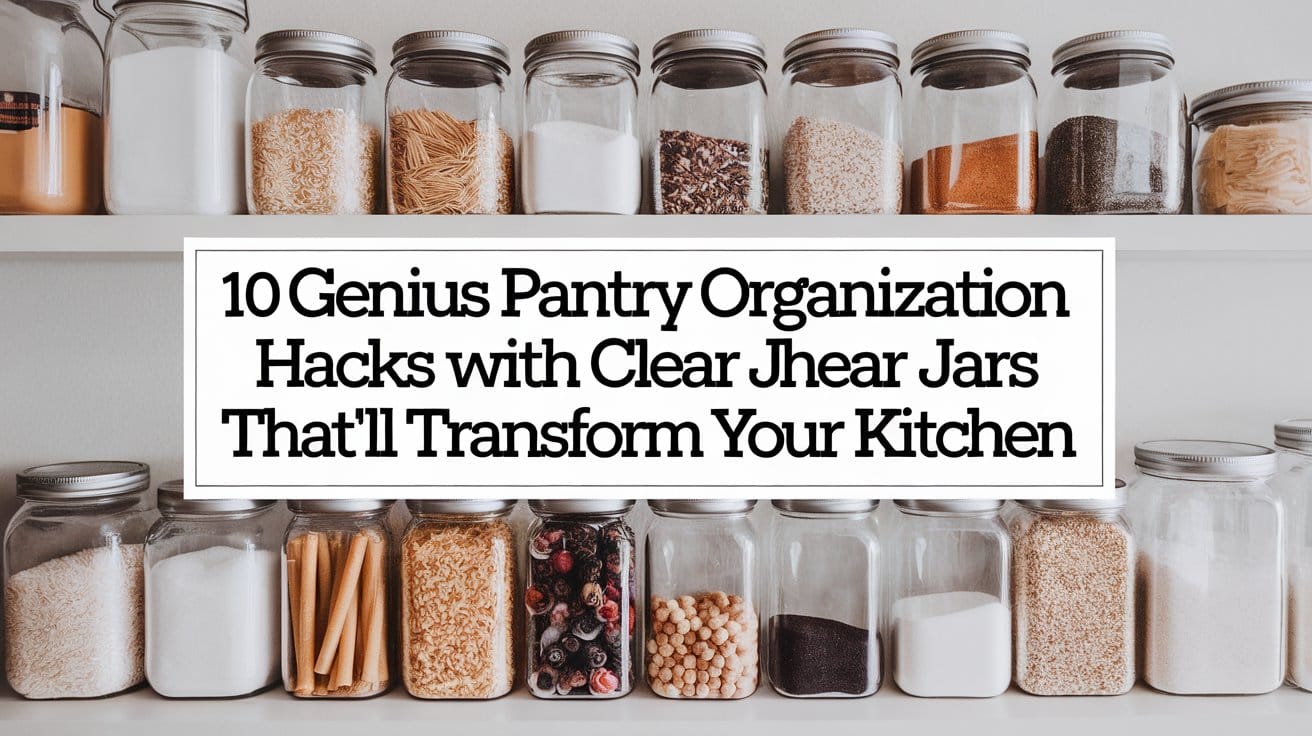
You know that moment when you open your pantry and a bag of rice face-plants onto your toe? Yeah. I got tired of that little circus, so I leaned hard into clear jars—and my kitchen instantly got calmer, faster, and way less “mystery bag” vibes.
Clear jars work because you see everything at a glance, you stop rebuying what you already own, and you turn chaotic shelves into something that feels weirdly… adult. (Who knew?) Research and recent viral pantry resets (especially the 2026 YouTube wave) keep repeating the same wins: less waste, faster meal prep, and up to 2x usable shelf space when you stack smart.
So let’s turn your pantry into a “why didn’t I do this sooner?” zone.
1) Deep Clean & Declutter Before You Jar Anything (AKA the Instant Reset)
Before you buy a single jar, you need a clean slate. Why? Because you can’t “organize” expired taco shells and five open bags of almonds. You just can’t.
Do this in one focused sprint:
- Empty the pantry بالكامل (everything out).
- Trash expired stuff and donate what you won’t use.
- Sort into piles: grains, baking, snacks, breakfast, spices, etc.
- Wipe shelves and let them dry.
Here’s the sneaky part: when you switch to clear jars, you force yourself to face reality. You can’t hide half a cup of stale flour in a crumpled bag anymore. And honestly? Good. 🙂
2) Label Everything for One-Second Grabs (End the Hunt)
Ever grabbed powdered sugar and dumped in flour? No? Just me? Cool.
Labels turn clear jars into an instant inventory system. Organizing pros consistently note that labeling can cut search time by around 50% because you stop scanning and start grabbing.
What to put on your clear jar labels
- Item name (obvious, but crucial)
- Expiration or refill date
- Cooking ratio notes (like “1 cup rice : 2 cups water”)
My take on label styles (honest opinion)
- Printed labels look clean and stay readable.
- Chalk labels feel cute until your handwriting betrays you.
If you want the easiest setup, grab a jar kit with labels + a funnel. You pour faster, spill less, and avoid the “why does my shelf look like a sandstorm?” situation.
3) Choose Matching Stackable Clear Jars (Your Vertical Space Glow-Up)
Let’s talk about the biggest pantry lie: “I need more shelves.”
Most people need better vertical use.
Recent pantry makeovers (including a featured family pantry design) show that risers + stackable clear jars can double usable space without changing cabinets. You keep items visible, and you stop building towers of bags that collapse if you blink.
What stackable clear jars do best
- Maximize shelf height
- Create clean rows (no weird gaps)
- Make it easy to restock because everything fits
IMO, matching jars matter more than people admit. When every container looks different, your brain reads it as clutter—even if you technically “organized” it.
4) Decant Bulk Staples into Matching Clear Jars (Bye, Crinkly Packaging)
This hack does the heavy lifting. You take bulky packaging (rice bags, pasta boxes, bean sacks) and move everything into uniform clear jars.
Best pantry staples to decant
- Rice, quinoa, oats
- Pasta, lentils, beans
- Flour, sugar, baking soda
- Nuts, chocolate chips, dried fruit
Clear jars help you track levels instantly, which reduces accidental overbuying and food waste. And yes, the aesthetic upgrade feels real—Good Housekeeping-style “pantry pops” don’t happen by accident.
Quick tip: pick wide-mouth jars for flour and snacks. You’ll thank yourself when you scoop.
5) Stack Clear Jars on Acrylic Risers (Double Shelf Space Without Renovating)
If you do one “hardware” move, do this. Acrylic risers turn one shelf into two visual levels, and research-based organizer tips often cite up to 100% more vertical capacity with smart riser setups.
How I like to place items (simple rules)
- Everyday jars on the bottom level (easy reach)
- Backstock or special-use items on the top level
- Tall jars on the sides so you don’t block sightlines
Risers keep everything visible, which stops the dreaded “forgotten bag in the back” problem. And if you hate drilling holes, you’ll love this: risers require zero permanent changes.
6) Build “Grocery Store Zones” with Clear Jar Groupings
You know how grocery stores group cereal with cereal and baking with baking? Copy that. Your pantry should work like a mini market, not a random-items museum.
Easy zone ideas that actually stick
- Breakfast zone: oatmeal, cereal, granola, pancake mix
- Baking zone: flour, sugars, chocolate chips, sprinkles
- Snack zone: nuts, pretzels, dried fruit
- Dinner base zone: rice, pasta, lentils
Organizers who use zoning in real homes report faster routines and less stress because you stop bouncing around the pantry. You also restock faster because you instantly notice what looks low.
Ever wondered why zoning feels so satisfying? Your brain loves predictable “homes” for items.
7) Use Pull-Out Pantry Sliders for Clear Jars (Small Kitchen Secret Weapon)
Deep shelves love to eat jars. You place something in the back, and it disappears like it joined a new family.
Pull-out sliders fix that fast, and 2026 small-space pantry videos go wild for this setup because it works in apartments and cramped kitchens.
What to store on pull-out sliders
- Spices in mini jars
- Oils and vinegars
- Narrow jars with grains
- Baking extras (yeast, cocoa, powdered sugar)
You pull the shelf out, you see everything, and you stop playing “pantry archaeology.”
8) Maximize Door + Wall Space with Jar Holders (Free Storage You Already Own)
Your pantry door and wall space beg for a job. Give them one.
Popular home organization features keep recommending over-door racks and pegboards because they free shelf space and keep smaller jar categories accessible.
Door + wall jar ideas
- Mini jars for spices and seasoning blends
- Tea and coffee jars near a beverage station
- Baking sprinkles and cupcake toppers (if you live that life)
FYI, you don’t need a “Pinterest pantry.” You just need smart reach zones for what you use daily.
9) Combine Clear Jars with Mesh Drawers for Produce (No More Onion Funk)
This combo feels oddly luxurious: clear jars above, mesh drawers below.
Mesh drawers keep onions and potatoes breathable, and clear jars keep dry goods clean and sealed. You also stop spills because jars don’t “leak” like ripped packaging.
A simple layout that works
- Top shelves: jars (grains, snacks, baking)
- Middle: cans and bottles (grouped)
- Bottom: mesh drawers for onions/potatoes + heavier items
Do you hate cleaning pantry dust and mystery crumbs? This setup cuts that dramatically because jars contain the chaos.
10) Set Container Limits + Do a 5-Minute Reset (The “Stay Organized Forever” Trick)
You don’t need a 3-hour Sunday reset. You need a tiny daily habit that prevents the slow slide into mess.
Organizers and viral pantry reset videos keep pushing the same concept: set container limits and keep a 5-minute reset routine.
My no-drama rules
- Fill jars only to comfortable capacity (no cramming)
- Use “one in, one out” for duplicates
- Do a 5-minute reset: return items, wipe a shelf, check one low jar
When you respect jar limits, your pantry stays organized because the system can’t overflow. And yes, that means you sometimes say no to the warehouse-sized pretzel tub. Tragic.
Real-World Results: What Actually Changes When You Switch to Clear Jars
This isn’t just “pretty pantry” content. Real pantry projects and creator-tested setups show consistent results:
- A family pantry redesign using risers + clear jars reported roughly doubled usable space and easier kid-friendly access.
- A design-forward pantry with decanted jars reported less expired food because visibility made low stock obvious.
- Small-apartment pantry resets using pull-out sliders + jars highlighted faster cleanup because everything returned to a clear “home.”
Do you want the biggest takeaway? Visibility changes behavior. When you see it, you use it.
Quick-Start Checklist (Do This Today)
| Step | Action | Tools You’ll Need |
|---|---|---|
| 1 | Declutter + toss expired items | Trash bag, donation box |
| 2 | Pick jar sizes for your staples | 10–20 clear jars (mix of tall + wide) |
| 3 | Label jars + add dates | Labels, marker/chalk pen |
| 4 | Add vertical organization | Acrylic risers, lazy Susan |
| 5 | Create zones | Bins or shelf dividers (optional) |
| 6 | Maintain with micro-resets | 5 minutes a day |
Best Clear Jar Types (So You Don’t Buy Random Stuff You Regret)
| Jar Type | Best For | Why It Works |
|---|---|---|
| Tall clear jars | Pasta, rice, oats | Tracks levels fast and saves shelf width |
| Wide-mouth jars | Flour, sugar, snacks | Scoops easily and reduces spills |
| Mini jars | Spices, baking add-ins | Creates a clean, consistent spice system |
| Stackable jars | Grains, legumes | Boosts vertical storage and looks tidy |
| Airtight seal jars | Anything that goes stale | Preserves freshness and reduces waste |
FAQs About Pantry Organization with Clear Jars
Are glass or plastic clear jars better?
Glass feels sturdier and stays crystal-clear longer. Plastic weighs less and survives drops better. I use glass for staples and plastic for high-traffic kid snacks.
How many clear jars do I need to start?
Start with 10–15 jars for your most-used staples. You’ll build from there once you see what you actually reach for.
Do clear jars really save space?
Yes—especially when you combine matching shapes with risers or pull-out sliders. You stop losing space to awkward packaging and half-empty boxes.
How often should I refresh my pantry jars?
I check monthly for expiration dates and refill needs. I also do quick wipe-downs during my 5-minute reset.
Final Thoughts: Your Pantry Doesn’t Need Perfection—It Needs a System
If you want the fastest transformation, do these three things first: declutter, label, and stack with risers. Clear jars handle the rest by keeping everything visible and contained. So… want your pantry to stop bullying you every time you open the door? Grab a few clear jars, pick one shelf, and start. Your future self will cook faster, waste less, and maybe even enjoy putting groceries away (weird, but true).