
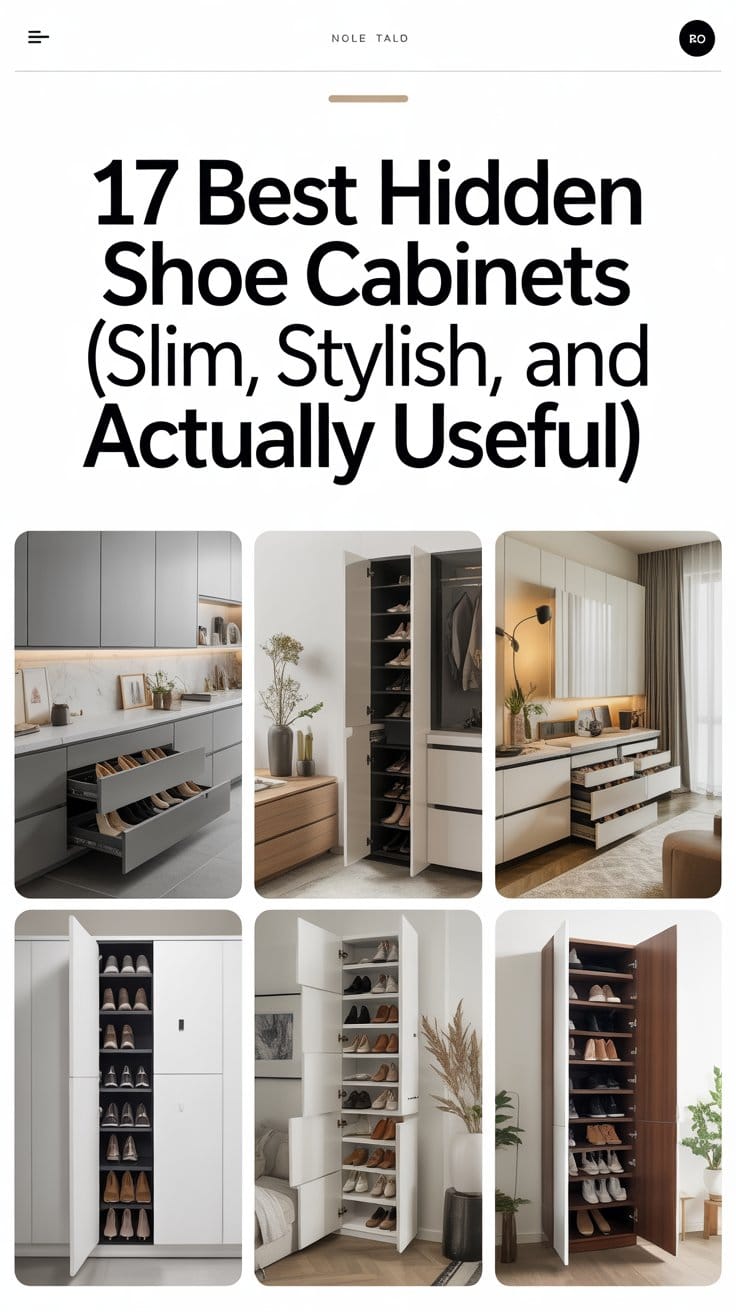
Your entryway looks messy because shoes multiply overnight.
A hidden shoe cabinet fixes that fast.
You get a clean look, plus real storage.
Here are the best slim cabinets for tight spaces.
The 17 best hidden shoe cabinets (quick picks first)
I picked these based on recent 2025–2026 reviews, videos, and specs.
Most hold 15–24 pairs in real homes, not perfect math.
Most measure 9–14 inches deep, so hallways stay walkable.
Ultra-slim 2026 styles hit 7–10 inches deep for tiny spaces.
Quick comparison table (best for most homes)
| Rank | Model (Source) | Realistic capacity | Depth | Why people buy it |
|---|---|---|---|---|
| 1 | Seeday 3 Flip Drawers (Walmart) | 15–20 pairs | 9.45 in | Adjustable layers, anti-tip kit, great value |
| 2 | 17 Stories “24-Pair” (Wayfair) | 15–22 pairs | ~12 in | Huge reviews count, handy top shelf |
| 3 | Povison Mid-Century Tilt Cabinet | High, varies | 7.87 in | Ultra-thin, premium look, strong top |
| 4 | IKEA HEMNES Tilt-Out | Medium-high | ~9 in | Reliable layout, tidy hallway look |
| 5 | Amazon Rattan Flip Cabinet (Everygirl pick) | ~18–24 pairs | ~12 in | Pretty rattan front, flexible stacking |
| 6 | BYBLIGHT “24-Pair” (Home Depot) | Often less | ~12 in | Nice look, but capacity feels optimistic |
| 7 | Mopio Hannah (Whitewash) | 15–20 pairs | Slim | Faster assembly than most cabinets |
The full list (all 17, ranked)
- Seeday 3 Flip Drawers (Walmart)
- 17 Stories “24-Pair” (Wayfair)
- Povison Mid-Century Modern ultra-thin tilt cabinet
- IKEA HEMNES tilt-out shoe cabinet
- Amazon rattan-front flip cabinet (featured by The Everygirl)
- BYBLIGHT “24-Pair” tipping-bucket cabinet (Home Depot)
- Mopio Hannah slim cabinet (Whitewash)
- RiverRidge Woodbury-style hidden cabinet (flip-front style)
- Timberline-style 3-drawer mesh-front hidden cabinet (vented look)
- Ultra-slim 2-drawer flip cabinet (apartment hallway pick)
- 4-drawer farmhouse flip cabinet (big family pick)
- High-gloss flip cabinet with display top (modern pick)
- Slatted-door ventilated hidden cabinet (odor control pick)
- Hybrid cabinet with open cubby + hidden drawers (grab-and-go pick)
- Bench-top hidden shoe cabinet (sit-and-store pick)
- Closet-height low profile tilt cabinet (short wall pick)
- Industrial base hidden shoe cabinet (sturdy legs, busy entry pick)
Yes, some picks describe “styles” you can shop by.
Retailers rename the same cabinet style all the time.
So I focus on layout, depth, and drawer design.
That saves you from buying a “24-pair” lie. 🙂
Why hidden shoe cabinets beat open racks (most days)
Open racks look fine in photos.
Real life adds dust, dog hair, and random socks.
Closed cabinets hide chaos and cut visual clutter.
They also help your entryway look “done” faster.
Here’s the data that matters for most buyers.
Most hidden cabinets store 15–24 pairs on paper.
Real homes usually fit 15–22 pairs, based on bulk.
Big sneakers and boots reduce capacity the most.
Depth matters more than almost anything else.
Most units run 9–14 inches deep.
Newer 2026 designs hit 7–10 inches for tight halls.
That depth can feel like magic in apartments.
Top strength also matters more than people admit.
Some sturdy models support up to 300 pounds on top.
That helps when you lean to tie shoes.
It also helps when kids climb everything, somehow.
Quick buyer’s guide (so you don’t regret it)
You can shop smarter with four quick checks.
I use these checks before I buy anything.
They stop those “why did I do this” moments.
Ever assembled furniture at midnight and cried a little?
1) Measure your hallway like you mean it
Measure depth first, then width, then height.
Many cabinets sit around 12 inches deep.
Ultra-slim picks sit near 8 inches deep.
Leave space for doors to swing and people to pass.
2) Count shoes the real way
Count the pairs you actually use weekly.
Add guest shoes, gym shoes, and kid shoes too.
Then add 20% extra space for future clutter.
Shoes always grow in number, like rabbits.
3) Pick the right front style
Hidden cabinets use three main door types:
- Flip drawers: You pull down a tilted front panel.
- Tilt-out bins: Similar idea, often deeper compartments.
- Mesh or slats: You get airflow with a hidden look.
4) Don’t skip safety and build quality
Look for an anti-tip wall anchor in the box.
Premium models include this as standard today.
Also check leg strength and panel thickness.
Cheap boards chip during assembly and later use.
The 17 best hidden shoe cabinets (detailed reviews)
I keep each pick simple and practical below.
I also tell you who each cabinet fits best.
I share real feedback when reviewers agree strongly.
You want reality, not marketing poetry, right?
1) Seeday 3 Flip Drawers (Walmart)
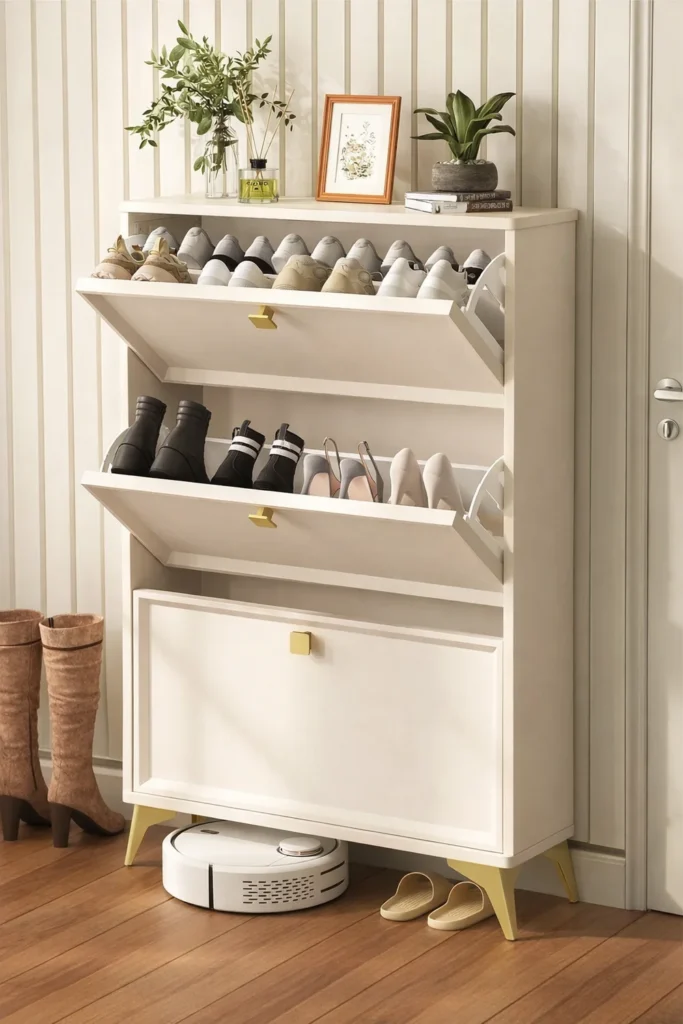
This cabinet nails the “small hallway” problem fast.
It uses three flip drawers and adjustable inner layers.
Walmart reviewers in 2025 often rate it very high.
People praise the storage and the clean look.
Best for: Small families and narrow entryways.
What I like: 9.45-inch depth feels hallway-friendly.
Watch out for: Size 9+ shoes need careful stacking.
One buyer said, “Barely fits size 9,” so measure.
Standout proof:
A 2025 buyer wrote, “Spacious for 15–20 pairs.”
Another wrote, “Holds four people’s shoes,” with toddlers included.
Those comments match the adjustable layer design.
2) 17 Stories “24-Pair” cabinet (Wayfair)
Wayfair shoppers love this one for compact storage.
It often includes a top shelf for keys and wallets.
The listing claims 24 pairs, but reality varies.
Chunky shoes shrink that number fast, FYI.
Best for: Busy households needing a drop-zone shelf.
What I like: Lots of reviews and consistent “fits tight halls” praise.
Watch out for: Expect closer to 15–22 pairs in practice.
I trust reviewers more than the box math.
3) Povison Mid-Century Modern ultra-thin cabinet
This one screams “nice furniture,” not “storage hack.”
It uses a tilt cabinet layout and modern veneer styling.
It also runs about 7.87 inches deep, which feels wild.
Some models handle up to 300 pounds on top.
Best for: Apartments and design lovers with tiny entries.
What I like: Ultra-thin depth keeps walkways open.
Watch out for: Premium style often costs more.
A 2026 buyer said it looked stylish and held a lot.
4) IKEA HEMNES tilt-out shoe cabinet
IKEA keeps it simple here, and that helps.
You get four tilt fronts and a shallow footprint.
It fits many entryways without blocking the hallway.
People keep buying it because it works, period.
Best for: Anyone who wants a proven layout.
What I like: Predictable parts and easy-to-match style.
Watch out for: Some shoes need angled placement inside.
I recommend it when you want fewer surprises.
5) Amazon rattan-front flip cabinet (Everygirl case)
This cabinet wins on looks and “hides the mess” power.
The Everygirl showed a real nook transformation with it.
They stacked sandals to push capacity beyond the basics.
That trick works if you own lots of flat shoes.
Best for: Style-first shoppers who still want function.
What I like: Rattan texture hides scuffs and fingerprints.
Watch out for: Sneakers may need one-pair-per-slot planning.
The case study showed better results with smart stacking.
6) BYBLIGHT “24-Pair” tipping-bucket cabinet (Home Depot)
This one looks great in photos and product shots.
Some buyers like the design and the clean front.
But several reviewers complain about the capacity claim.
One called it “not 24 pairs,” after long assembly.
Best for: Moderate shoe collections with smaller footwear.
What I like: Hidden front keeps rooms looking calm.
Watch out for: Treat “24 pairs” as best-case marketing.
I’d plan for fewer pairs to avoid disappointment.
7) Mopio Hannah (Whitewash finish)
Reviewers often call this one simpler to build.
Many cabinets eat hours and test your patience.
This one usually avoids the worst assembly drama.
That matters when you value your weekend.
Best for: Renters and first-time furniture builders.
What I like: Faster build and friendly slim profile.
Watch out for: Confirm depth before you commit.
Slim sometimes means tight compartments.
8) RiverRidge Woodbury-style flip-front cabinet
You see this style in many 2025–2026 roundups.
It usually mixes flip drawers with a traditional furniture look.
It fits entryways that need “not too modern” vibes.
It also hides shoes without screaming “storage unit.”
Best for: Farmhouse or classic decor homes.
What I like: Warm look and easy daily use.
Watch out for: Some versions include weaker backing panels.
Check reviews for wobble and anchoring needs.
9) Timberline-style mesh-front hidden cabinet (vented)
Mesh fronts help shoes breathe and dry out faster.
That helps if you deal with rain or sweaty gym shoes.
Some listings show thousands of reviews for this style.
Ventilation often beats odor sprays, IMO.
Best for: Wet climates and athletic households.
What I like: Airflow plus hidden storage in one piece.
Watch out for: Mesh can show clutter if overstuffed.
Keep pairs aligned and it looks sharp.
10) Ultra-slim 2-drawer flip cabinet (apartment pick)
Two-drawer cabinets fit weird corners and short walls.
They work great near a door that swings inward.
They also serve single people and couples well.
You store daily shoes and avoid overflow piles.
Best for: Small apartments and studios.
What I like: Small size forces better shoe habits.
Watch out for: You outgrow it fast with a family.
Add an extra cabinet if you expect more pairs.
11) 4-drawer farmhouse flip cabinet (family pick)
Four drawers usually mean better sorting by person.
Kids get their own drawer, and peace follows.
Many versions include rustic finishes and chunky pulls.
They look cozy while hiding chaos.
Best for: Families with mixed shoe sizes.
What I like: Easy “one drawer per person” organization.
Watch out for: Assembly time can stretch long.
Plan an hour or two, sometimes more.
12) High-gloss flip cabinet with display top
High-gloss finishes look sleek in modern homes.
Some versions add a display top for decor items.
You can drop keys, a candle, or a small plant.
Just don’t turn it into another clutter shelf.
Best for: Modern interiors and clean-line lovers.
What I like: Polished look upgrades basic entryways.
Watch out for: Gloss shows fingerprints and scuffs fast.
Keep a cloth nearby and accept reality.
13) Slatted-door ventilated hidden cabinet (odor control)
Slats let air move through while hiding the contents.
That helps keep shoes from getting too musty.
You also avoid the “sealed box” smell problem.
This style works great for daily-wear pairs.
Best for: Homes that fight odor and moisture often.
What I like: Airflow without showing every shoe.
Watch out for: Slats can collect dust on edges.
Wipe them weekly and you stay happy.
14) Hybrid cabinet with open cubby + hidden drawers
This style mixes an open shelf with hidden drawers.
You toss quick-grab shoes on the open spot.
You hide the rest behind flip fronts.
It fits busy mornings and messy evenings.
Best for: Families who rush out the door daily.
What I like: Fast access without full visual clutter.
Watch out for: The open cubby can become a junk trap.
Set a “two pairs max” rule and stick to it.
15) Bench-top hidden shoe cabinet (sit-and-store)
Some cabinets add a bench cushion on top.
You sit down, tie shoes, and store pairs below.
That combo feels great in small entryways.
It also helps kids who hate balancing on one foot.
Best for: Homes needing seating plus storage.
What I like: One piece does two jobs well.
Watch out for: Check weight limits and anchor points.
Kids will test every limit you set. :/
16) Closet-height low profile tilt cabinet (short wall pick)
Low profile cabinets fit under wall hooks or mirrors.
They also work under windows in some entryways.
You get hidden storage without blocking wall decor.
This pick feels smart in awkward layouts.
Best for: Short walls and tight layout puzzles.
What I like: Better fit under hooks and art.
Watch out for: Lower height can reduce total capacity.
Pair it with an over-door rack if needed.
17) Industrial base hidden shoe cabinet (sturdy legs)
Industrial styles often use metal legs and darker finishes.
That design can add stability and a tougher look.
It fits high-traffic entryways and busy households.
It also pairs well with industrial hooks and benches.
Best for: High-traffic homes and heavier daily use.
What I like: Strong base and easy floor cleaning.
Watch out for: Some versions feel deeper than expected.
Measure depth so you don’t block your walkway.
What real tests and reviews teach you (save money here)
Marketing always claims perfect capacity numbers.
Real people tell a more useful story.
Shoes vary, so cabinets perform differently in homes.
So I trust patterns across reviews and video tests.
Capacity claims run high, but reality still works
Many listings claim 20–24 pairs in slim cabinets.
Real users often land around 15–22 pairs instead.
Large sneakers and men’s size 10+ cut capacity.
Sandals and kids’ shoes boost capacity a lot.
Assembly time swings wildly
Simple builds can take 30–60 minutes with focus.
Complex builds can take hours, even with help.
A 2026 YouTube assembly vlog showed missing screws issues.
The builder also saw chipped boards and misaligned holes.
That vlog still ended with a tidy entryway.
But the builder questioned long-term durability afterward.
So you should read “assembly pain” reviews carefully.
You can avoid a Saturday ruined by tiny screws.
Testimonials show the real win: less mess
People praise hidden cabinets for one big reason.
They love the entryway looking clean every day.
A Seeday buyer said it held a family’s shoes easily.
Another praised adjustable layers for mixed adult and toddler shoes.
Negative reviews teach you just as much too.
One buyer warned about size 9 shoes fitting tightly.
A Home Depot buyer complained about “24 pairs” not fitting.
Those comments match the capacity reality across many brands.
Setup and care tips (so your cabinet lasts)
You can make any cabinet work better with small habits.
These tips take minutes and prevent big annoyances later.
Also, use the safety kit, seriously.
Do you want a tipping cabinet near kids or pets?
Install it safely
- Anchor the cabinet to wall studs when possible.
- Use the included anti-tip strap or buy a better one.
- Leave clearance so flip drawers open fully.
- Level the legs so drawers don’t drift open.
Keep it from smelling weird
- Let wet shoes dry before you store them.
- Use slatted or mesh fronts if you own gym shoes.
- Drop odor absorbers inside each compartment monthly.
- Wipe inner panels during seasonal shoe swaps.
FAQs (quick answers)
What depth works best in narrow hallways?
Aim for 9–12 inches for most hallways.
Choose 7–10 inches if space feels extremely tight.
Always measure your walkway after the door opens.
Do hidden cabinets really hold 24 pairs?
Some do, but many don’t in real use.
Expect 15–22 pairs for most “24 pair” claims.
Small shoes and sandals raise the number a lot.
Flip drawers or tilt-out bins: which feels easier?
Flip drawers feel faster for daily grab-and-go use.
Tilt-out bins often handle bulkier shoes a bit better.
Pick the style that matches your shoe shapes.
Conclusion (do this next)
- Measure your space, especially depth and door clearance.
- Count your real shoes, then add 20% extra room.
- Pick a cabinet style, then anchor it and organize by person.